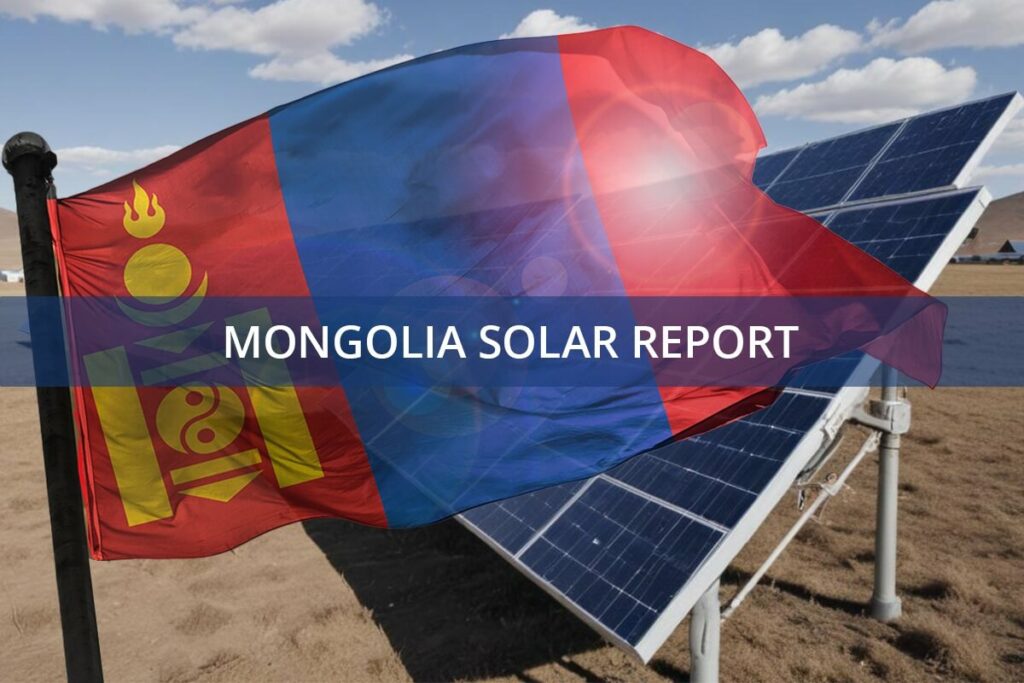
Mongolia is making significant strides in renewable energy, with its government recently approving a large-scale project to export clean energy to Gulf countries. This initiative is part of a broader effort to transform the nation into a major exporter of renewable energy by drawing on its abundant solar and wind resources.
Large-Scale Solar and Wind Export Projects
The Mongolian government has approved a project to build a 2,000 MW solar and wind power plant in the country’s southern region. This ambitious project, a collaboration with the United Arab Emirates (UAE), will combine a 1,000 MW solar power plant with a 1,000 MW wind power plant.
Slated for completion in 2030, the plant will export its electricity to Gulf countries such as the UAE, Saudi Arabia, and Qatar.
In addition to the power plants, the project includes the construction of a 500 kV power transmission line connecting Mongolia’s grid to the Gulf countries. At over 3,000 kilometers long, this transmission line will be one of the longest in the world.
The economic impact on Mongolia is projected to be substantial, with the project expected to create thousands of jobs and generate over $1 billion in annual revenue. For more on Mongolia’s solar energy ambitions, visit Mongolia’s Ambitions to Rise in Solar Energy.
Aiming to Become a Regional Energy Hub
Mongolia’s drive to become a renewable energy powerhouse is part of a broader strategy to diversify its economy, which has traditionally relied on mining. The country has one of the world’s highest levels of solar potential, with an average of 270 sunny days per year, and possesses vast wind resources, particularly in the Gobi Desert.
In recent years, Mongolia has made significant progress in developing its renewable energy sector. The country currently has over 300 MW of installed solar and wind capacity, with ambitious plans to increase this to 3,000 MW by 2030.
To support this growth, the government has set a 2030 renewable energy target of generating 30% of its electricity from renewable sources, a significant jump from the current 7%.
Mongolia’s renewable energy potential has caught the attention of international investors. Alongside the UAE, countries like Japan and South Korea have shown interest in investing in the sector. The World Bank also recently approved a $100 million loan to help Mongolia develop its renewable energy infrastructure.
The Gobi Desert’s Pivotal Role in Renewable Energy
The Gobi Desert, covering much of southern Mongolia, is a key area for the country’s renewable energy development. Its vast open spaces and strong winds make it an ideal location for large-scale wind farms, while its high levels of sunlight are perfect for solar power plants.
Several large-scale renewable energy projects are already underway in the Gobi Desert. The 50 MW Tsetsii wind farm was completed in 2017, followed by the 55 MW Sainshand wind farm in 2018. A 30 MW solar power plant was also completed in the region in 2019.
These projects are just the beginning. The Mongolian government has ambitious plans to further develop the Gobi Desert’s renewable energy potential, with several more wind and solar projects already in the pipeline.
Overcoming Challenges in Renewable Energy Exports
Although Mongolia’s renewable energy sector has made significant progress, it still faces several challenges. A major obstacle is the country’s limited power grid infrastructure, which cannot yet handle such large amounts of renewable energy.
To address this, the government is working to upgrade and expand the nation’s power grid. The new 500 kV transmission line to the Gulf countries is a key part of this effort, as it will not only facilitate energy exports but also help stabilize the domestic grid.
Limited domestic demand for renewable energy poses another challenge. Mongolia’s small population and relatively low energy consumption mean that much of the renewable energy generated will need to be exported.
Despite these challenges, Mongolia’s renewable energy sector is poised for significant growth. The country’s abundant solar and wind resources, combined with its strategic location between China and Russia, position it well to become a major exporter of clean energy.
These projects are already having a positive impact on the country’s economy and environment by creating jobs, generating government revenue, and reducing greenhouse gas emissions. As Mongolia continues to develop its renewable energy sector, it has the potential to become a global leader in clean energy and a key player in the international energy market.