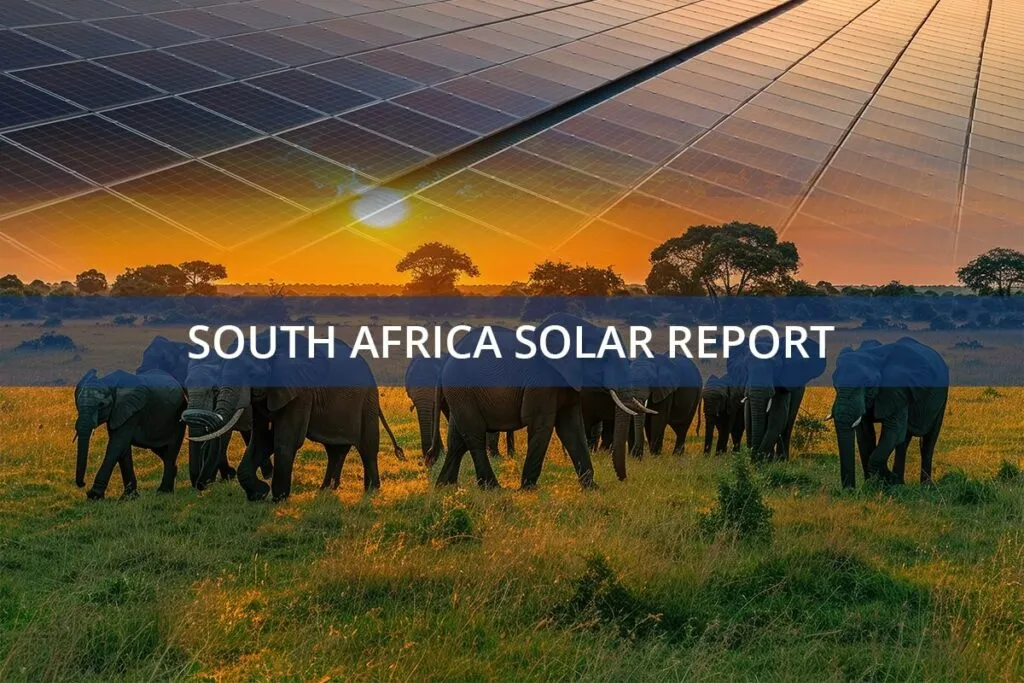
Africa’s substantial solar resources offer a promising solution to the challenge of electricity access for 600 million people. However, the continent currently installs only a small fraction of the world’s solar capacity.
Africa’s Contribution to the World’s Solar Capacity
A panel discussion at Enlit Africa in Cape Town underscored the need to increase solar installations across the continent. Panelists emphasized that solar energy’s power to improve lives, spur economic expansion, and create jobs is essential for Africa’s development.
Rethabile Melamu, CEO of SAPVIA, pointed out that of the 550GW of solar capacity installed worldwide in 2023, only 5GW was in Africa.
Wido Schnabel of Canadian Solar described solar energy as a democratic power source ideal for Africa. He highlighted South Africa’s progress through the REIPPP program, which helped reduce solar costs and improve technology, leading to grid parity in 2014. Schnabel argued that leaving available rooftops bare is a financial waste, especially since the sector’s growth has already had a significant societal impact by enabling widespread embedded generation.
Solar Potentials in Africa
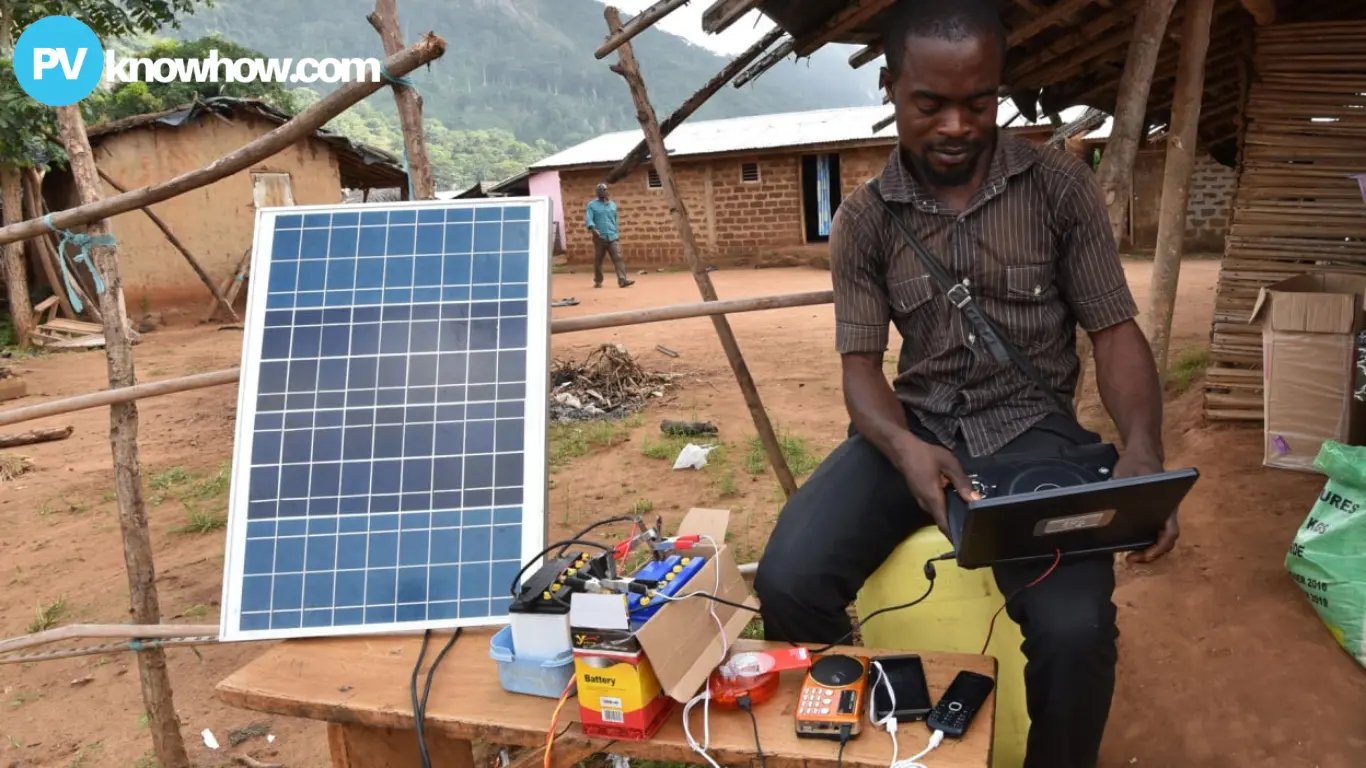
Image: Collected
Melamu shared how small-scale solar PV deployments have transformed disadvantaged communities by delivering critical electricity access, allowing families to power appliances and charge phones.
Building on this, Schnabel proposed an ambitious plan to install one million modular solar roofs in South African townships, a move that would make solar energy more accessible and impactful—especially with the aid of subsidies.
Schnabel also stressed the solar sector’s significant potential for job creation. He contrasted Europe’s workforce shortages with Africa’s large population of trained yet unemployed workers, pointing to an enormous opportunity for regional employment as solar infrastructure expands.
Maximizing Africa’s solar resources, however, requires a modernized grid infrastructure. Ralf Blumenthal, head of Siemens grid software for the Middle East and Africa, emphasized the critical role of grids, noting that about 7,000 GW of renewable energy globally sits idle due to inadequate grid access.
Harnessing the Potentials
Blumenthal urged a tenfold increase in Africa’s renewable energy capacity by 2030, a goal that demands rapid and significant changes. He also pointed to the accompanying challenges, such as integrating new technologies like microgrids and energy storage, which complicate grid management and shift system dynamics.
To tackle these challenges, Blumenthal called for efficient grid planning and advanced software to integrate more photovoltaic (PV) systems. He also underscored the need for effective interconnection among Africa’s grids to enhance energy distribution and reliability—a crucial step for harnessing the continent’s vast solar potential and ensuring sustainable energy growth.
The panelists unanimously agreed on the importance of solar energy for a swift and inclusive energy transition, while also noting the significant potential of hybrid projects. Schnabel cited a Rethink X model showing that South Africa could achieve a fully renewable grid with 80GW of solar, 50GW of wind, and 30GW of storage, eliminating coal and nuclear power.
Oya Solar Project: A Model for Others
Harris discussed the Oya project, which combines 155MW of solar power, 86.4MW of wind, and 242MWh of battery storage, making it Africa’s largest hybrid renewable energy installation. This project demonstrates the potential for dispatchable, baseload renewable power. To foster more initiatives like Oya, the panelists stressed the need for agile government policies that provide stability and encourage investment in renewable energy.
Yunus Hoosen from the South African Department of Trade and Industry pointed to regulatory changes driving the solar revolution in South Africa, such as lifting caps on private sector generation and enabling energy trading.
He stressed the importance of industrialization to create value during the energy transition, suggesting Africa can achieve this by processing its own minerals and forming intracontinental partnerships to promote economic growth.
The discussions at Enlit Africa underscored the urgent need to harness Africa’s solar potential to solve widespread electricity access issues. Despite its abundant resources, the continent’s contribution to global solar capacity remains minimal.
However, with ambitious proposals and strategic investments, Africa is poised to lead in sustainable energy growth, driving economic prosperity and societal well-being by embracing solar power.