Details of the Landmark Mandate
Effective April 1, 2026, this new mandate compels all distribution utilities (DUs) and electric cooperatives (ECs) to process complete net metering applications within the strict 10-day window, down from the previous 20-day standard. The circular goes further to expedite the entire chain of approvals, directing Local Government Units (LGUs) to issue the required electrical permits within just three working days. This comprehensive approach addresses key bottlenecks that have historically discouraged investment in distributed solar energy for systems up to the 100 kW capacity limit.
Strategic Impact on National Energy Goals
This policy overhaul is a strategic response aimed at bolstering the nation’s energy security. By removing frustrating delays, the DOE intends to unleash a new wave of investment in customer-owned solar generation. The reform directly supports the ambitious goals of the Philippine Energy Plan (2023–2050), which targets a 35% renewable energy share in the country’s power mix by 2030. Industry projections suggest that this accelerated process could be instrumental in adding 500 to 1,000 MW of new distributed solar capacity by 2027, a substantial increase from the approximately 200 MW from over 15,000 systems installed as of early 2026.
What This Means for Applicants
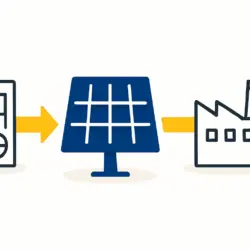
For prospective solar adopters, the path to generating clean energy is now clearer and significantly faster. The streamlined procedure begins with submitting a complete application—including system specifications and necessary permits—to the local utility. From there, the coordinated 10-day clock starts, integrating verification by the utility and approvals from other relevant bodies. Following a successful application, owners can proceed with installation, culminating in the placement of a bi-directional meter and the signing of the net-metering agreement that connects their system to the grid.
This acceleration gives powerful new enforcement to the principles of Republic Act No. 9513, the Renewable Energy Act of 2008, empowering energy consumers to become producers. By transforming a process once defined by unpredictable waits into a swift and reliable system, the DOE has issued a clear signal that the time to invest in solar energy in the Philippines is now.
Sources
- DOE speeds up net-metering application process to 10 days
- DOE cuts net metering approval to 10 days amid energy emergency
- Philippines DOE Mandates 10-Day Net Metering Approvals Under …
- Philippines DOE Mandates 10-Day Net Metering Approvals Under …
- Philippines Net Metering Approvals Now Take 10 Days.