
SEG Solar, a US solar module manufacturer, has begun commercial operations at its Houston facility, which has an annual production capacity of 2GW.
SEG Targets 5.5GW Capacity with New Facility
With the new PV manufacturing facility, SEG Solar plans to increase its global annual manufacturing capacity to 5.5GW by year-end, complementing its existing module production sites in China, Indonesia, and Thailand.
SEG Solar has launched the first 585W YUKON N-series module from its production line, making it one of the pioneering manufacturers to produce modules in the United States.
“As a leading US solar company, SEG is proud to be among the first to respond to the call for domestic manufacturing by constructing a solar module factory in the US,” said Jim Wood, SEG Solar CEO.
SEG Solar highlighted that the facility will use ‘automated intelligent manufacturing systems’ along with ‘advanced’ enterprise resource planning (ERP) and manufacturing execution systems (MES) to track the origin of materials and components used in its modules.
“The production lines are compatible with 182mm and 210mm N-type cells and are equipped with fully automated intelligent manufacturing systems ensuring seamless integration of automation, information and intelligence,” SEG said.
SEG Solar Commits $60 Million to New Solar Facility
Constructed with an investment of around $60 million (EUR 55 million), the new solar module factory in Houston covers nearly 250,000 square feet (23,226 sq m). SEG has announced that the factory is now fully operational and ready to produce the latest high-efficiency N-type solar modules.
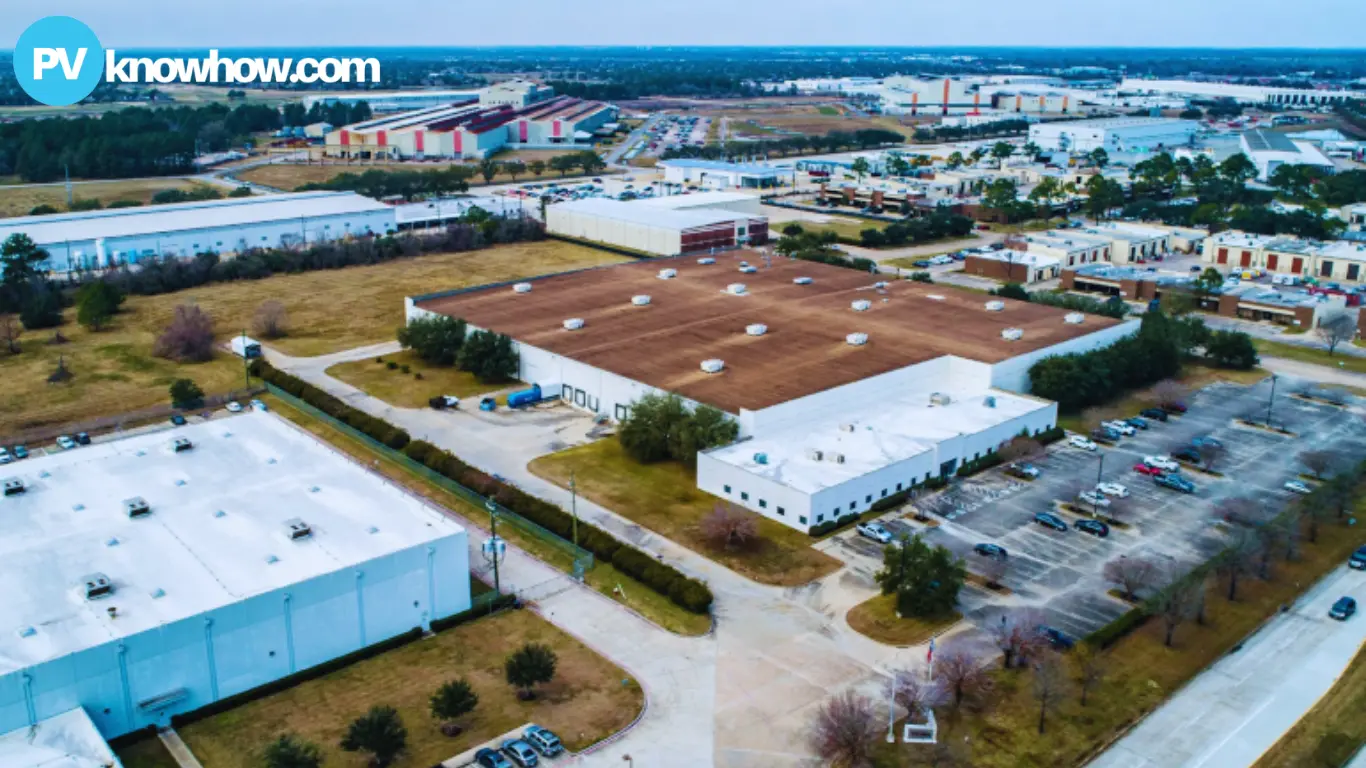
Image: Collected
“We don’t just want to make money. We want to build solar manufacturing in this country. We want to bring all of the supply chains to this country,” said Jun Zhuge, SEG Solar’s Chief Operating Officer.
SEG Solar to Launch R&D Center in Houston
The company also plans to establish a global research and development (R&D) center at its Houston facility by the end of 2024. The center will offer comprehensive testing services—including Damp Heat, PID, and Light and LeTID tests—to ensure the reliability and performance of the modules under various environmental conditions. It will also provide light-induced degradation (LID) testing, which has recently gained prominence.
A team of researchers from several U.S. institutions, including the National Renewable Energy Laboratory (NREL) and the University of California San Diego, has developed a perovskite module designed to resist LID while maintaining a power conversion efficiency of 16%.
“The completion of the Houston plant marks a significant milestone for SEG and a major advancement in US module manufacturing technology. Looking ahead, SEG will continue to deepen its investments in wafers, cells and modules, closely tracking market trends to meet our customers’ needs,” added Wood.