Siemens Energy has expanded its Budapest plant with a new factory, a training centre, and a solar park. This investment will help the company generate some of the energy required for its operations.
1.5MW Solar Park
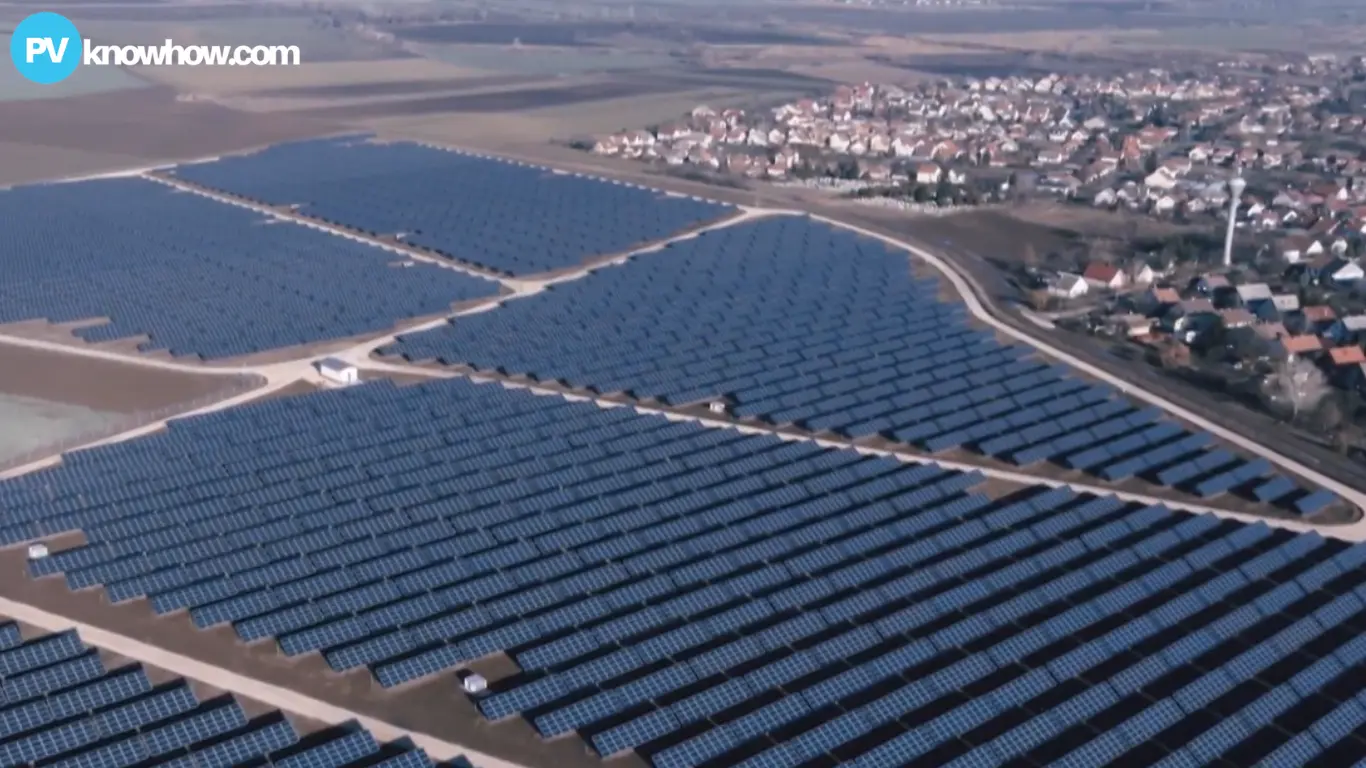
Image: Collected
During a ceremony at the Siemens Energy factory, the minister announced that the German company will manufacture gas turbine combustion heads at its new multifunctional plant. The project also includes a dual training centre to train Hungarian specialists in the latest technologies.
As part of the investment, a 1.5-megawatt solar park was also commissioned under the Factory Rescue Program.
According to Hungary Today, this three-part investment programme is valued at HUF 26 billion (EUR 67 million), with the government contributing roughly HUF 900 million (EUR 2.3 million). The project aligns with the primary goals of Hungary’s energy strategy, which aims to maximize the energy produced for the country’s own operations.
Impact of Siemens Energy in Hungary
The minister noted that since the government signed a strategic cooperation agreement with Siemens Energy, the company has doubled its revenues in Hungary, added 400 employees to its workforce, and invested nearly HUF 50 billion (EUR 129.5 million).
He emphasized that Siemens Energy remains a crucial partner for Hungary’s energy supply security. The company—along with the French firm Framatome—won the tender to provide control technology for the new Paks nuclear power plant.
The minister expressed hope that Hungary’s advancements in the nuclear energy sector could pave the way for a return to normal, respectful international cooperation. He stressed that fostering such cooperation, based on mutual respect and common sense, could help address current global political challenges more effectively.
The Paks Project
Péter Szijjártó remarked that in an era of significant threats, recent crises have demonstrated that nations with strong strategic capabilities—particularly in energy security—are better protected and less vulnerable.
He highlighted the importance of robust energy production, which is why Hungary is constructing the new Paks nuclear blocks to ensure its long-term energy security.
“The last few years have proved that a country can be tremendously strong if it has the necessary capacities for energy production, which is why we are developing the new Paks blocks,” Szijjártó noted.
Szijjártó also highlighted that the Paks expansion is an international project involving companies from the USA, France, Germany, Austria, and Switzerland, working alongside the Russian prime contractor, Rosatom.
Expansion of Solar Energy in Ireland
Ireland’s commitment to a sustainable future is evident in its extensive support for solar energy, with significant government incentives making solar installations more affordable for homeowners, businesses, and farmers.
The Sustainable Energy Authority of Ireland (SEAI) offers a Solar Electricity Grant of up to €2,100 for homeowners installing solar PV panels, which helps expand renewable energy sources in the country.
For businesses, schools, and farms, the NDMG provides funding for larger solar PV systems, with grants reaching up to €162,600 for systems up to 1,000 kWp. Additionally, the Targeted Agricultural Modernisation Scheme (TAMS) supports farmers with grants that cover up to 60% of installation costs—capped at €90,000—encouraging sustainable energy use in agriculture.
The Irish government has also committed funds in Budget 2024 to support energy upgrades and solar PV installations, including electricity credits and European funding to assist households in energy poverty.
Applying for these grants requires meeting specific eligibility criteria and submitting an application through the SEAI website. Policy changes, such as the 0% VAT rate on domestic solar panel installations, have significantly boosted growth in the sector, demonstrating the government’s proactive approach to promoting renewable energy.