Sri Lanka’s renewable energy ambitions have taken another concrete step forward with the Vavunathivu II Solar Project reaching a critical milestone. A 20-year Power Purchase Agreement (PPA) was officially signed between the Ceylon Electricity Board (CEB) and Suryashakthi (Pvt) Limited on October 25, 2023, ensuring the project’s output will power the nation’s grid for the next two decades.
Project Details of the Sri Lanka solar project
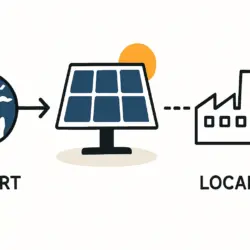
Set to be developed in Vavunathivu, Batticaloa, on the country’s east coast, the Vavunathivu II Solar Project is a 10 MW solar power facility. This initiative is spearheaded by Suryashakthi (Pvt) Limited, a subsidiary of Solar Universe (Pvt) Limited. Solar Universe represents a powerful joint venture between some of Sri Lanka’s most established renewable energy players: WindForce Plc, Vidullanka Plc, and HiEnergy Services (Pvt) Ltd.
The project is on track for completion and connection to the national grid by the fourth quarter of 2024. The successful execution of the solar panel manufacturing process and installation will be key to meeting this timeline.
Financing of the Sri Lanka solar project
The project is backed by a significant investment of approximately LKR 2.2 billion (around USD 7 million). It will be constructed in two 5 MW phases, allowing for a structured and efficient rollout. Understanding the financial dynamics of such an undertaking is complex, involving everything from equipment to labour, as detailed in a typical solar panel manufacturing plant cost breakdown.
Power Purchase Agreement for the Sri Lanka solar project
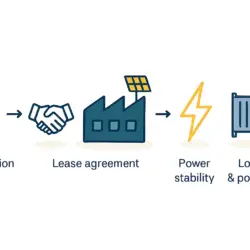
Under the terms of the PPA, the state-owned Ceylon Electricity Board (CEB) has committed to purchasing electricity from the Vavunathivu II Solar Project at a fixed rate of LKR 18.93 per kilowatt-hour (kWh) for a 20-year term. This long-term agreement provides financial certainty for the investors and a stable, predictable energy source for Sri Lanka’s national grid, helping to insulate it from the price volatility of imported fossil fuels.
Sri Lanka’s Commitment to Renewable Energy
The Vavunathivu II project is a key component of Sri Lanka’s broader strategy to decarbonize its energy sector. The government has set an ambitious target to generate 70% of its electricity from renewable sources by 2030. This push has been intensified by recent economic challenges, including currency crises and fuel shortages, which highlighted the urgent need for energy independence.
This commitment is further supported by new legislation, such as the recently passed Electricity Act, which is designed to streamline and encourage private investment in the energy sector. The remarkable growth in Sri Lanka solar power is evident in multiple projects across the island, including the recently inaugurated 100 MW Sri Lanka solar farm in Siyambalanduwa. Furthermore, the nation is actively fostering international partnerships, as seen in the recent Sri Lanka India solar power plant deal.
Benefits of the Sri Lanka solar project
The successful implementation of the Vavunathivu II Solar Project will deliver multiple advantages for Sri Lanka:
- Increased Energy Security: By adding 10 MW of clean energy, the project directly helps diversify the country’s energy mix and reduces its dependence on imported fossil fuels.
- Reduced Carbon Emissions: The plant will displace fossil fuel-based generation, contributing significantly to Sri Lanka’s climate change mitigation goals and reducing its national carbon footprint.
- Economic Development: The project stimulates local economies by creating jobs during the construction and operational phases. It also boosts the ancillary supply chain, which includes everything from logistics to the sourcing of solar panel raw materials.
- Improved Grid Stability: Integrating decentralized power sources like this solar plant can enhance the resilience and stability of the national grid, which is essential to meet the country’s rising electricity demand.
Conclusion of the Sri Lanka solar project
The signing of the Power Purchase Agreement for the Vavunathivu II Solar Project is more than a procedural step; it is a clear signal of Sri Lanka’s unwavering momentum toward a sustainable energy future. This project exemplifies how private sector expertise and investment can align with national goals to enhance energy security, drive economic growth, and combat climate change. It is a vital piece in the puzzle as Sri Lanka works diligently to achieve its 70% renewable energy target by 2030.
To learn more about the intricacies of bringing solar projects to life, from initial concept to full-scale production, consider enrolling in our free e-course.