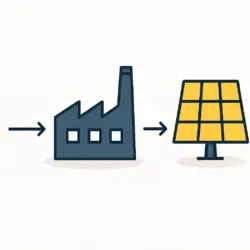
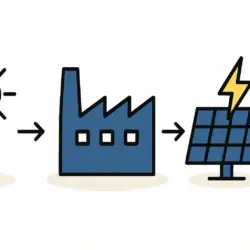
TotalEnergies has successfully installed a 310 kWp solar photovoltaic (PV) system at its lubricants blending plant in Ba Ria-Vung Tau Province, Vietnam. This project will significantly reduce the plant’s carbon emissions and advance its sustainability efforts.
Project Details and Environmental Impact
Executed by TotalEnergies Distributed Generation, the project involved installing a rooftop solar PV system at the company’s lubricants blending plant. Operational since 2019, this new solar installation marks a significant step towards sustainability and a smaller carbon footprint for the facility.
The system is expected to generate around 460 MWh of renewable electricity annually, offsetting about 7% of the plant’s total power consumption. This translates to an estimated reduction of 380 tonnes of carbon dioxide emissions each year. The project aligns with TotalEnergies’ broader commitment to achieving carbon neutrality by 2050 and its strategy of expanding its renewable energy portfolio.
TotalEnergies’ Renewable Energy Initiatives in Asia
This solar project is part of TotalEnergies’ larger initiative to strengthen its renewable energy presence in Asia. The company has been actively expanding its solar energy projects across the continent, focusing on reducing carbon emissions from its operations and contributing to the global energy transition.
In addition to the Vietnam project, TotalEnergies has commissioned a 1 MW solar system at its lubricants blending plant in Singapore. This system, comprising 2,600 solar panels, generates around 1.2 GWh of electricity annually, powering the plant’s manufacturing operations with excess electricity fed back into the local grid.
Underscoring its commitment to innovation, TotalEnergies is also collaborating with Singapore’s National Environment Agency (NEA). The organizations are jointly developing solutions for recycling solar panels, batteries, and wind turbine blades, addressing the growing challenge of e-waste in the renewable energy sector.
TotalEnergies’ Global Renewable Energy Targets
TotalEnergies has ambitious goals for its renewable energy portfolio, aiming for 35 GW of gross renewable electricity capacity by 2025 and 100 GW by 2030. The company currently operates nearly 25 GW of renewable energy capacity, with a significant portion of its solar power generation coming from projects in Asia. This dedication is reflected in its extensive portfolio, which includes nearly 4 GW of solar generation capacity across various markets. In Vietnam alone, TotalEnergies operates over 100 MW of solar PV systems, demonstrating its commitment to expanding its renewable energy footprint in the region.
Vietnam’s Growing Role in Solar Energy
Vietnam has emerged as a key player in the global solar energy market, ranking among the top ten countries for solar capacity. Between 2018 and 2020, the country’s solar capacity surged from 105 MW to over 16 GW, fueled by investments in large-scale solar farms and distributed solar projects. Vietnam aims to achieve an impressive 16 GW of solar capacity by 2025. More information on Vietnam’s solar landscape can be found at PVKnowhow Vietnam Solar News Archives.
The government’s Feed-in Tariff (FiT) scheme was crucial in attracting investments and accelerating project deployment. However, this rapid expansion also presents challenges in grid integration and curtailment, necessitating further investments in grid infrastructure and energy storage solutions.
Despite these hurdles, Vietnam’s solar energy sector continues to flourish, with ongoing investments in new projects and technological advancements to enhance efficiency and reliability. Further insights into Vietnam’s solar manufacturing sector are available in the PVKnowhow Vietnam Solar Panel Manufacturing Report.
The solarisation of TotalEnergies’ lubricants blending plant represents a significant milestone in the company’s journey toward sustainability. By leveraging renewable energy, TotalEnergies is not only reducing its operational carbon footprint but also contributing to the global effort to combat climate change.