
Procuring industrial machinery for a battery manufacturing plant is a significant capital investment. The final cost, however, is not settled at the point of purchase, but only when the equipment achieves consistent, nameplate production capacity. A common and costly oversight is assuming new machinery will function perfectly upon arrival.
Structured validation through Factory Acceptance Testing (FAT) and Site Acceptance Testing (SAT) is the best way to de-risk this critical phase of factory setup. It ensures equipment meets all contractual specifications before it can impact your production timeline.
This guide offers a systematic overview of the FAT and SAT processes. It is designed for industrial investors and project managers who need a clear framework for equipment verification—one that moves beyond generic checklists to establish a defensible protocol that protects their investment.
The Business Case for Rigorous Equipment Validation
Factory and Site Acceptance Testing are not merely procedural formalities; they are fundamental risk mitigation activities with direct financial implications. The goal is to catch and correct equipment deficiencies at the earliest, most cost-effective stage. A defect discovered at the manufacturer’s facility during FAT is significantly less expensive to fix than one found after the machine has been shipped, installed, and integrated into a production line at your site.
As a critical tool for protecting your investment, a structured FAT and SAT process delivers several key benefits:
- Cost Reduction: Identifies non-conformities before shipment, avoiding costly on-site repairs, modifications, and project delays.
- Risk Mitigation: Verifies safety functions, performance specifications, and build quality in a controlled environment, reducing operational risks.
- Timeline Adherence: Ensures equipment is fit for purpose before it arrives on site, preventing commissioning delays that can postpone the start of production.
- Contractual Compliance: Provides documented proof that the supplier has met all contractual obligations regarding the equipment’s functionality and performance.
FAT vs. SAT: A Clear Comparison
Understanding the distinction between Factory Acceptance Testing and Site Acceptance Testing is crucial for effective project planning. While both are sequential parts of a single validation process, they serve different objectives and take place at different locations and times.
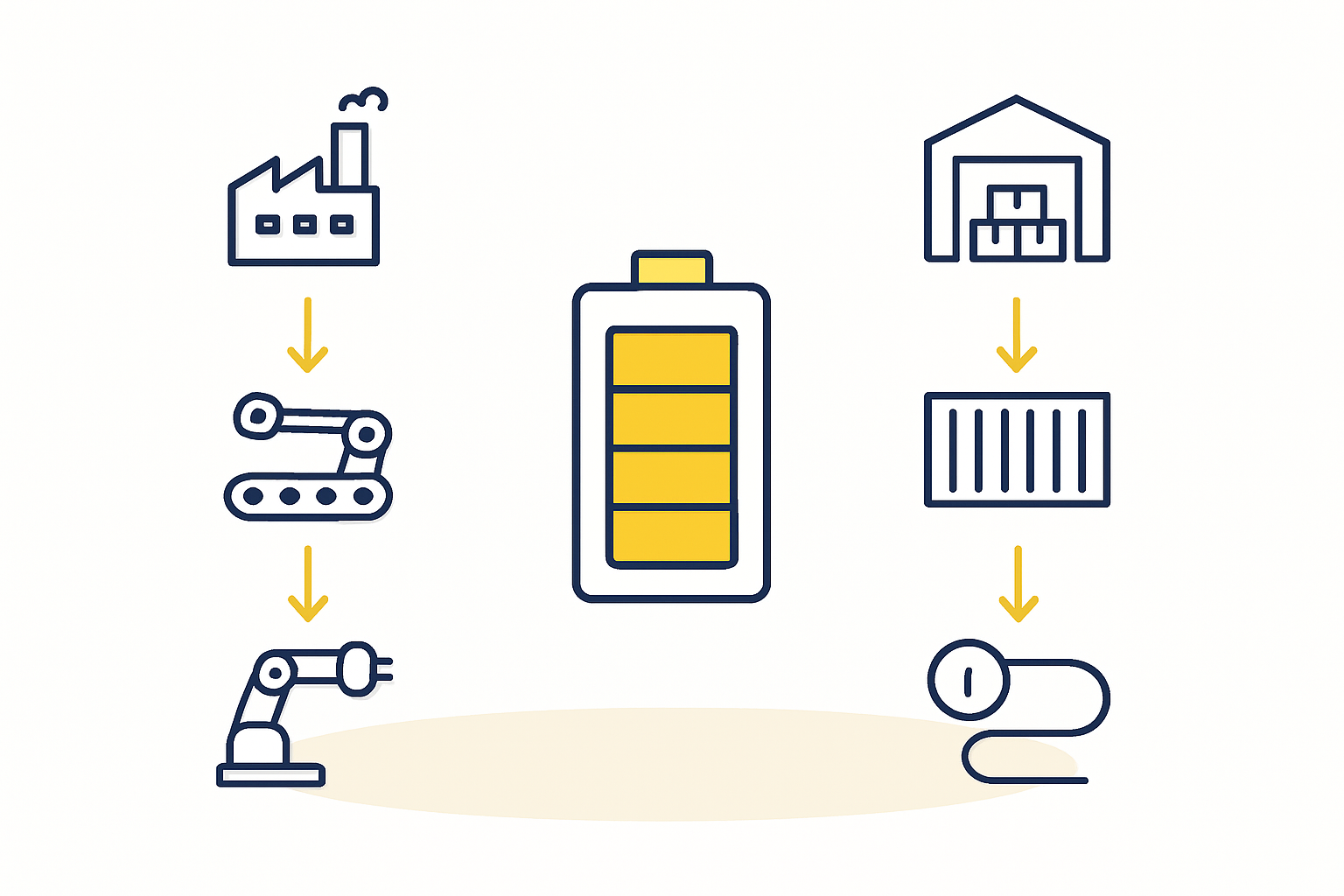
Factory Acceptance Test (FAT)
Conducted at the equipment manufacturer’s premises before shipment, this test verifies that the equipment is built according to design specifications and operates correctly as a standalone unit.
- Location: Equipment manufacturer’s facility
- Timing: Before shipment
- Objective: Verify equipment meets design specifications
- Environment: Controlled, using the supplier’s utilities and materials
- Participants: Buyer’s and supplier’s technical teams
- Scope: Standalone machine performance, build quality
Site Acceptance Test (SAT)
Performed at your factory after installation, this test confirms the equipment was not damaged during transit and performs as expected once integrated with other machinery and local utilities like power, compressed air, and data networks.
- Location: The final operational site (your factory)
- Timing: After installation and commissioning
- Objective: Verify performance within the integrated system
- Environment: Real production environment with your utilities
- Participants: Buyer’s operational and maintenance teams
- Scope: System integration, performance under load

The Complete FAT Process: A Step-by-Step Guide
A successful FAT relies on meticulous planning and clear documentation. While many online resources offer generic checklists, an effective protocol must be tailored to the specific machinery and its role in your production line. The process generally follows these stages:
-
Protocol Development: The buyer and supplier collaboratively create a detailed test plan. This document is the most critical element, defining every check, performance metric, and success criterion.
-
Pre-FAT Checks: The supplier conducts and documents internal pre-testing to ensure the machine is ready for the official FAT, preventing wasted time and resources.
-
Static and Documentary Review: The buyer’s team begins with a visual inspection. This includes verifying the bill of materials (BOM), checking component serial numbers, reviewing electrical and mechanical drawings, and ensuring build quality matches the agreed-upon standards.
-
Functional Testing (Dry Run): The equipment is powered on and operated without production materials. Testers verify safety features like emergency stops, control systems, sensor functionality, and software interfaces.
-
Operational Testing (Wet Run): The machine runs using test materials to simulate real-world conditions. This stage verifies performance metrics such as cycle time, processing speed, and output quality.
-
Punch List and Rectification: Any deviations, errors, or non-conformities are formally documented on a punch list. A plan for correcting these issues must be agreed upon before the FAT can be concluded.
-
Sign-off: Once all punch list items are resolved, both parties sign the FAT protocol, authorizing the equipment for shipment.
The Complete SAT Process: A Step-by-Step Guide
After the equipment is delivered, installed, and commissioned at your facility, the SAT begins. This phase confirms that the machine’s performance, as verified during the FAT, was maintained after transport and that it integrates correctly into the larger production environment.
-
Pre-SAT Checks: Before formal testing, the team verifies that the machine has been installed correctly, all utility connections (electrical, pneumatic, data) are secure, and the area is safe for operation. A visual inspection for any in-transit damage is also performed.
-
Startup and Commissioning: The machine is powered on, and initial commissioning procedures are completed according to the manufacturer’s guidelines.
-
Integration Testing: This is a key differentiator from the FAT. The SAT protocol must include tests that verify the machine’s ability to communicate and interact with upstream and downstream equipment. For a battery assembly line, this could mean testing the handover of modules from a stacking machine to a welding station.
-
Performance Qualification: The equipment runs under normal production conditions for a specified period. This test validates its ability to meet throughput, yield, and quality targets consistently within your factory’s unique operational environment.
-
Documentation and Training: All SAT results are documented. Upon successful completion, the supplier typically conducts training for your operators and maintenance staff.
-
Final Handover: With a successful SAT, the equipment is formally handed over to the production team, concluding the procurement and validation process.

Common Failure Points and How to Avoid Them
Experience from numerous industrial projects, including those documented on pvknowhow.com, shows that several recurring issues can derail the validation process. Proactive management can prevent these common pitfalls.
Vague Test Protocols
An ambiguous protocol with unclear success criteria is the most common cause of disputes. The solution is to define every test parameter, expected result, and measurement tolerance numerically. Avoid subjective terms like ‘acceptable’ or ‘fast enough.’
Inadequate Supplier Preparation
When a supplier has not performed its own pre-testing, the FAT can fail, wasting significant time and travel expenses. The solution is to contractually require the supplier to provide documented evidence of pre-FAT checks before your team travels.
Ignoring Documentation
Focusing only on the physical machine while neglecting to review electrical diagrams, software documentation, or maintenance manuals is a common mistake. The solution is to allocate specific time in the FAT agenda for a thorough documentary review. Incomplete or inaccurate documentation is a valid reason to fail a FAT.
Different Test Conditions
Using materials or utility specifications during FAT that do not match the conditions at your site can lead to performance issues during SAT. The solution is to ensure the test materials and environmental conditions at the FAT are as close as possible to your real production environment.
The Rise of Remote FAT (rFAT): Adapting to New Realities
Travel restrictions and a desire for efficiency have accelerated the adoption of remote Factory Acceptance Testing (rFAT). While not a perfect substitute for in-person inspection, a well-structured rFAT can be an effective validation tool, particularly for less complex or standardized equipment.
Key considerations for a successful rFAT include:
-
Technology: High-quality, multi-camera video streaming is essential. This may include fixed overview cameras, mobile cameras operated by a technician, and even wearable cameras to provide a first-person view.
-
Communication: A clear communication protocol with dedicated channels for audio and data exchange is critical for directing on-site technicians effectively.
-
Data Integrity: A secure method for sharing real-time performance data, screen captures from the HMI, and high-resolution photos of key components is essential for verification.
-
Protocol Adaptation: The test protocol must be adapted for remote execution, with clear instructions on what needs to be shown on camera and for how long.
Frequently Asked Questions (FAQ)
-
Who should attend the FAT?
The team should include a process or manufacturing engineer who understands the equipment’s function, a quality control specialist to verify output standards, and a maintenance technician who will be responsible for the machine long-term. For complex equipment, a controls or automation engineer should also be present. -
What happens if a machine fails the FAT?
If minor issues are found (Category B punch list items), they can often be rectified within a day or two, followed by a re-test of the failed component. If major non-conformities are discovered (Category A), the FAT is typically suspended. A plan for rectification is agreed upon, and a second FAT is scheduled at the supplier’s expense. The equipment should never be approved for shipment until all Category A items are resolved. -
How detailed should the test protocol be?
The protocol should be exhaustive. It should list every single function, safety feature, and performance metric to be tested. Each test item should have a corresponding line for the expected result, the actual result, a pass/fail designation, and a space for comments. The goal is to create an objective, auditable record of the machine’s performance against the contract. -
Are FAT and SAT mandatory for battery production lines?
While not always legally mandated, they are an indispensable best practice in industrial project management. For a complex, integrated system like a battery production line—where the failure of one machine can halt the entire process—skipping FAT and SAT introduces an unacceptable level of financial and operational risk.
Conclusion: Validation as an Investment, Not an Expense
Executing a thorough FAT and SAT requires an upfront investment of time and resources. However, this investment pales in comparison to the potential costs of resolving major equipment flaws on-site. By treating equipment validation as a critical part of the investment process, project leaders can ensure their facility is built on a foundation of reliable, high-performing machinery. This paves the way for a faster, smoother start to production and a more predictable return on investment.