
Two leading American universities are embracing solar power, setting a powerful example for sustainability in higher education. Princeton University is increasing its solar capacity with four new installations across its New Jersey campus, while Northeastern University has just completed a major rooftop solar initiative at its Snell Library in downtown Boston.
Princeton University Partners with Brightcore Energy for Campus Solar Integration
Princeton University has announced plans to install solar rooftop and canopy-mounted structures across its campus in Princeton, New Jersey. Brightcore Energy, a company specializing in renewable energy solutions for commercial and institutional sectors, is leading the projects in partnership with Princeton’s facilities organization.
According to a report by BusinessWire, the initiative includes four arrays—two on rooftops and two as canopies—with a total capacity of approximately 2.2MWdc. Rooftop installations are slated for the Tiger and Cub buildings, while canopy-mounted arrays will grace the Meadows and Stadium garages.
Princeton’s Solar Capacity and Environmental Impact
Comprising 4,039 panels, these arrays are projected to generate roughly 2,588 MWh of electricity annually. According to the university’s release, construction is expected to begin in the summer of 2024.
Once operational, the solar arrays are expected to offset approximately 1,834 metric tons of CO2 emissions per year. This project aligns with Princeton University’s commitment to achieving net-zero carbon emissions by 2046, a key part of its Sustainability Action Plan, which emphasizes adopting renewables as the primary campus energy source.
Mike Richter, President of Brightcore, expressed pride in being selected for the project, lauding Princeton University for its rigorous standards and visionary sustainability goals. He emphasized the institution’s leadership and his excitement about contributing to its ambitious sustainability agenda.
Northeastern University Completes Rooftop Solar Project
Meanwhile, in Boston, clean technology integrator Ameresco, Inc. has completed a significant solar project for Northeastern University. The new on-grid rooftop solar system, installed atop the historic Snell Library, has a capacity of 157.78 kWp DC and helps power the building, which serves over two million visitors a year.
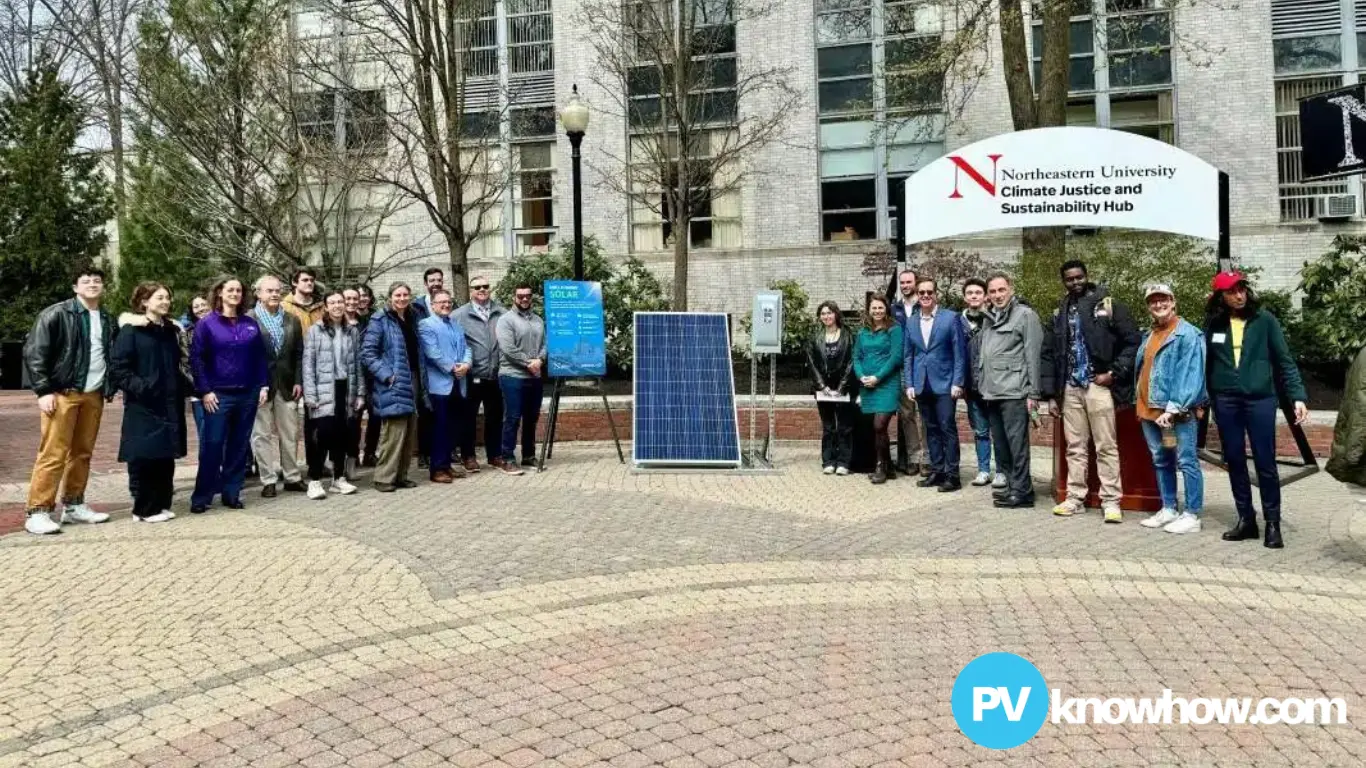
Operational since March 13, 2024, the system is expected to offset 146 metric tons of carbon (CO2) emissions annually, Ameresco announced via Smart Energy Decisions. Located in downtown Boston, the Snell Library installation highlights Northeastern’s focus on decarbonizing its campus with environmentally responsible strategies. The project showcases the innovative integration of urban on-grid solar PV technology and underscores how clean energy can help drive sustainability in community hubs.
Northeastern University Marks Milestone with Solar Installation Celebration
To honor the installation, Northeastern University hosted a “flip the switch” ceremony on April 2, 2024, at the Snell Library Quad. Speakers at the event included Michael Williamson from Ameresco, Leah Bamberger from Northeastern’s Climate Justice and Sustainability Hub, Dan Cohen, the Vice Provost for Information Collaboration and Dean of the University Library, and a current Northeastern student.
Pete Christakis, Executive Vice President of Ameresco’s East Region, underscored the project’s significance for Northeastern University’s decarbonization journey. “This solar installation represents a key milestone on Northeastern University’s path to decarbonisation, and Ameresco is honoured to partner with the University on their journey,” he noted.
Leah Bamberger, Executive Director of Northeastern’s Climate Justice and Sustainability Hub, emphasized the project’s role in the university’s broader goal of eliminating harmful emissions from its buildings. “This project comes at an important time as we are developing plans to fully decarbonize our buildings and eliminate harmful emissions,” she said.
As universities continue to prioritize sustainability and renewable energy, initiatives like these set an example for campuses worldwide, demonstrating the potential of solar energy to drive meaningful environmental change.