For entrepreneurs eyeing the African solar market, Kenya represents a prime opportunity. The country has high solar irradiation, a growing economy, and an increasing demand for reliable energy. However, the initial capital required for a manufacturing facility can be a significant barrier.
To address this, the Kenyan government offers a suite of financial incentives for businesses in Kenya, particularly for 2025 and beyond, designed to attract investment in local solar production. These policies aren’t just abstract promises; they are concrete, legislated advantages that can transform the financial outlook of a new solar module factory. This article outlines the key incentives available and explains their practical business advantages.
Why the Kenyan Government is Prioritizing Local Solar Production
Understanding the motivation behind these incentives is crucial for any investor. Kenya’s support for solar manufacturing is not an isolated policy but a core component of its long-term national strategy.
Key drivers include:
- Kenya Vision 2030: This national development blueprint identifies manufacturing as a key pillar for economic growth. Localizing the production of high-value goods like solar panels directly contributes to this goal.
- Energy Security and Access: By encouraging local production, the government aims to reduce its reliance on imported solar modules, stabilize supply chains, and accelerate rural electrification.
- Job Creation: A solar module assembly plant creates skilled and semi-skilled jobs for engineers, technicians, and assembly line workers. A typical 20–50 MW factory can directly employ 30 to 60 people.
- Regional Hub Status: Kenya is positioning itself as an economic leader in East Africa. A strong domestic solar manufacturing base allows it to export to neighboring countries, strengthening its trade position.
These strategic priorities have led to a robust framework of financial support for businesses willing to establish production facilities in the country.
Key Financial Incentives for New Solar Manufacturing Operations
Investors can leverage several layers of government support, primarily focused on reducing capital expenditure (CapEx) and operational taxes during the critical early stages.
Tax Exemptions and Reductions
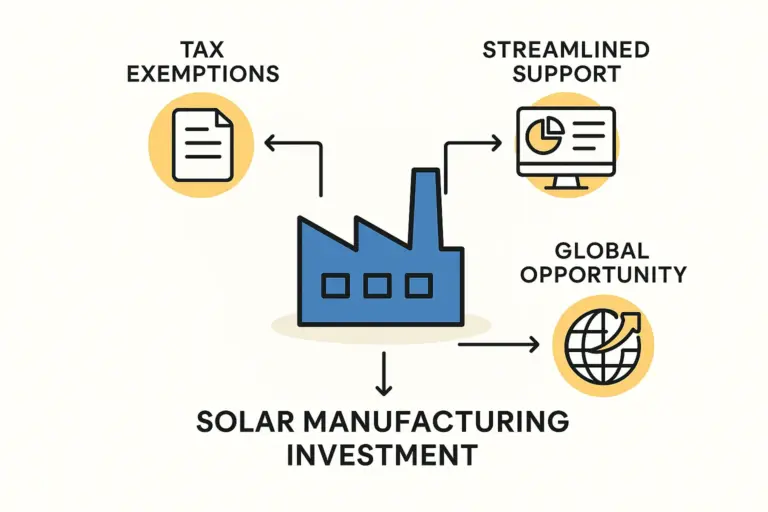
One of the most direct financial benefits comes from significant tax relief. Through various Finance Acts, the Kenyan government has established clear exemptions for the renewable energy sector.
- Value Added Tax (VAT) Exemption: All solar equipment—including specialized assembly machinery and the final solar modules—is exempt from the standard 16% VAT. This provides an immediate, substantial cost saving.
- Import Duty Waivers: Crucially, essential machinery, equipment, and raw materials (like solar cells, EVA film, and backsheets) that must be imported are eligible for an exemption from customs duties. This alone can reduce the initial machinery investment by 15–25%.
- Investment Deduction Allowance (IDA): This powerful incentive allows a business to deduct a significant portion of the cost of new machinery and buildings from its taxable income. The current rate allows for a 100% deduction of the investment value, spread over several years, lowering the corporate tax burden during the critical initial years.
The Strategic Advantage of Special Economic Zones (SEZs)
For investors planning a significant operation, establishing the factory within a designated Special Economic Zone (SEZ) offers an exceptional package of benefits. SEZs are specific areas with business laws designed to attract foreign direct investment.
Benefits of operating within a Kenyan SEZ include:
- Corporate Tax Holiday: A 0% corporate tax rate for the first 10 years of operation, followed by a reduced rate of 15% for the next 10 years (compared to the standard 30%).
- Exemption from All Taxes and Duties: This covers all taxes on imports for construction and production, including VAT and excise duty, for goods and services supplied to the SEZ.
- Streamlined Infrastructure: SEZs typically provide reliable access to power, water, and transport logistics, mitigating common operational challenges.
- One-Stop-Shop Service: SEZ authorities often provide a single point of contact for facilitating all necessary permits and licenses, drastically reducing administrative burdens.
An industrial park in Kenya, illustrating the modern infrastructure available in designated Special Economic Zones.
Ready to make big Profits?
The solar Industry is Booming
WE HELP NEWCOMERS to the solar industry start their own solar module production line. Customers can make BIG PROFITS by selling modules and finding investors, without wasting money and time on things they don't need!
Streamlined Support and Facilitation
Beyond direct financial incentives, the government has established agencies to simplify the investment process. The Kenya Investment Authority (KenInvest) acts as the primary facilitator for new investors, helping them navigate regulations, assist with company registration, and provide guidance on acquiring licenses—making the setup process more predictable and efficient.
Translating Policy into a Practical Business Case
These incentives become tangible when applied to a real-world business case. Consider a new 50 MW solar module assembly line. The VAT and import duty exemptions on core machinery—such as the laminator, cell stringer, and framing station—could result in upfront savings of hundreds of thousands of dollars.
This preserved capital offers a significant strategic advantage. It can be reallocated to other critical areas, such as advanced quality control equipment, extensive staff training, or securing a larger initial inventory of raw materials. This financial breathing room is crucial during the setup of a solar module factory, transforming a project from marginally profitable to highly attractive.
Common Questions for Investors Exploring the Kenyan Market
How stable are these government incentives?
These incentives are anchored in long-term national policies like Vision 2030 and supported by legislation such as the Investment Promotion Act and the SEZ Act. The government’s strategic commitment to manufacturing and renewable energy provides a strong foundation for their continuity.
Are these benefits only for large-scale factories?
No. While SEZs are geared towards larger investments, tax and duty exemptions apply to any registered business in the sector. A smaller-scale, semi-automated assembly line of 10–20 MW can equally benefit from the VAT and duty waivers on its imported equipment.
What are the “local content” requirements?
Currently, there are no stringent, mandated local content percentages for private solar manufacturing. However, the government strongly encourages it. Demonstrating a plan to use local suppliers and hire Kenyan nationals will strengthen an investment proposal and foster goodwill with regulatory bodies.
Is technical expertise available locally in Kenya?
Kenya has a growing pool of university-educated engineers and technicians. However, specialized knowledge in solar module manufacturing is still developing. Successful projects typically involve an initial phase of training local staff, often led by an experienced international partner, to establish a sustainable, high-quality operation.
Your Next Steps in Evaluating the Kenyan Opportunity
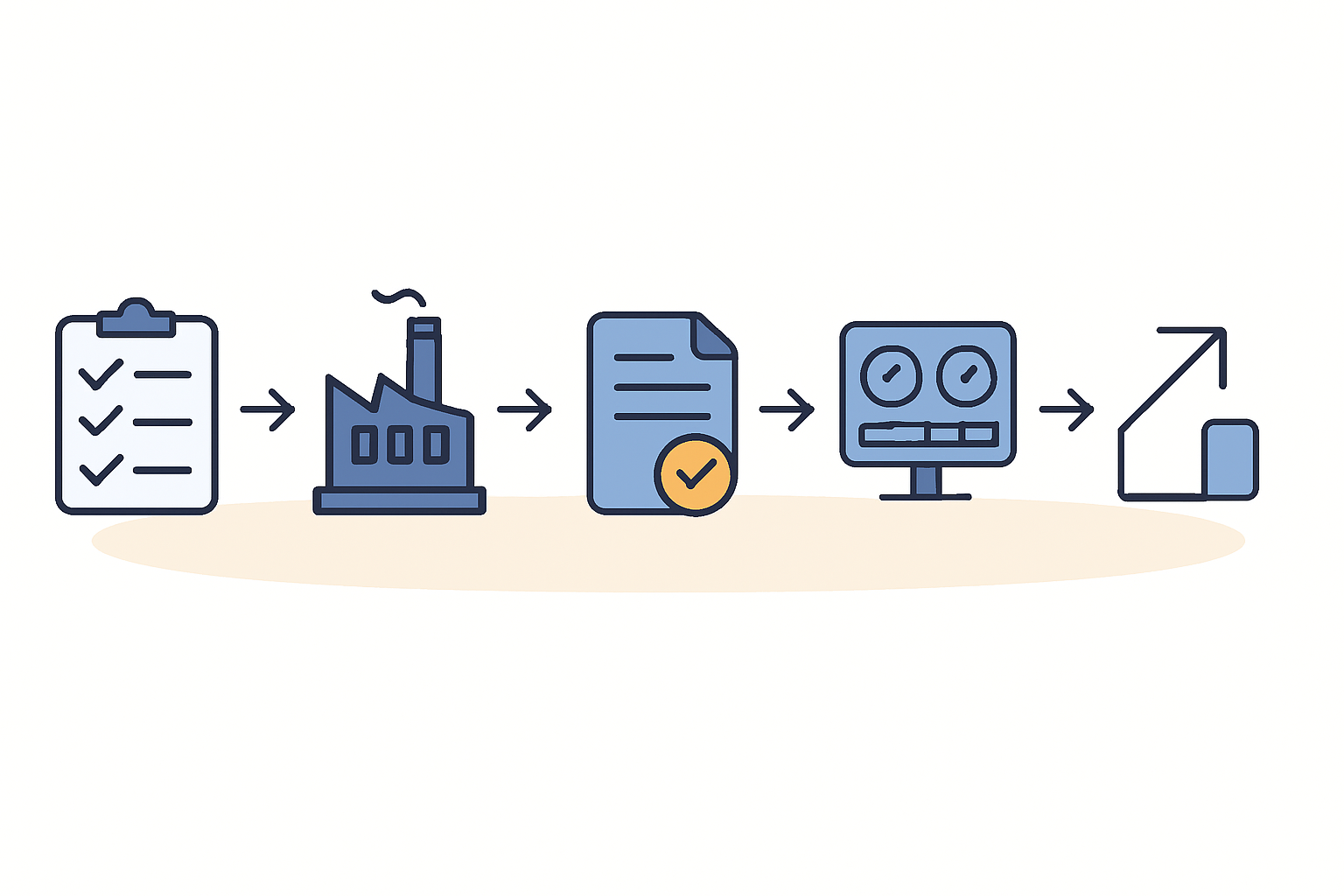
The Kenyan government’s multi-layered incentive structure directly addresses the primary financial hurdles of launching a solar module factory. The combination of tax holidays, duty exemptions, and administrative support demonstrates a clear and serious intent to build a domestic solar manufacturing industry.
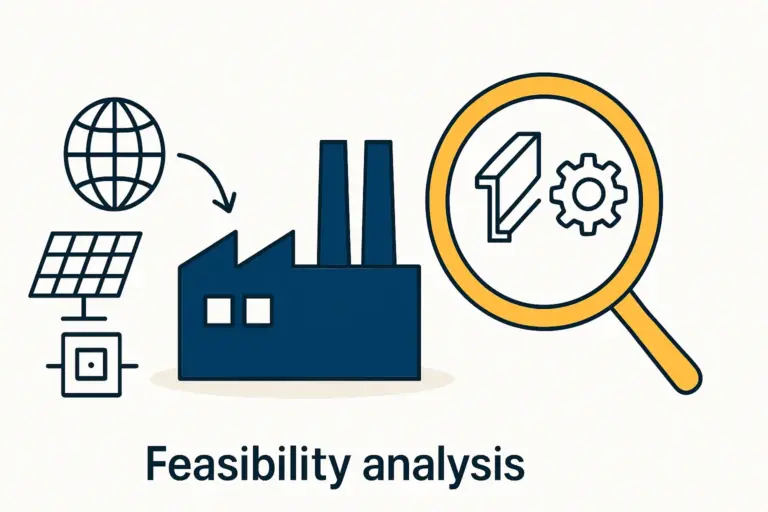
For any entrepreneur exploring this opportunity, a detailed feasibility study and business plan are essential to quantify these benefits for your specific project. To build a robust investment case that fully leverages this powerful government support, the structured e-courses on pvknowhow.com can provide a comprehensive framework to guide you through this critical planning phase.
Access the downloadable PDF on Kenyan incentives for solar manufacturers.