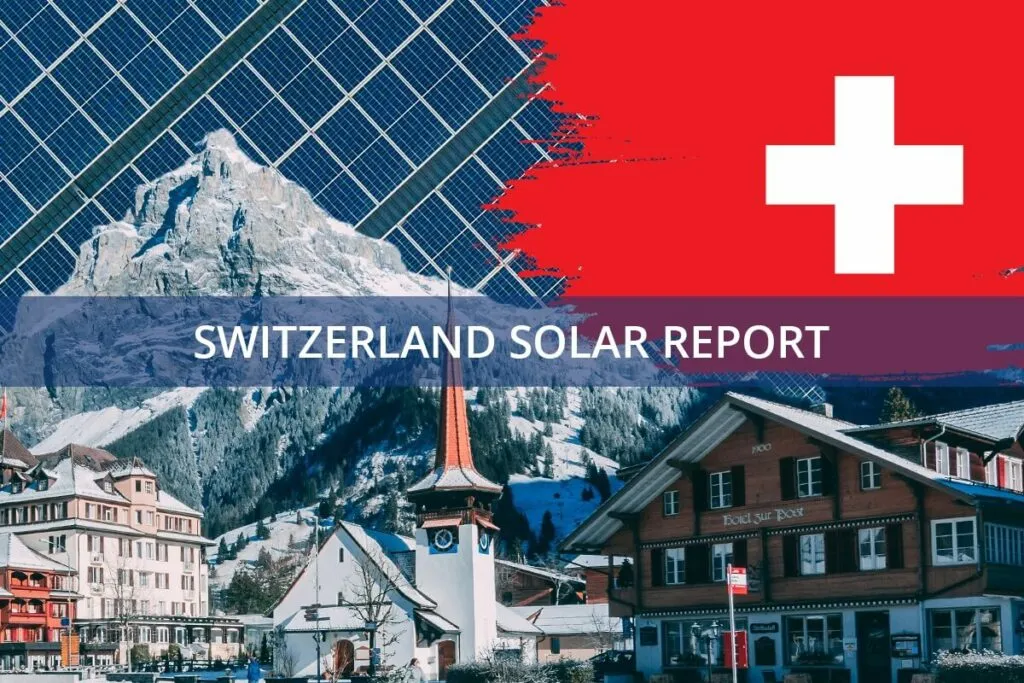
Switzerland is set to launch a tender for 1.6 GW of solar capacity in 2025, marking one of its most ambitious annual expansions to date and a significant step in its renewable energy efforts. The Swiss Federal Office of Energy (SFOE) has announced plans to hold two tenders next year, each for 800 MW of capacity, as part of a broader Switzerland solar initiative aimed at boosting energy independence.
Focus on Alpine Regions for Switzerland solar capacity
The tender will include alpine solar projects, which will receive preferential treatment, and ground-mounted solar projects that require a concession contract with the federal government. This focus is strategic, as high-altitude installations benefit from stronger solar irradiation and can be highly productive during winter months, often above the fog layer that can limit output in the lowlands. The SFOE will accept bids for the first round from March 1 to March 31, 2025, and for the second round from September 1 to September 30, 2025.
Projects located in alpine areas will be eligible for a substantial 60% subsidy of their investment costs, while other projects will receive a 40% subsidy. To encourage significant developments, each project must have a minimum capacity of 100 kW.
Progress From Previous Tenders in Switzerland solar capacity
This initiative builds on Switzerland’s previous efforts to expand its solar capacity. In 2024, the SFOE allocated 250 MW of capacity in two tenders, with 150 MW awarded in the first round and 100 MW in the second. The success and learnings from these smaller rounds have paved the way for the significantly larger capacity being offered in 2025.
The first round of 2024 saw 15 projects awarded, with winning bids ranging from CHF 0.08 ($0.087) per kWh to CHF 0.117 per kWh. All of these projects were located in alpine regions, demonstrating strong interest in high-altitude solar development.
The second round of 2024 attracted 18 bids, with 12 projects eventually selected. The winning bids ranged from CHF 0.079 per kWh to CHF 0.106 per kWh, with two projects located in alpine areas. The selected projects had power outputs ranging from 1 MW to 25 MW.
Switzerland’s Renewable Energy Goals for solar capacity
Switzerland’s solar strategy is part of a broader push to meet its renewable energy targets. While the country aims to have 35 TWh of solar capacity by the end of the decade, it is also aiming for 24 TWh of annual generation by 2040 to secure its long-term energy supply. To reach these targets, the country must significantly increase its annual installations. This tender represents a clear acceleration, as between 2020 and 2024, Switzerland installed an average of 1.2 GW of new solar capacity each year.
However, this rapid expansion is not without its difficulties. The Swiss solar industry has faced a slowdown due to supply chain disruptions and a shortage of skilled workers, which could pose challenges to project timelines. To ensure progress is distributed effectively across the nation, Swiss cantons will set their own unique 2025 targets, creating a framework for localized accountability.
In 2023, Switzerland added 1.9 GW of new photovoltaic capacity, reaching a total of 6.8 GW. Despite this growth, solar energy accounted for only 7.6% of the country’s electricity consumption last year, highlighting the need for continued acceleration. The success of these projects depends on a robust supply chain, covering everything from the basics of solar panel manufacturing to the intricate solar panel manufacturing process itself. Understanding the necessary solar panel raw materials and the specialized solar panel manufacturing machines involved provides a clearer picture of the industrial scale required to meet these goals.
The 2025 tender is expected to significantly boost Switzerland’s solar capacity, bringing the country closer to its renewable energy goals. This move is a strategic investment in energy security, reducing reliance on imported energy, especially during critical winter months. By focusing on alpine regions and offering substantial subsidies, the tender aims to unlock the potential of large-scale solar projects. The solar panel manufacturing plant cost breakdown for such projects highlights the significant investment the country is encouraging to advance its clean energy transition.
As Switzerland pushes forward with these ambitious plans, understanding the fundamentals of solar technology becomes increasingly important. To learn more about how solar panels are made and the industry behind them, consider enrolling in our free e-course on solar manufacturing.