Voltalia Launches Hybrid Solar-Storage Plant Construction in French Guiana
In a significant move for renewable energy infrastructure, Voltalia has announced the start of construction on a new hybrid solar and battery storage plant in French Guiana. This project, located in the remote town of Maripa-Soula, underscores the growing global trend of combining power generation with energy storage to ensure a stable and reliable green electricity supply.
Project Snapshot: The Maripa-Soula Plant for French Guiana solar storage
The new facility is designed to be a cornerstone of the region’s energy supply. It initially features a 10.8 MW solar farm coupled with a substantial 20.6 MWh battery storage system. This combination is powerful: the solar panels generate clean electricity during the day, and the battery system stores excess energy to supply power consistently, even after sunset or during cloudy periods.
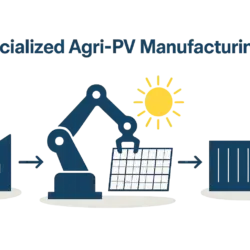
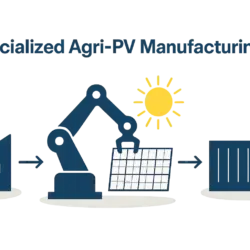
Voltalia also has plans for future expansion, aiming to increase the solar capacity to 12 MW. This forward-thinking approach highlights the scalability of such projects. The intricate solar panel manufacturing process that produces the panels for farms like this involves sophisticated technology and a deep understanding of the basics of solar panel manufacturing. Every component, from the core solar panel raw materials to the finished module, is crucial for achieving the efficiency needed for utility-scale generation.
What This Means for the Bigger Picture—and for Germany French Guiana solar storage
While a power plant in South America might seem distant, projects like Maripa-Soula are important indicators of global energy trends that directly impact homeowners and tenants in Germany. This project serves as a large-scale proof of concept for the reliability and effectiveness of solar-plus-storage solutions. The very same model is being adopted across Germany, not just by utility companies, but by individuals looking to reduce their reliance on the grid and lower their electricity bills.
The announcement comes as France overhauls its own energy market, scrapping the Arenh mechanism to promise more stable electricity prices through 2027. This reflects a broader European shift towards securing energy independence and price stability through renewables. For German residents, this trend reinforces the value of investing in rooftop solar and home battery systems. By generating and storing their own power, they can insulate themselves from market volatility and contribute to the Energiewende (energy transition).
The decreasing costs that make residential solar viable are driven by innovations in utility-scale projects. Advances in solar panel manufacturing machines and efficiencies in the supply chain, which are reflected in the overall solar panel manufacturing plant cost breakdown, ultimately make solar technology more accessible for everyone.
Voltalia’s project in French Guiana is more than just a new power plant; it’s a blueprint for a resilient, decentralized, and clean energy future. It showcases how technology can overcome geographical challenges to provide stable power, a lesson that applies equally to remote towns and urban households in Germany.
If you’re inspired to learn more about how solar technology works and how you can be a part of this energy revolution, consider enrolling in our free e-course to deepen your understanding.