
A new solar module factory stands ready. The machinery is commissioned, the staff is trained, and the first major orders are secured. Yet, the production line is silent. A critical shipment of solar cells, delayed by just two weeks due to port congestion thousands of miles away, has brought the entire multi-million dollar operation to a standstill. This scenario is all too common for new entrants, and it highlights a critical lesson: in manufacturing, consistent operation is paramount.
A buffer stock, or safety stock, of critical components isn’t merely an operational detail—it’s a strategic investment in business continuity. This article provides a quantitative framework for business leaders to determine optimal inventory levels by balancing the cost of holding stock against the far greater cost of production stoppages.
Why “Just-in-Time” is a High-Risk Strategy for New Solar Factories
In many mature industries, the “Just-in-Time” (JIT) manufacturing model, where materials arrive exactly when needed, is praised for its efficiency. It minimizes capital tied up in inventory and reduces warehousing costs. For a new solar module factory, however, especially one in an emerging market, adopting a strict JIT approach can be a high-risk gamble.
Recent global events have exposed the fragility of international supply chains. The solar value chain, heavily concentrated in a few regions, is susceptible to disruptions ranging from shipping delays to geopolitical tensions. This creates a phenomenon known as the “bullwhip effect,” where small fluctuations in demand at the factory level can trigger massive, unpredictable swings in supply from component manufacturers.
For an entrepreneur in Africa, the Middle East, or Latin America, relying on a JIT model means placing immense trust in a long and complex logistics chain. A container delayed in customs, a vessel rerouted, or a supplier facing a temporary shutdown can halt production for weeks. The resulting financial and reputational damage can far outweigh any savings from maintaining minimal inventory. This reality calls for a more resilient approach.
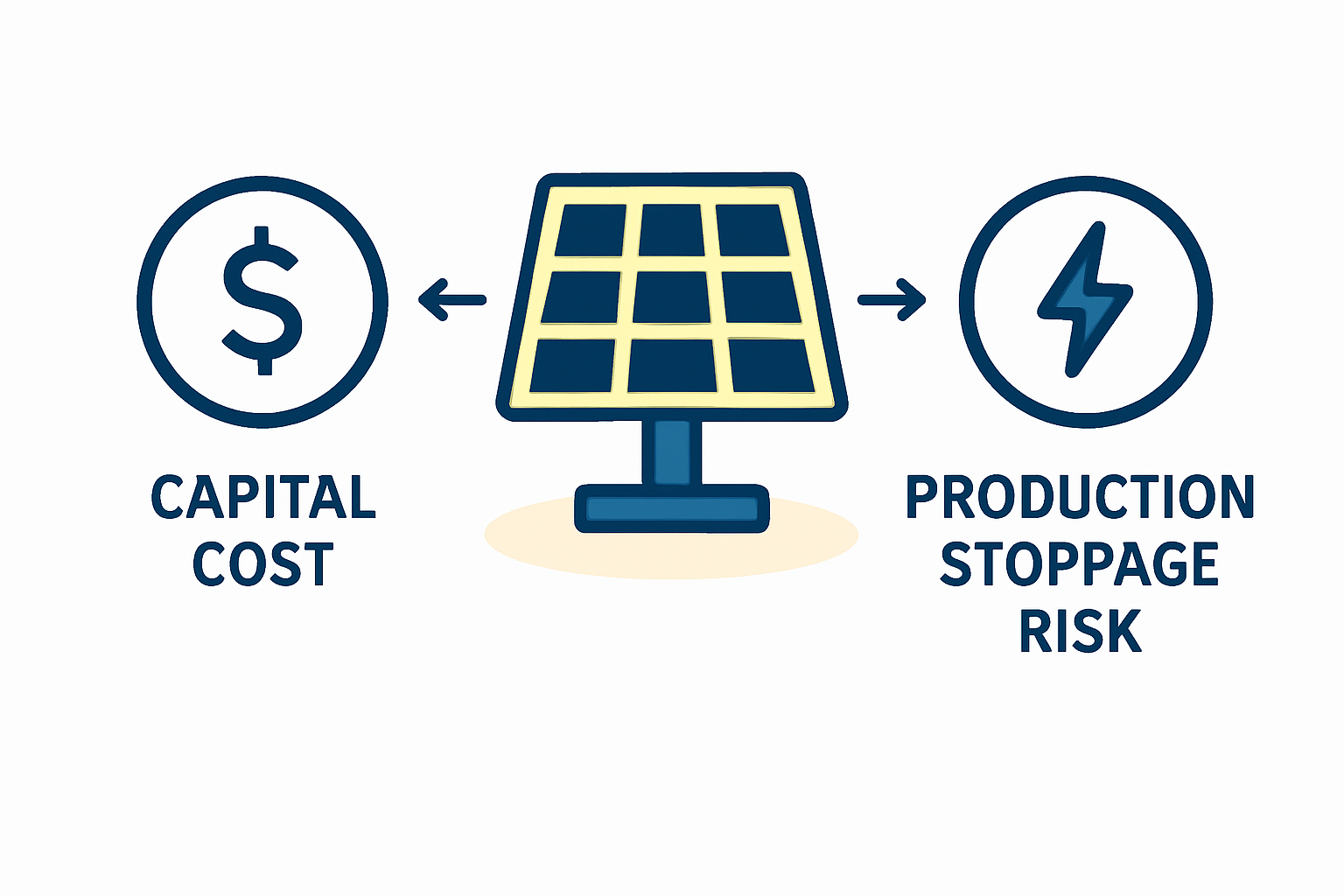
The Core Trade-Off: Capital Costs vs. Production Stoppage Costs
Determining the right level of buffer stock involves a careful balancing act between two opposing financial pressures.
The Cost of Carrying Inventory
Holding physical stock creates direct and ongoing costs for the business. These include:
- Tied-Up Capital: Money invested in inventory is capital unavailable for other purposes, such as marketing or R&D.
- Warehousing & Insurance: Storing components requires secure, often climate-controlled space, incurring costs for rent, utilities, and insurance.
- Risk of Obsolescence: Solar technology evolves rapidly. Holding too many solar cells for too long risks them being superseded by a newer, more efficient generation.
- Handling & Spoilage: Components like EVA film have a limited shelf life and require specific storage conditions to prevent degradation.
The Cost of a Stockout
While carrying costs are predictable, the cost of a stockout—running out of a critical component—can be catastrophic and less immediately obvious. These costs include:
- Lost Revenue: Every hour the production line is idle is an hour of lost output and lost sales.
- Fixed Cost Inefficiency: The factory’s fixed costs—salaries, rent, utilities, machine depreciation—continue to accrue even when production is idle.
- Contractual Penalties: Failure to meet delivery deadlines for committed orders can trigger financial penalties.
- Reputational Damage: Repeatedly failing to deliver on time erodes customer trust and can harm long-term business prospects.
Experience from numerous turnkey projects shows that the cost of a single week of unplanned production downtime can easily exceed the cost of carrying an extra month’s worth of key components.
A Framework for Calculating Buffer Stock Levels
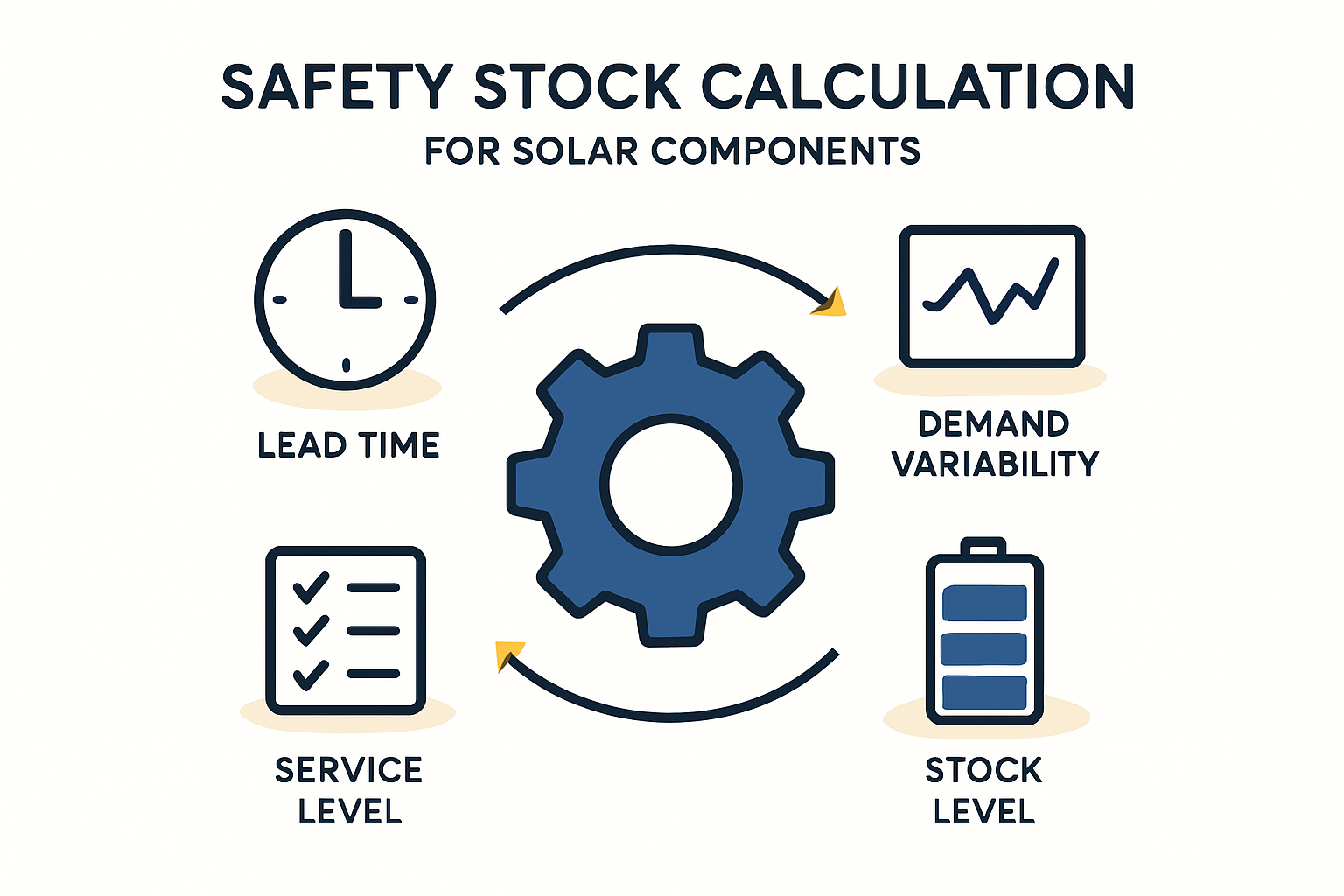
While precise calculation requires sophisticated modeling, a straightforward formula provides a robust starting point for strategic planning. The formula quantifies the inventory needed to cover variability in both your consumption rate and your supplier’s delivery time.
The formula is:
Safety Stock = (Maximum Daily Usage × Maximum Lead Time) – (Average Daily Usage × Average Lead Time)
Let’s break down each element:
- Maximum Daily Usage: The highest number of units (e.g., solar cells, m² of glass) your factory would consume on a peak production day.
- Maximum Lead Time: The realistic worst-case scenario for a component to travel from the supplier’s warehouse to your factory floor, measured in days. This must include manufacturing time, ocean freight, port handling, customs clearance, and inland transport.
- Average Daily Usage: Your standard, expected daily consumption of the component.
- Average Lead Time: The typical, expected time for delivery in days.
Applying the Framework to Critical Components
This framework helps establish baseline buffer levels for the most critical materials.
Solar Cells
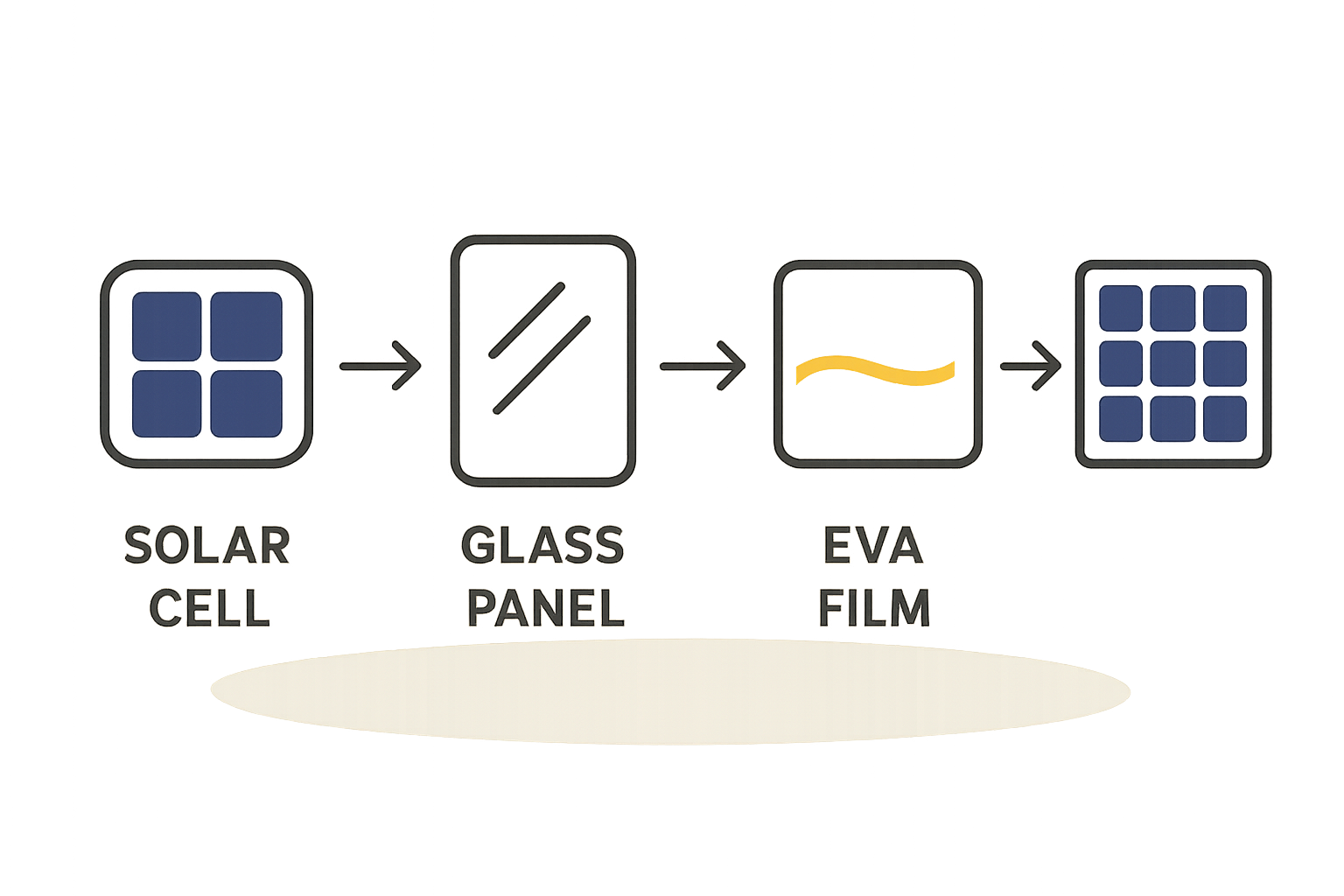
As the most valuable and technologically sensitive component, solar cell inventory requires careful management. Lead times from major Asian suppliers can be long and variable, making a strategic buffer essential. Exploring the different solar cell technologies available will also inform purchasing and stocking decisions. For most new factories, a buffer stock equivalent to 3–4 weeks of planned production provides a reasonable shield against common supply disruptions.
Solar Glass and Backsheets
These materials are bulky and can be costly to ship and store. While local sourcing may be an option in some regions, quality and availability can be inconsistent. If importing, the lead times for these materials are comparable to those for solar cells. A 2–4 week buffer is a prudent starting point here as well.
EVA or POE Film
This encapsulant film is fundamental to the solar lamination process, which bonds the module components together. It is also sensitive to storage conditions and has a defined shelf life. Holding a 3–4 week supply helps ensure production continuity without risking material degradation from excessively long storage.
Beyond the Formula: Qualitative Factors to Consider
The calculation provides a quantitative baseline, but the final decision must be tempered with business judgment and an understanding of local context.
- Supplier Reliability and Diversification: Are you sourcing from a single, well-established supplier or multiple, newer ones? Having at least two qualified suppliers for critical components can significantly reduce risk, potentially allowing for slightly lower buffer stocks.
- Logistical & Geopolitical Stability: This is where local knowledge is key. A factory operating in a region with efficient ports and stable trade policies faces different risks than one in a location known for customs delays or political instability. The “Maximum Lead Time” in your calculation must honestly reflect these local realities.
- Demand Volatility: A factory with a stable, long-term order book can operate with a leaner inventory than one serving a highly fluctuating project market. Unpredictable demand requires a larger buffer to respond to sudden increases in orders.
A Practical Example from a J.v.G. Project
A client establishing a 40 MW factory in the Middle East initially budgeted for a lean, two-week buffer stock to minimize upfront capital expenditure. An analysis, drawing on J.v.G. Technology’s data from regional projects, revealed that average customs clearance times were seven days longer than the client had assumed, with a maximum observed delay of 20 days.
Based on this analysis, we recommended increasing the initial buffer for solar cells and glass to four weeks. Eight months into operation, a regional port strike delayed a key shipment by 16 days. While competitors in the area were forced to halt their lines, the client’s factory continued at full capacity, fulfilling a time-sensitive order and securing a valuable long-term contract as a result. The additional investment in inventory proved to be a critical strategic advantage.
Frequently Asked Questions (FAQ)
What is the difference between buffer stock and safety stock?
In practical business discussions, these terms are often used interchangeably. Both refer to inventory held in reserve to protect against uncertainty in supply and demand.
How much capital should I budget for initial buffer stock?
This is a significant figure to plan for. For a typical 20-50 MW factory, the value of the initial 3-4 week buffer of critical materials can range from $250,000 to over $1,000,000 USD, depending on the specific technology and component prices. This figure should be a dedicated line item in any comprehensive solar factory business plan.
Can I reduce the need for high buffer stock over time?
Yes. As your operation matures, you can take steps to lower inventory levels safely. These include developing strong relationships with reliable suppliers, improving your demand forecasting accuracy, and working with experienced logistics partners to streamline your supply chain. For a new enterprise, however, starting with a more conservative (higher) buffer is a prudent risk management strategy.
Does the type of module technology (e.g., PERC, TOPCon, HJT) affect buffer stock strategy?
It can. Newer technologies, such as TOPCon or HJT, may have a smaller pool of qualified cell suppliers. This reduced supplier base can make the supply chain more volatile than that for established technologies like PERC. Consequently, a slightly larger buffer for these newer cell types may be advisable until their supply chains mature.
Conclusion: From Inventory Cost to Strategic Asset
For entrepreneurs entering the solar manufacturing space, the crucial mental shift is to view buffer stock not as a regrettable cost but as a strategic asset. It is an insurance policy against a volatile global supply chain, ensuring your significant investment in machinery and people can operate continuously and generate revenue.
The optimal inventory level is not a single number but a dynamic strategy, tailored to your factory’s specific location, suppliers, and risk appetite. By planning for this buffer methodically, you build a resilient foundation for a sustainable and profitable manufacturing business. The structured planning support available through resources like pvknowhow.com can help integrate this critical element into your overall business strategy from day one.