
Signing the contract for a new solar module factory is a significant achievement. For many professionals entering the photovoltaic space, this achievement quickly raises a critical question: What happens next? The journey from a signed agreement to a fully operational production line is a structured process that often moves faster than many anticipate.
Global solar PV capacity grew by a record 239 GW in 2022 alone, and the demand for local manufacturing has never been stronger. Entrepreneurs see the opportunity to build supply chain resilience and create significant economic value. A successful project, however, depends on a clear understanding of the implementation timeline. Misaligned expectations for equipment delivery, installation, and commissioning can create unnecessary risks and delays.
This article provides a transparent, phase-by-phase overview of a typical 9-12 month project timeline for installing a turnkey solar manufacturing line. It outlines key milestones, payment structures, and responsibilities for both the equipment supplier and the investor, ensuring a predictable path from initial investment to final production.
The Four Phases of a Turnkey Project Lifecycle
Based on data from numerous completed turnkey projects, the installation of a 50 MW solar module factory typically breaks down into four distinct phases. While timelines can vary based on factors like customs clearance and the client’s site readiness, this framework represents a reliable industry standard.
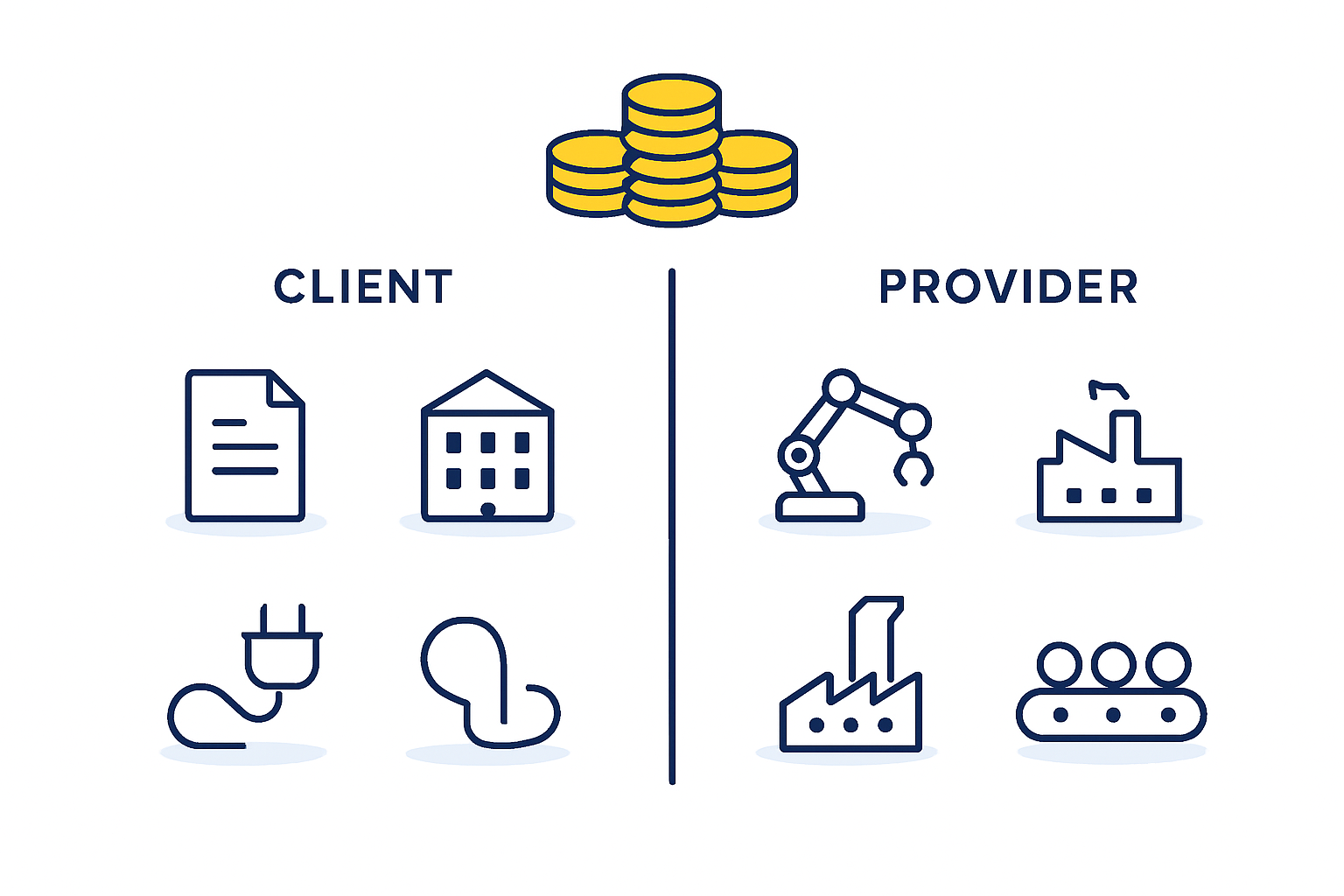
The process is designed for clarity and to mitigate risk, with specific milestones and payment schedules that align with tangible progress. The typical payment structure is 30% upon contract signature, 60% upon the equipment’s readiness for shipment, and the final 10% upon successful commissioning and acceptance.
Phase 1: Contract Signature and Down Payment (Month 0-1)
The formal signing of the supply contract marks the official start of the project. This is also when the initial 30% down payment is typically made. This crucial first step allows the turnkey partner to secure production slots for all long-lead-time machinery, such as laminators and stringers, effectively locking in the project schedule with various sub-suppliers.
While the equipment supplier begins procurement, the investor must handle several critical responsibilities. Completing this work in parallel is essential for preventing delays later in the project. Key client-side activities during this phase include:
- Finalizing the building: Ensuring the facility meets all structural, electrical, and HVAC requirements.
- Preparing the site: Completing any necessary civil works according to the agreed-upon factory layout.
- Securing utilities: Arranging for stable and sufficient electricity, compressed air, and other necessary connections.
A dedicated project manager on the client’s side is vital for coordinating these local activities and ensuring the site is ready when the equipment arrives.
Phase 2: Equipment Manufacturing and Factory Acceptance Test (FAT) (Month 2-6)
During this period, the various equipment suppliers manufacture, assemble, and prepare all the machines for the solar panel production line. This is the longest phase of the project, as it involves the precise engineering and construction of highly specialized technology.
Towards the end of this phase, one of the most important risk-mitigation steps is the Factory Acceptance Test (FAT). The FAT is a comprehensive series of tests conducted at the manufacturer’s facility before the equipment is shipped. The client, or their representatives, are invited to witness these tests.
The purpose of the FAT is to:
- Verify that the equipment meets all contractual specifications.
- Confirm the machine’s performance, throughput, and quality standards.
- Identify and resolve any potential issues before the machinery leaves the factory.
Experience from J.v.G. Technology turnkey projects shows that a thorough FAT can identify and resolve up to 80% of potential equipment issues before shipment, significantly de-risking the later stages of installation and commissioning.
Successful completion of the FAT triggers the second major payment of 60%. This milestone signifies that the equipment has been verified and is ready for shipment (ex-works).

Phase 3: Logistics, Shipping, and Installation (Month 7-9)
Once the FAT is passed and the payment is received, the logistics phase begins. All machinery is professionally packed into containers, often with specialized crating and moisture protection, to ensure it arrives safely. The equipment is then transported via sea or air freight to the client’s country.
This phase is where local conditions can have the biggest impact on the timeline. Customs clearance, for example, is a key variable that depends on the efficiency of local port authorities and the client’s import documentation. Working with an experienced logistics partner is essential to navigate this process smoothly.
Upon arrival at the factory site, the supplier’s team of installation engineers supervises the unloading, positioning, and assembly of the production line. They also oversee the connection of all machines to the prepared utility points.
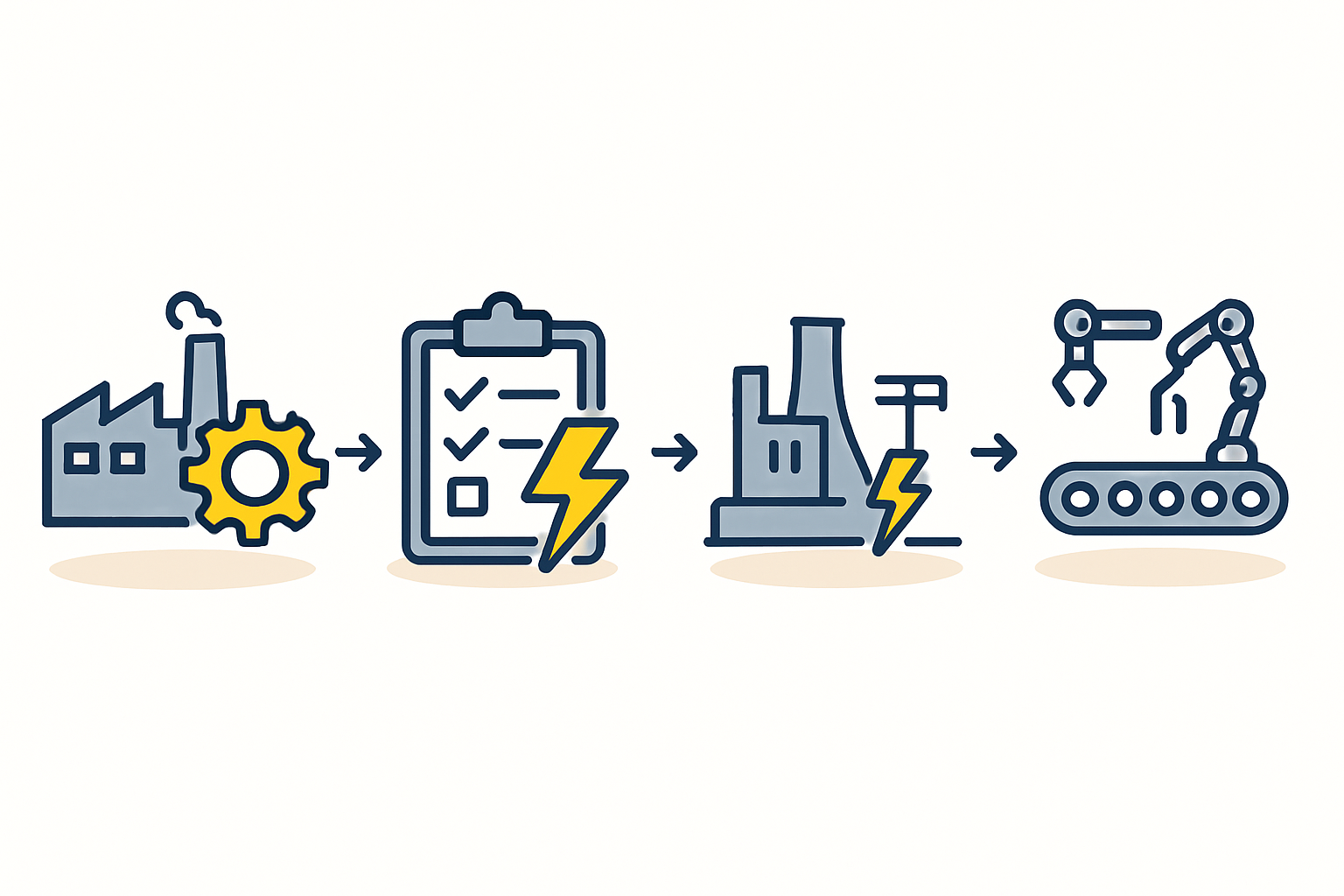
Phase 4: Commissioning, Training, and Final Acceptance (Month 10-12)
This final phase is where the factory comes to life. Commissioning is the process of starting up and fine-tuning the entire production line to ensure all machines work together seamlessly. This stage, including the Site Acceptance Test (SAT), typically takes 4-6 weeks.
During the SAT, the engineering team will:
- Run the complete line with actual production materials.
- Calibrate all machines to optimize performance and material usage.
- Produce the first batch of finished solar modules.
- Conduct comprehensive training for the local operators and maintenance staff.
Producing the first certified module is the project’s most significant milestone, confirming that the line is fully operational.
Once the line is running at its specified capacity and quality, and the local team is trained, the final acceptance protocol is signed. This triggers the final 10% payment and marks the official handover of the factory to the client.
Frequently Asked Questions About Project Timelines
What are the most common causes of delays?
Most delays are related to client-side readiness. Common issues include the factory building not being completed on time, insufficient or unstable utility connections (especially electricity and compressed air), and prolonged customs clearance. Proactive local management is the best way to mitigate these risks.
Is a 9-12 month timeline realistic for any factory size?
This timeline is a reliable standard for most semi-automated or automated lines with an annual capacity between 20 MW and 100 MW. Significantly larger or more technologically complex gigawatt-scale factories may require a longer project plan.
How much involvement is required from my team during this process?
While the supplier manages the equipment side, active involvement from the client is critical. A dedicated local project manager should be appointed to oversee building preparation, permit applications, utility contracts, and logistics coordination. This manager serves as the essential link between the turnkey partner and local contractors.
Does this timeline include sourcing the raw materials?
The 9-12 month timeline covers the delivery and commissioning of the production line itself. Procuring the initial raw materials, or the bill of materials (BOM), is a parallel task. A turnkey partner or consultant typically provides guidance on sourcing these materials to ensure they are available for the commissioning phase.
Planning Your Path to Production
Understanding the project lifecycle is fundamental to making an informed investment decision. A turnkey solar manufacturing line project is not an unpredictable venture but a structured, logical process with clear milestones and deliverables. This 9-12 month timeframe is highly achievable when both the equipment partner and the investor fulfill their responsibilities in a coordinated manner.
This transparent, phased approach is designed to build confidence and ensure that new entrants to the solar industry are equipped for success from day one. With a clear roadmap in place, the next logical step for an investor is to develop a comprehensive understanding of the total investment required to bring such a project to fruition.