
Imagine a meticulously crafted business plan for a new solar module factory, with projections based on a polysilicon price of $15 per kilogram. Six months later, as the first production run begins, the global spot price has surged to $25. That single factor—entirely outside the owner’s control—can instantly erode or even eliminate the entire profit margin projected for the first year.
This scenario isn’t hypothetical; it reflects the real-world challenges of sourcing raw materials in the photovoltaic industry. For a startup solar factory, especially one without a dedicated commodities trading department, managing the price volatility of key inputs like polysilicon and silver paste is critical for financial viability. This article outlines practical, operational strategies to mitigate these risks without requiring complex financial instruments.
The Financial Impact of Volatile Raw Materials
Polysilicon and silver paste are two of the most significant cost drivers in a solar module’s bill of materials (BOM). Together, they can account for 40% to 60% of the total manufacturing cost, depending on market conditions and module technology. Their prices are subject to substantial fluctuations driven by global supply and demand, energy costs, and geopolitical events.
- Polysilicon: As the primary semiconductor material, its price has historically seen dramatic swings. In certain 12-month periods, for example, prices have more than doubled due to supply chain constraints or shifts in government policy, only to fall again as new production capacity comes online.
- Silver Paste: Used for the conductive contacts on solar cells, silver is a precious metal traded on global commodity markets. While the quantity per module is small, its high value makes even minor price changes significant. A 20% increase in the price of silver can directly increase the final module production cost.
For a new enterprise, this volatility presents a direct challenge. Unpredictable costs make it difficult to price finished modules competitively, manage cash flow, and secure long-term sales contracts. Understanding the cost of solar raw materials is the first step toward managing them effectively.
Why Traditional Financial Hedging is Often Unsuitable for Startups
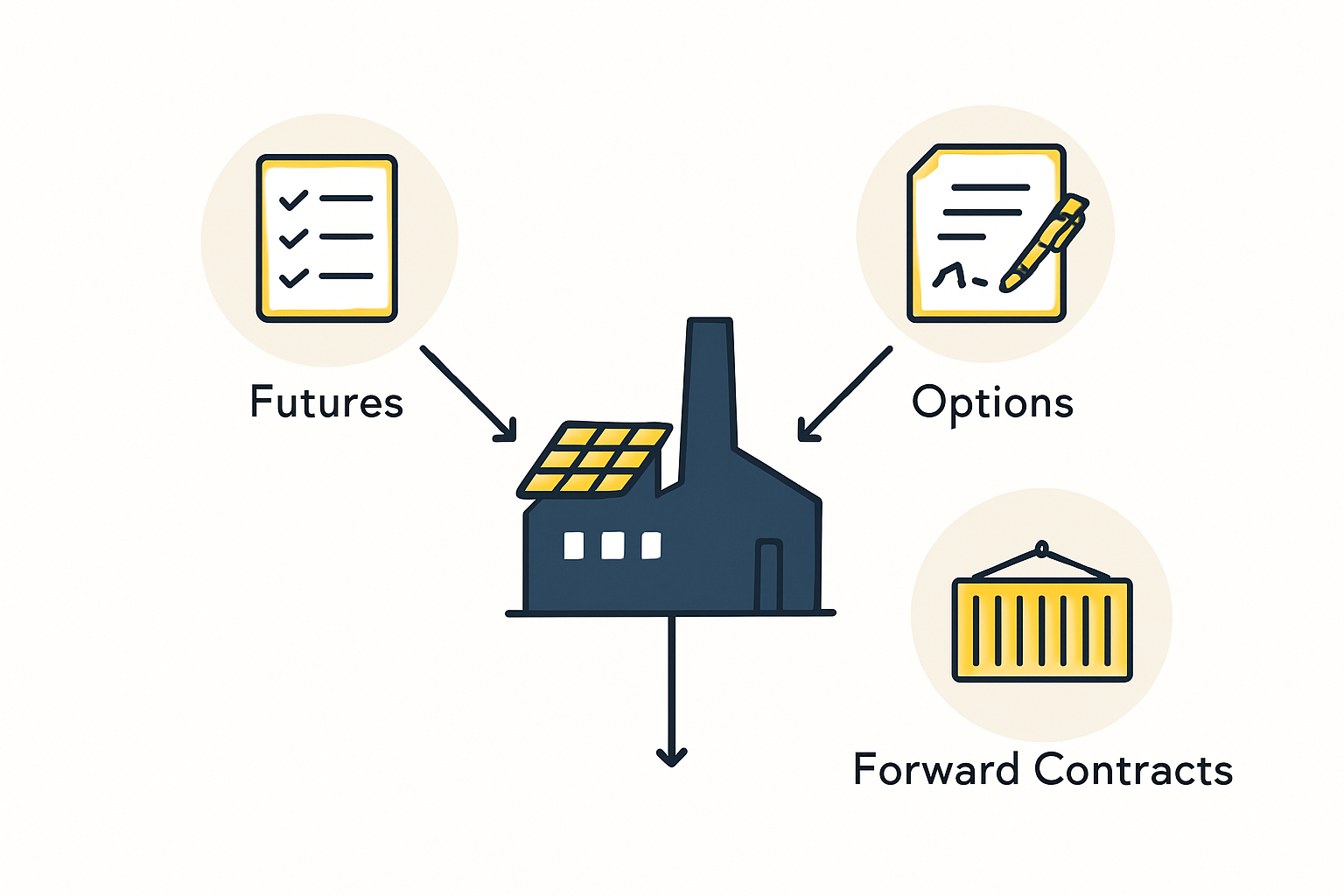
Large, established manufacturers often use sophisticated financial instruments like futures contracts and options to hedge against price volatility. They employ specialized teams to trade on commodity exchanges, locking in prices for future delivery.
This approach, however, is typically impractical for a new manufacturer for several reasons:
- Expertise Required: It demands deep knowledge of financial markets, which manufacturing startups rarely have.
- Capital Intensive: Financial hedging requires significant capital to cover margin calls, tying up funds that are critical for operations.
- Scale: Contracts on major exchanges are often for large volumes, potentially exceeding the immediate needs of a 20-50 MW startup factory.
New entrants must instead look to more accessible, operational hedging strategies integrated into their procurement process.
Practical Procurement and Hedging Strategies
For a new solar manufacturer, effective hedging is less about financial trading and more about intelligent procurement. The goal is to build a degree of price stability into the supply chain itself.
Strategy 1: Long-Term Supply Agreements (LTSAs)
A Long-Term Supply Agreement is a contract with a supplier to purchase a specified quantity of material over a set period (e.g., 6 to 12 months) at a predetermined price or pricing formula.
- How it Works: A manufacturer commits to buying, for example, 100 metric tons of polysilicon over one year. The price could be fixed at the start or be based on a fixed discount to a published market index.
- Advantages: This approach provides price certainty and ensures supply security, which is critical in a tight market. That stability simplifies financial planning and customer quoting.
- Considerations: The primary risk is being locked into a high price if the spot market falls significantly. This is why LTSAs require careful negotiation and a strong, reliable supplier relationship. Typically, the fixed price in an LTSA comes at a small premium to the spot price at the time of signing—the price paid for stability.
Strategy 2: Indexed Pricing with Collars
A more flexible alternative to a fixed-price LTSA is an agreement based on indexed pricing with a “collar”—a pre-agreed price ceiling and floor.
- How it Works: The purchase price floats with a recognized market index (such as those published by PV Infolink or other market analysts). However, the contract specifies that the price will never go above the ceiling or below the floor, regardless of how the index moves.
- Advantages: This creates a predictable price range. The manufacturer is protected from catastrophic price spikes while still benefiting from moderate price decreases, offering a balance between risk and opportunity.
- Considerations: The supplier typically charges a premium for offering this price insurance. The width of the collar (the difference between the floor and ceiling) is a key point of negotiation.
Strategy 3: Strategic Inventory Management
This is a physical, rather than contractual, hedging method that involves actively managing on-site inventory based on market price cycles.
- How it Works: When market analysis suggests that material prices are at a cyclical low, the manufacturer purchases more than its immediate need, building a buffer stock of two to three months’ worth of supply. This stock can then be drawn down when prices spike.
- Advantages: This straightforward strategy gives the business direct control and, if market movements are anticipated correctly, can be highly effective.
- Considerations: This approach ties up significant working capital in inventory. It also requires adequate, climate-controlled storage space and introduces the risk of material degradation, particularly for silver paste which has a limited shelf life. A precise understanding of consumption is needed, which starts with calculating your solar module bill of materials (BOM).
A Blended Approach: The Most Prudent Path
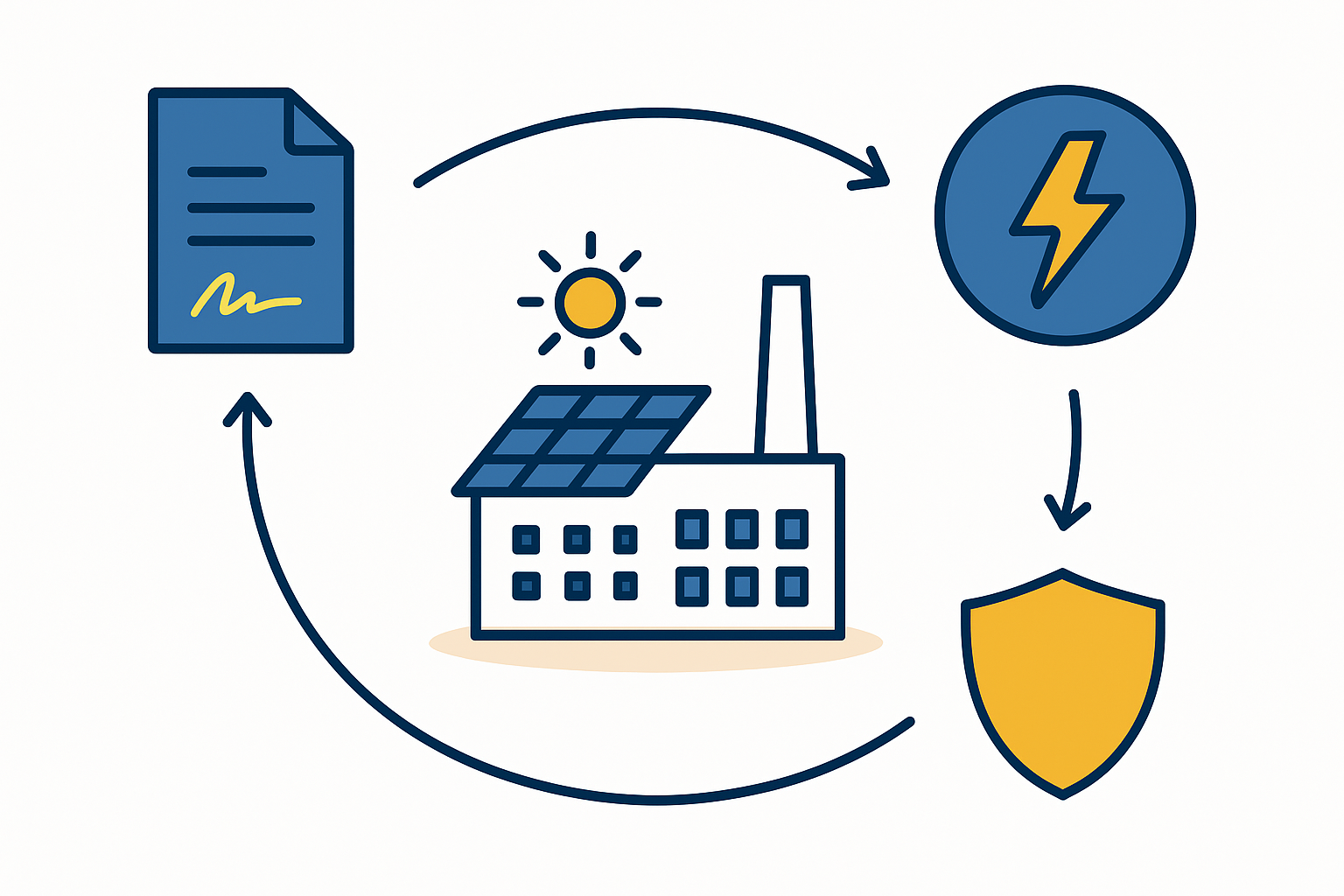
For most new solar factories, the optimal strategy is not to rely on a single method but to implement a blended approach.
For example, a new 50 MW factory might secure 60% of its projected annual polysilicon requirement through an LTSA with a trusted supplier, guaranteeing its core supply at a stable price. The remaining 40% could be purchased through shorter-term contracts or on the spot market, allowing the company to capitalize on any price dips.
Experience with J.v.G. Technology GmbH turnkey projects shows that this balanced portfolio approach gives new manufacturers a robust defense against volatility while retaining the flexibility they need in their early years.
Frequently Asked Questions (FAQ)
What is a “spot price”?
The spot price is the current market price for the immediate delivery of a commodity. It serves as the benchmark against which futures, forwards, and other contractual prices are often set.
How much polysilicon and silver paste does a typical module contain?
A modern high-efficiency PERC module (e.g., 550W) uses approximately 2.5-3.0 grams of polysilicon per watt and around 8-10 grams of silver paste for the entire module. While the quantities seem small, their high cost per kilogram makes them major cost factors.
Are these strategies applicable to other materials like EVA or backsheets?
Yes. The principles of LTSAs and strategic inventory management apply equally well to other key materials like encapsulants (EVA/POE), backsheets, and glass. Although their prices may be less volatile than polysilicon’s, securing a stable price and supply is just as important for operational continuity.
At what factory size should one hire a dedicated procurement manager?
For a startup factory in the 20-100 MW range, procurement is often managed by the general manager or operations manager. A dedicated procurement specialist becomes a necessity as the operation scales beyond 100-200 MW or if the business plan involves more complex, multi-supplier sourcing strategies.
Where can business owners find reliable price indexes for these materials?
Several industry-specific market intelligence firms publish regular price indexes and analyses. Subscriptions to services from firms like BloombergNEF, PV Infolink, or IHS Markit provide the data needed to track trends and make informed procurement decisions.
Conclusion: Turning Procurement into a Competitive Advantage
For an entrepreneur entering the solar manufacturing space, mastering production technology is only half the battle. Developing a proactive and intelligent raw material procurement strategy is equally crucial for long-term success.
By moving beyond simple spot-market purchasing and implementing practical hedging strategies like long-term agreements, indexed pricing, and strategic inventory management, a new factory can protect its margins, improve financial predictability, and build a more resilient business. A strategic approach to the supply chain is foundational when setting up your first solar module production line and helps build the venture on a solid financial footing.