
An entrepreneur receives an unexpected invoice for thousands of dollars in “port handling charges” and “customs inspection fees” for a critical piece of machinery that just arrived. They had assumed the supplier’s shipping quote covered all costs to the local port. This surprise expense not only strains the budget but also delays the project timeline. It’s a scenario that’s all too common in international trade, yet almost always preventable with a clear understanding of one crucial element in a sourcing contract: the Incoterm.
For professionals sourcing high-value goods from overseas, such as those procuring solar manufacturing equipment, Incoterms are far more than logistical jargon. They are the contractual foundation that defines who pays for what, who is responsible for the goods at each stage of their journey, and precisely when the risk of loss or damage transfers from seller to buyer. This guide explains the strategic importance of these terms and how to use them to protect your investment.
What Are Incoterms and Why Do They Matter?
Incoterms, or International Commercial Terms, are a set of globally recognized rules published by the International Chamber of Commerce (ICC). They provide a universal language for buyers and sellers that eliminates ambiguity in international sales contracts. Their primary function is to clarify three critical points:
- Tasks: Who is responsible for arranging transport, insurance, and customs clearance?
- Costs: Who pays for each part of the journey, from the factory floor to the final destination?
- Risk: At which specific point does responsibility for the goods (e.g., in case of damage or loss) transfer from the seller to the buyer?
Simple misunderstandings of these terms are at the root of many commercial disputes in international shipping. For an entrepreneur setting up a new factory, such a dispute can mean the difference between an on-time launch and a project derailed by unforeseen liabilities.
A Practical Breakdown of Common Incoterms for Equipment Buyers
While there are eleven official Incoterms, most industrial equipment procurement revolves around a few key options. Understanding the nuances of each is essential for effective negotiation.
EXW (Ex Works): Maximum Responsibility for the Buyer
Under an EXW agreement, the seller’s only obligation is to make the goods available at their own premises, such as a factory or warehouse. From that point forward, the buyer bears all costs and risks. This includes loading the equipment onto a truck, arranging export clearance in the seller’s country, managing international freight, and handling import duties and delivery at the destination.
Business Implication: EXW often presents the lowest initial price from the supplier, which can be attractive. However, the total landed cost can become significantly higher if the buyer isn’t experienced in managing logistics within the supplier’s country. This term gives the buyer maximum control, but it also exposes them to the greatest risk.
FOB (Free On Board): A Balanced Approach
One of the most widely used terms for sea freight, FOB makes the seller responsible for all costs and risks until the goods are loaded “on board” the vessel nominated by the buyer at the named port of departure. This includes transporting the equipment to the port, clearing it for export, and paying for all loading charges. Once the goods are on the ship, responsibility for risk and cost shifts to the buyer, who then manages and pays for ocean freight, insurance, and all subsequent costs.
Business Implication: This term offers a good balance of responsibilities. The seller, with local expertise, handles the complexities of getting the goods to the port and through export customs. The buyer maintains control over the more significant cost component—international sea freight—allowing them to work with preferred carriers and secure competitive rates.
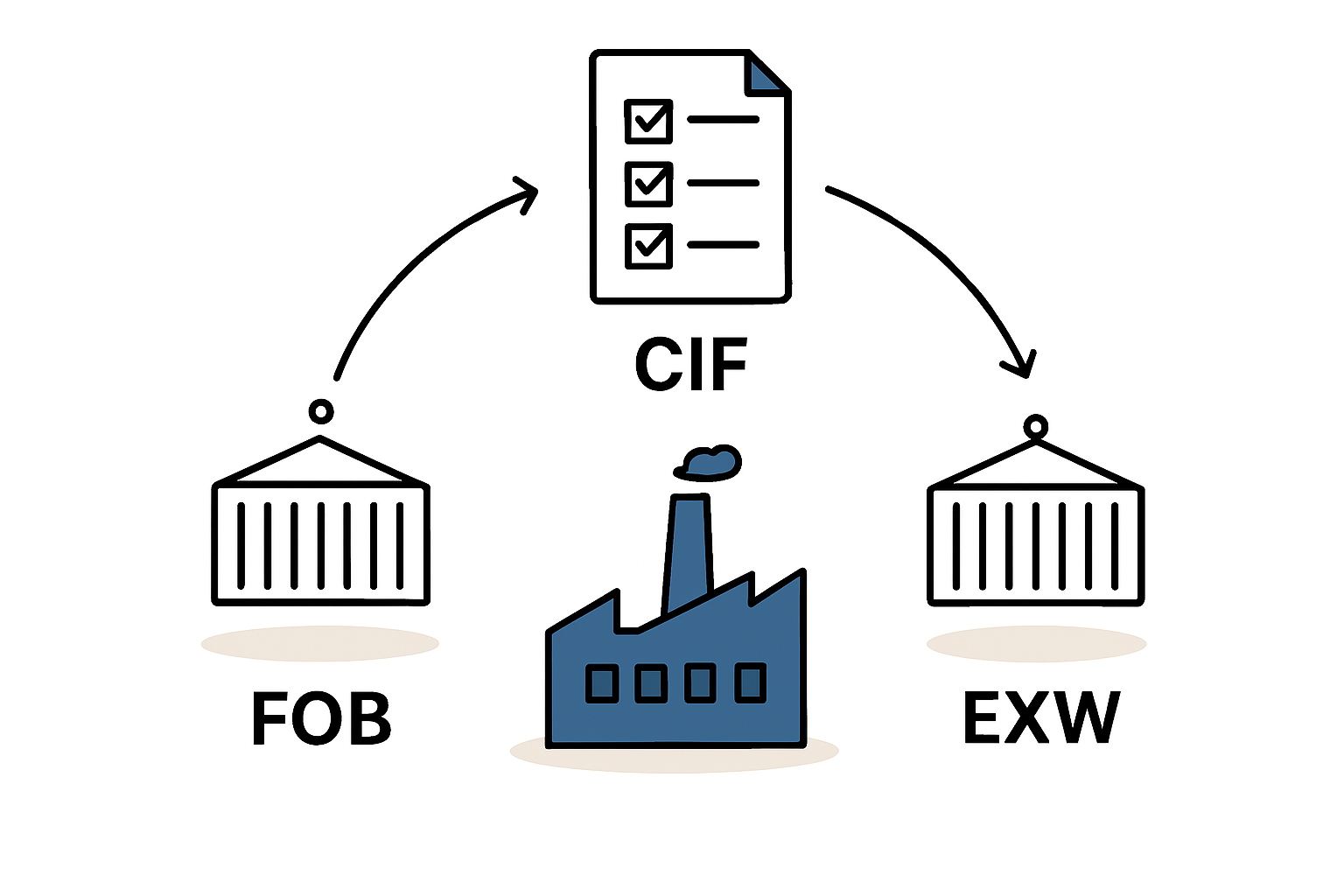
CIF (Cost, Insurance, and Freight): Convenience with a Critical Distinction
A CIF agreement requires the seller to arrange and pay for the cost of the goods, the sea freight to the buyer’s destination port, and a minimum level of insurance coverage. This may seem like the most convenient option for a new importer. However, there is a crucial, often misunderstood detail: the transfer of risk.
While the seller pays for transit to the destination port, the risk of loss or damage transfers to the buyer as soon as the goods are loaded on board the vessel at the port of origin—exactly the same as with FOB. If the equipment is damaged during the sea voyage, it is the buyer, not the seller, who is responsible for filing a claim with the insurance company the seller chose.
Business Implication: CIF offers simplicity, but the buyer gives up control over the choice of shipping line and insurer. The freight and insurance costs arranged by the seller may also be higher than what the buyer could secure directly.
The Financial Impact of Choosing the Right Incoterm
The difference between an initial quote and the final “landed cost” can be substantial. A quick look at the numbers reveals how directly the chosen Incoterm affects the project budget.
Consider a machine with a base price of $500,000:
Scenario 1: Quoted as EXW
- Machine Price: $500,000
- Buyer’s Responsibility:
- Inland transport & export clearance in origin country: $15,000
- Ocean freight & insurance: $25,000
- Import duties & local delivery: $50,000
- Total Landed Cost: $590,000
Scenario 2: Quoted as FOB
- Machine Price: $512,000 (includes the seller’s cost to get goods on the ship)
- Buyer’s Responsibility:
- Ocean freight & insurance: $25,000
- Import duties & local delivery: $50,000
- Total Landed Cost: $587,000
As this example shows, negotiating an FOB term instead of EXW provides a more predictable cost structure and often results in overall savings, as the seller is typically more efficient at managing their local logistics. Based on experience from numerous industrial turnkey projects, a well-negotiated Incoterm can influence the final logistics budget by 5–10%.
Beyond Cost: Risk, Control, and Documentation
Choosing the right Incoterm is about more than just direct financial costs. It fundamentally defines operational control and liability.
- Risk Management: The Incoterm specifies the exact moment that liability for the high-value equipment transfers. If damage occurs before this point, it is the seller’s responsibility. If it occurs after, it is the buyer’s.
- Logistical Control: Terms like EXW and FOB give the buyer control over the freight carrier. This allows them to choose partners known for reliability and proper handling of sensitive industrial machinery, rather than being limited to the seller’s potentially cost-focused selection.
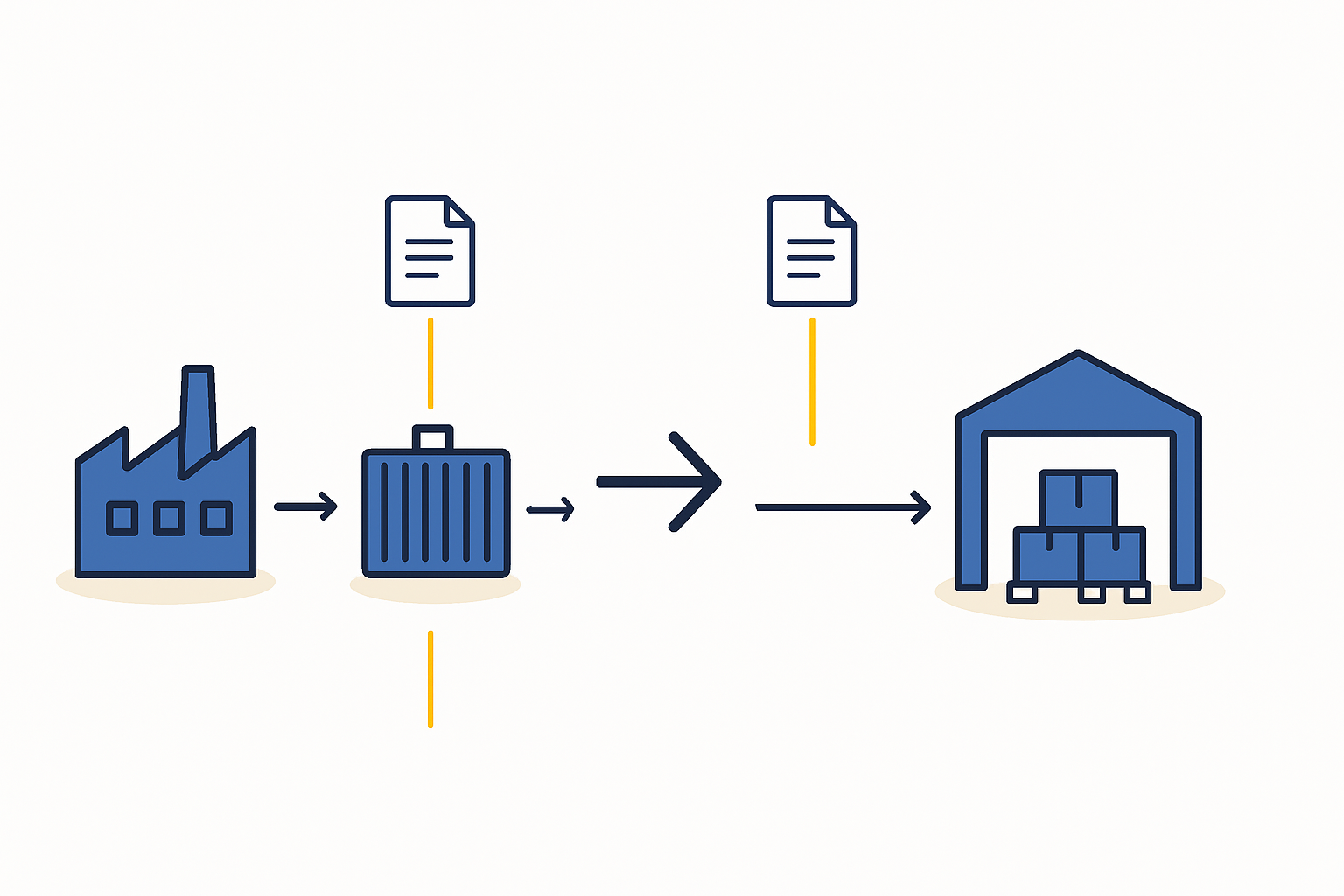
- Documentation: The Incoterm dictates who is responsible for preparing crucial documents, such as the Bill of Lading and export declarations. Errors in this paperwork can lead to significant delays at customs, a critical concern when establishing a facility with a strict timeline and needing to secure essential certifications for solar module manufacturing.
Common Pitfalls for First-Time Importers
- The CIF Risk Misconception: Believing that because the seller pays for freight and insurance, they also bear the risk during transit. Remember, with CIF, risk transfers at the origin port.
- Underestimating EXW Costs: Neglecting to account for “hidden” local costs in the seller’s country, such as special packaging requirements, crane hire for loading, or unexpected export taxes.
- Ignoring Insurance Details: With CIF, the seller is only obligated to provide minimum insurance coverage. This may not be sufficient for high-value or sensitive industrial equipment, meaning the buyer often needs to purchase additional coverage.
- Using Sea-Specific Terms for Other Transport: Terms like FOB and CIF are designed for sea and inland waterway transport. For containerized cargo or air freight, other terms like FCA (Free Carrier) or CPT (Carriage Paid To) are more appropriate and provide better protection.
Frequently Asked Questions (FAQ)
Who decides which Incoterm to use?
The Incoterm is a negotiable part of the sales contract. Both the buyer and seller must agree on the term before the contract is finalized. It should be chosen based on which party is best positioned to handle specific responsibilities efficiently and cost-effectively.
Are Incoterms legally binding?
Yes. When an Incoterm (e.g., “FOB Shanghai, Incoterms® 2020”) is explicitly written into a sales contract, its rules become legally binding terms of that agreement.
Do Incoterms cover ownership transfer?
No. This is a critical distinction. Incoterms only define the transfer of risk and the division of costs. The point at which the legal title or ownership of the goods passes from seller to buyer must be specified separately in the sales contract.
Where can I find the official Incoterms rules?
The International Chamber of Commerce (ICC) publishes and maintains the official rulebook, with the latest version being “Incoterms® 2020.”
Conclusion: Making Incoterms a Strategic Advantage
Incoterms should not be treated as a contractual afterthought. For entrepreneurs and business leaders sourcing equipment for a new manufacturing plant, they are a fundamental tool for managing budgets, mitigating risk, and maintaining control over the project’s supply chain. A clear understanding empowers you to negotiate from a position of strength, prevent costly surprises, and ensure your critical assets arrive safely and on schedule.
Building this expertise in logistics and procurement is a vital early step in the complex process of launching an industrial facility. As you move forward, structured guidance on other aspects of project planning can provide a clear roadmap for success.