
An entrepreneur receives a detailed quotation for a complete solar module production line. The total price is significantly lower than anticipated, sparking initial excitement. Could this be the competitive advantage needed to launch the venture successfully? Or is it the first step toward unforeseen expenses and project delays?
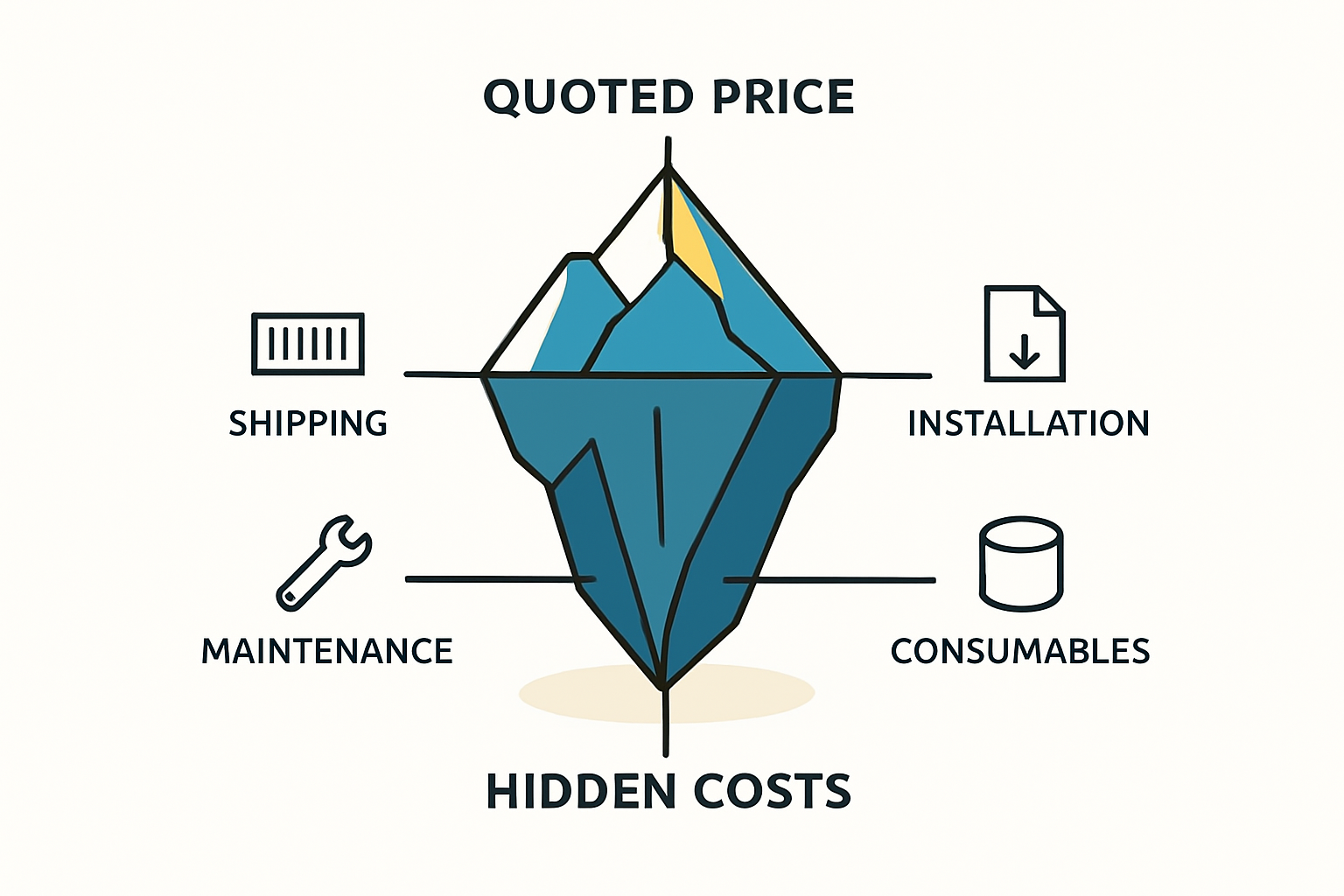
This scenario is common for investors entering the solar manufacturing industry. The equipment quotation is a critical document, but it’s often the source of significant financial risk. Industry analysis consistently finds that initial equipment proposals underestimate the total project cost by an average of 15-30%—a gap that stems from excluded items and ambiguous terms. This guide provides a structured framework for scrutinizing these documents, helping business professionals distinguish a genuine opportunity from a potential liability.
The Anatomy of a Quotation: Beyond the Headline Price
A professional equipment quotation is far more than a price list. It’s a complex technical and commercial proposal that forms the foundation of a future contract. Properly evaluating it means looking beyond the final number and dissecting its core components:
- Equipment List: The specific machines and their quantities.
- Technical Specifications: Performance data for each machine (e.g., throughput, capacity, dimensions).
- Scope of Supply: A detailed breakdown of precisely what the supplier will provide. This is where hidden costs often reside.
- Commercial Terms: Payment schedules, delivery timelines, warranty conditions, and legal stipulations.
Viewing the quotation through this lens transforms the evaluation process from a simple price comparison into a comprehensive risk assessment.
Red Flag #1: Ambiguous or Incomplete Scope of Supply
The most common cause of budget overruns is a vaguely defined scope of supply. A low initial price is often achieved by excluding essential goods and services, which the buyer must then procure at additional expense. A thorough review should confirm that the following are included.
Key Items Frequently Excluded:
- Logistics and Shipping: Does the price cover freight, insurance, and customs clearance (e.g., is it FOB, CIF, or DDP)? For heavy industrial equipment shipped internationally, these costs are substantial.
- Installation and Commissioning: The quotation must state whether on-site installation by the supplier’s engineers is included. If so, for how many days? Does it cover their travel, accommodation, and living expenses?
- Operator and Maintenance Training: Is comprehensive training for the production team included? Confirm whether this will be conducted on-site or remotely, its duration, and the level of documentation provided.
- Ancillary Equipment: A production line requires more than just the main machines. Items like air compressors, water chillers, power distribution units, and material handling carts are critical for operation but are often quoted separately.
- Initial Spare Parts: A robust quotation includes a starter kit of critical spare parts. A production halt due to a failed sensor or belt can cost tens of thousands of dollars per day, far exceeding the cost of the part itself.
A clear understanding of what is included versus what is excluded is paramount. This is where understanding the complete solar panel manufacturing process is critical to ensure no essential components are overlooked.
Red Flag #2: Vague Performance Guarantees
Promises like “high efficiency” or “excellent performance” are marketing language, not contractual commitments. A survey of first-time manufacturing investors revealed that disputes over unmet performance expectations are a leading source of post-installation conflict.
A reliable quotation translates vague performance promises into legally binding guarantees with specific, measurable metrics.
Essential Performance Guarantees:
- Specific KPIs: The contract should define Key Performance Indicators like machine uptime (e.g., >95%), throughput (modules per hour), and yield (e.g., >99% A-grade modules).
- Cell-to-Module (CTM) Ratio: This crucial metric measures the power loss between the sum of the individual cells and the final module’s output. The supplier must guarantee a maximum CTM loss (e.g., <2.5%), as this directly impacts the final product’s value and profitability.
- Acceptance Test Criteria: The document must clearly define the procedures for the Factory Acceptance Test (FAT) before shipping and the Site Acceptance Test (SAT) after installation. These tests are the formal mechanism for verifying that the equipment meets its guaranteed performance.
The quality of these guarantees directly affects the venture’s financial projections and overall solar panel manufacturing cost. Without them, the buyer has little recourse if the line underperforms.
Red Flag #3: The “Black Box” Approach to Technology
Some suppliers present a “turnkey line” as a single item without detailing the individual machines within it. This lack of transparency, or “black box” approach, poses a significant risk. It allows the supplier to substitute lower-quality, less reliable equipment from unknown manufacturers to protect their profit margin, leaving the investor with machinery that may not meet long-term production goals.
To mitigate this, an investor should insist on full transparency.
Demands for a Transparent Quotation:
- Detailed Bill of Materials (BOM): The quotation must include a complete list of every major machine, specifying the original manufacturer and exact model number.
- Technical Datasheets: Each major piece of equipment should be accompanied by its official technical datasheet, allowing for independent verification of its specifications and capabilities.
Based on experience from J.v.G. turnkey projects, insisting on a transparent BOM is a non-negotiable step for managing risk. It ensures the investor receives precisely the technology and quality they are paying for.
Red Flag #4: Mismatched Timelines and Payment Schedules
An overly optimistic delivery schedule can be a red flag, suggesting a supplier is more focused on securing a down payment than on realistic project execution. A delay with a single machine can halt the entire commissioning process, leading to cascading costs from idle staff and facility overheads.
The payment structure is equally important. A schedule that heavily favors the supplier with large upfront payments places an undue amount of risk on the buyer.
Best Practices for Timelines and Payments:
- Milestone-Based Payments: Link payments to tangible project milestones, not arbitrary calendar dates. A common, balanced structure is:
- 10-30% on contract signing (with a bank guarantee).
- 60-70% upon successful Factory Acceptance Test (FAT) and readiness for shipment.
- 10% upon successful Site Acceptance Test (SAT) at the buyer’s facility.
- Contingency Planning: A realistic project plan is a core component of a successful solar manufacturing business plan. It should account for potential delays in shipping, customs, or installation, especially in regions where logistics can be challenging. For instance, in many developing economies, securing letters of credit or managing foreign exchange for milestone payments requires significant lead time that should be factored into the project schedule.

Frequently Asked Questions (FAQ)
Is the cheapest quotation always the worst option?
Not necessarily, but it always requires the most scrutiny. A low price may result from a supplier’s efficiency, lower overhead, or a strategic decision to enter a new market. However, it’s more often the result of an incomplete scope of supply, lower-quality components, or unrealistic assumptions. The objective is to verify that the low-cost quotation is comprehensive and truly comparable to others on an “apples-to-apples” basis.
How much should be budgeted for costs not included in the equipment quotation?
It’s prudent to budget an additional 15-30% of the equipment cost to cover shipping, installation supervision, civil works, initial raw material inventory, and other pre-production expenses. This contingency buffer is essential for navigating the unforeseen challenges that arise in any major industrial project.
What is the difference between a Factory Acceptance Test (FAT) and a Site Acceptance Test (SAT)?
The FAT is conducted at the equipment manufacturer’s facility before shipping. Its purpose is to verify that the machine functions correctly and meets the agreed-upon technical specifications. The SAT is performed at the buyer’s factory after the complete line has been installed. It serves to confirm that all machines work together seamlessly as an integrated system under real production conditions and meet the final performance guarantees.
Is it advisable to mix equipment from different suppliers?
Yes, sourcing equipment from multiple specialized manufacturers is a common and often effective strategy. However, it introduces an integration risk: ensuring all machines can communicate and operate together seamlessly. If taking this approach, it is vital to assign responsibility for system integration to a single party, whether it is an experienced internal project manager or a qualified external consultancy.
Conclusion: From a Price Tag to a Partnership
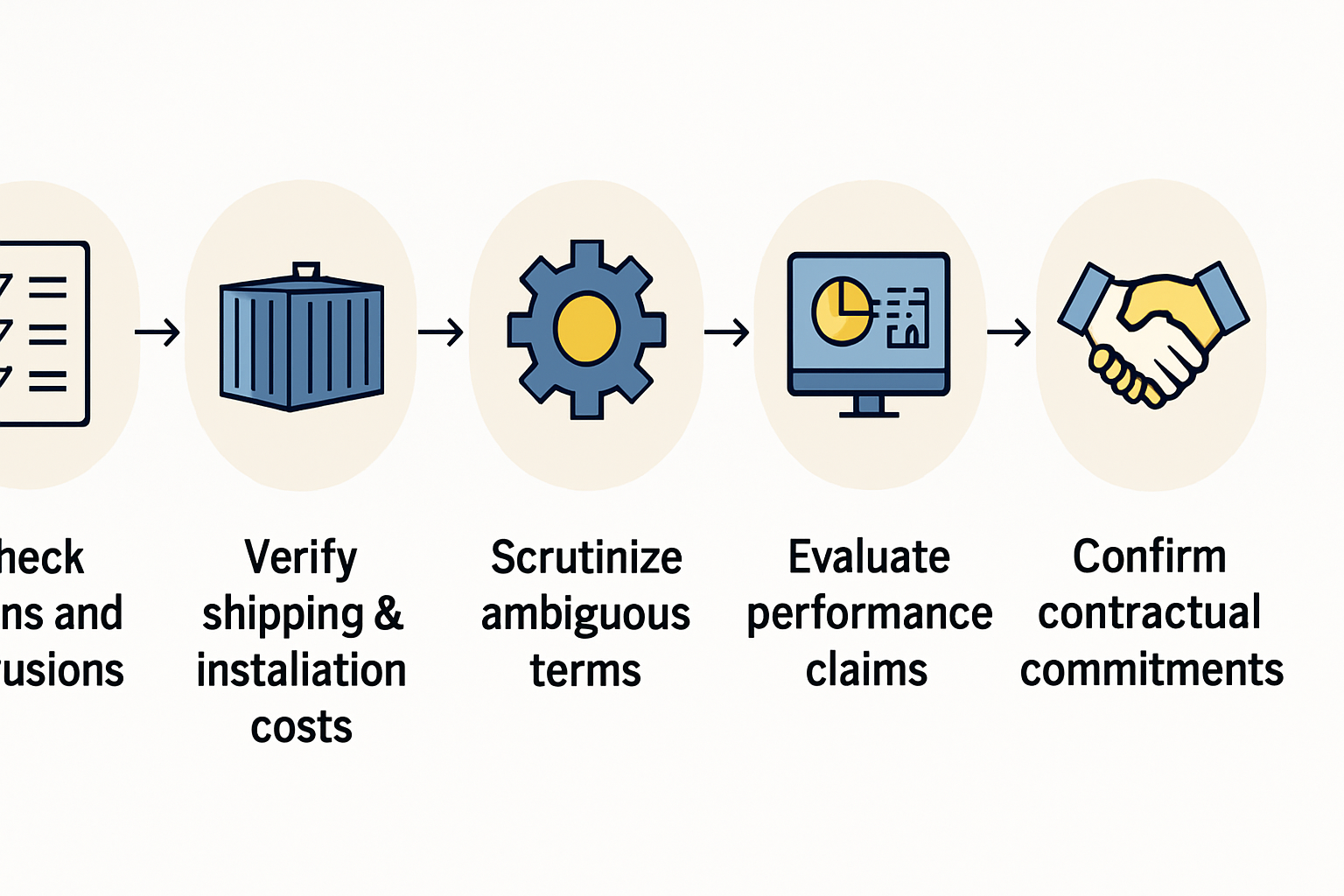
An equipment quotation should be viewed not as a final price tag but as the beginning of a technical and commercial negotiation. The goal is to convert it into a fair, transparent, and comprehensive contract that protects the investor’s interests.
By systematically checking the scope of supply, demanding specific performance guarantees, insisting on technological transparency, and aligning payments with proven milestones, an entrepreneur can effectively manage risk. This diligent approach transforms the procurement process from a potential liability into the foundation of a strong supplier partnership and a successful manufacturing venture. Taking the time to thoroughly vet a quotation is one of the highest-return activities in the entire project lifecycle.