Understanding Africa Solar Growth; Morocco’s Hub Potential
The African continent is stepping into the solar spotlight, marking 2025 as its most significant year for solar energy growth to date. A recent report from the Global Solar Council highlights a remarkable 54% year-on-year increase in solar installations, culminating in a record 4.5 GW of new capacity. This unprecedented surge signals a pivotal moment for Africa’s energy landscape, driven by a confluence of rising electricity demand and a strategic shift towards renewable sources.
The Engine Driving Africa Solar Growth
This record-breaking growth is not monolithic; it’s powered by two parallel trends. On one hand, large-scale, utility-sized solar projects, often backed by public and development finance, are coming online. On the other, there is a burgeoning market for privately financed distributed systems, including commercial and residential rooftop solar.
While established players like South Africa, Nigeria, Egypt, and Algeria accounted for approximately 90% of the new capacity, the story of Africa’s solar expansion is becoming more diverse. It’s in this expanding landscape that new leaders are emerging, pointing to a more decentralized and resilient energy future for the continent.
Morocco’s Ascendance as a Key Solar Hub
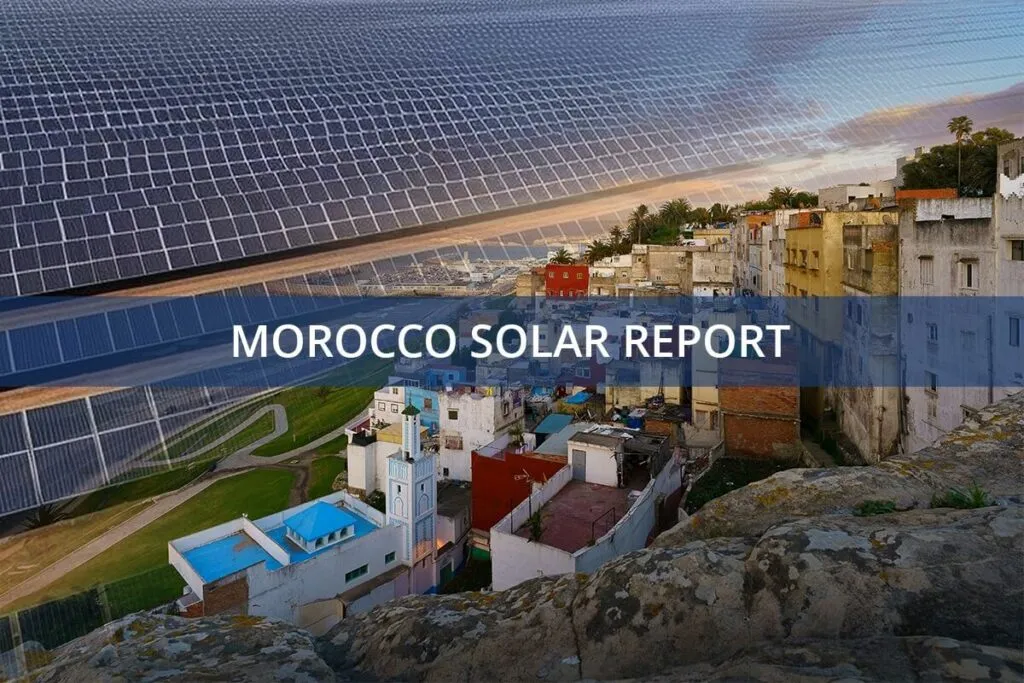
Among the nations contributing to this diversification, Morocco is positioning itself as a key regional hub. Alongside countries like Zambia, Morocco added substantial new solar capacity in 2025, demonstrating its growing influence beyond the continent’s traditional energy powerhouses. This progress is built on a foundation of ambitious renewable energy policies and a strategic vision to harness its abundant solar resources. As mid-sized markets like Morocco mature, they play a critical role in broadening participation and accelerating the continent’s clean energy transition.
Meeting Surging Demand with Clean Energy and Africa Solar Growth
The solar boom is arriving at a crucial time. According to the International Energy Agency, electricity demand across Africa accelerated significantly in 2025, growing by 5.2%. This rising demand is fueled by economic development, urbanization, and the digitalization of economies.
A prime example is the rapid expansion of data centers, particularly in South Africa, which is projected to add over 1,200 MW to the national electricity demand. Critically, these new energy-intensive industries are increasingly looking to power their operations with clean energy, creating a powerful commercial incentive for further renewable development.
The Road Ahead: Potential and Challenges for Africa Solar Growth
Despite the impressive growth, Africa still captures only a small fraction of global clean energy investment. A significant portion of current financing (82%) comes from public sources directed at large projects, leaving a gap for the distributed solar sector which is vital for energy access and resilience.
However, the potential is immense. Projections indicate a possible 21% compound annual growth rate through 2029. If financing, policy, and regulatory frameworks can be better aligned, the continent could see its installed solar capacity exceed 33 GW—more than six times the capacity added in 2025.
Furthermore, Africa holds a strategic advantage with its vast reserves of critical minerals essential for solar panel manufacturing, including 55% of the world’s cobalt and nearly half of its manganese. Leveraging this mineral wealth to build local manufacturing capabilities, as seen with Egypt’s plans for a 5 GW PV facility, could create jobs and secure Africa’s place in the global clean energy supply chain.
As the sun sets on a record-breaking year, it’s clear that Africa’s solar energy journey is just beginning. With established leaders pushing forward and emerging hubs like Morocco rising in prominence, the continent is charting a powerful course toward a sustainable and electrified future.