Egypt Solar Panel Manufacturing: A Cornerstone of Egypt’s Energy Strategy
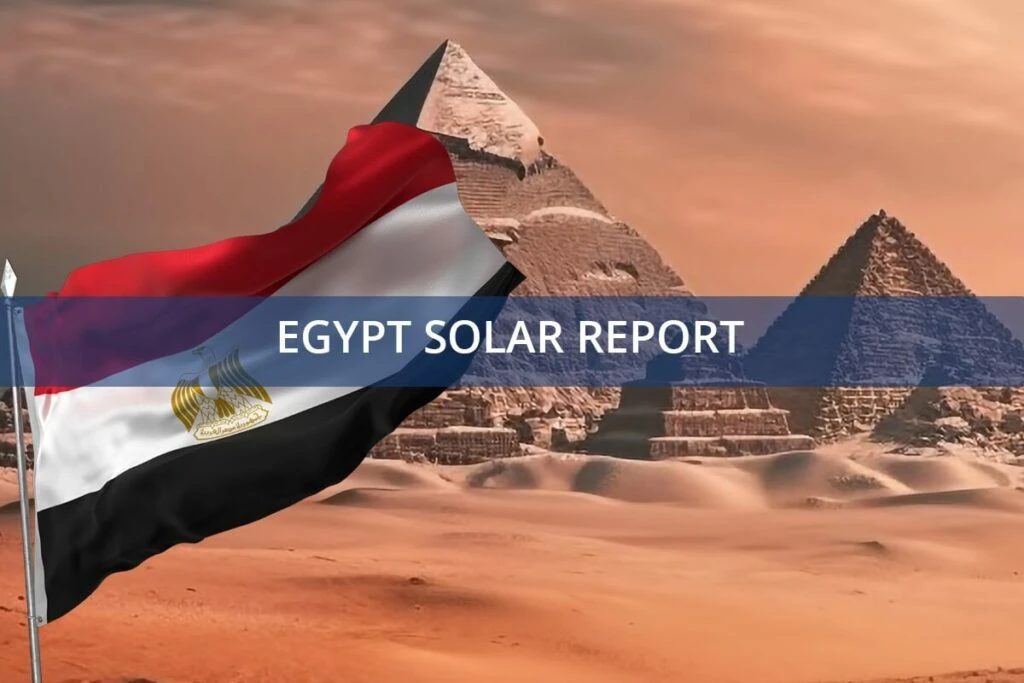
Egypt is positioning itself as a major player in the global solar panel manufacturing industry, with ambitious plans to produce 20 GW of solar panels annually. This initiative is a cornerstone of Egypt’s broader strategy to become a clean energy hub for the region and beyond, a goal detailed in reports like this one: Egypt Solar Panel Manufacturing | Market Insights Report. Backed by a consortium of Saudi, Emirati, Bahraini, and Chinese companies, the project will establish a vertically integrated solar panel manufacturing complex in the strategic Suez Canal Economic Zone. This plan aligns with broader trends in Africa’s solar energy landscape, as discussed in Africa’s Solar Boom: A Powerful Shift Toward Energy Independence.
The $6 billion project will be implemented in two phases. The first, a $2 billion phase slated for completion within two years, will focus on producing core solar panel components like polysilicon, ingots, wafers, and solar cells. The second phase will require an additional $4 billion investment to scale up production capacity to the targeted 20 GW annually.
Strategic Location and International Partnerships for Egypt Solar Panel Manufacturing
The Suez Canal Economic Zone offers a strategic location for this manufacturing complex, providing direct access to key global markets. The project also benefits from a consortium of international partners—including Saudi Arabia’s ACWA Power, the UAE’s Masdar, Bahrain’s Nogaholding, and China’s LONGi—bringing together essential expertise and resources. Such partnerships are increasingly common in large-scale renewable energy projects, as exemplified by ARECO Signs Solar Panel Manufacturing Plant Contract.
The Egyptian government, represented by Walid Gamal El-Din, Chairman of the General Authority for the Suez Canal Economic Zone (SCZONE), has formalized its commitment through a memorandum of understanding (MoU) with these companies to ensure the project’s smooth and successful implementation.
Egypt’s Commitment to Renewable Energy and Solar Panel Manufacturing
This solar panel manufacturing project underscores Egypt’s broader commitment to renewable energy. The country aims to generate 42% of its electricity from renewables by 2035, an ambitious goal supported by ongoing initiatives like the large-scale solar and wind projects detailed in Egypt renewable energy 2026: Discover 12 GW of Stunning Projects. To further demonstrate this commitment, Egypt has also launched a national green hydrogen strategy, aiming to become a key player in the burgeoning global market. The plan includes developing green hydrogen production facilities within the Suez Canal Economic Zone and at other strategic locations across the country.
Economic and Environmental Benefits of Egypt Solar Panel Manufacturing
The solar panel manufacturing project is expected to stimulate economic growth by creating thousands of jobs and attracting substantial foreign investment. It will also reduce Egypt’s dependence on imported energy and enhance its national energy security. On the environmental front, the project aligns with the country’s commitment to a low-carbon future by reducing greenhouse gas emissions and supporting the goals of the Paris Agreement. The initiative is also set to boost Egypt’s export of renewable energy products. Building on its existing role as a major electricity exporter to neighboring countries, the new facility will expand exports to Europe and other regions. This focus on large-scale production, combined with specific utility-scale projects like the one mentioned in Egyptian Utility Initiates Bid for 8.2 MW Solar Plant – PVKnowhow, further strengthens Egypt’s position in the renewable energy sector.