Tapping the Sun: Taiwanese Solar Firms Powering the ASEAN solar market
Against the backdrop of a global energy revolution where renewables are rapidly overtaking fossil fuels, Taiwanese solar energy companies are strategically expanding into the ASEAN market. This move is timed to capitalize on the powerful trend of energy self-generation as regional businesses seek to meet ambitious sustainability goals. With volatile electricity prices and an urgent demand for clean energy, these pioneering firms see a sun-drenched landscape of opportunity in Southeast Asia.
Growth and Opportunities in the ASEAN solar market
Taiwanese solar energy firms are increasingly focusing on the ASEAN market, driven by the burgeoning trend of self-generation. As Southeast Asia stands at a critical juncture in its energy transition, many companies are turning to solar to slash electricity costs and bolster their green credentials. Persistently high electricity prices, fueled by rising fossil fuel costs and tightening carbon emissions targets, make solar energy a financially compelling and environmentally responsible choice.
According to a report by the Institute of Energy Economics Japan, ASEAN electricity prices have risen significantly, with Indonesia’s rates increasing by 35% and Malaysia’s by 23% in 2023. This upward trend is set to continue as nations across the region work towards net-zero emissions by 2050, creating a stable, long-term demand for renewable solutions.
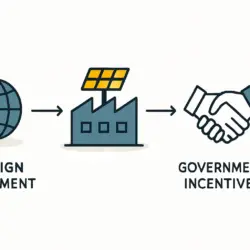
This regional push is reinforced by ASEAN’s collective goal to double renewable energy use by 2025. The region’s abundant sunlight, coupled with growing government incentives, makes it a prime market for solar power. For example, the Philippines aims to generate 50% of its electricity from renewables by 2040, while Thailand has a roadmap to add 12 gigawatts of solar capacity by 2037, signaling a massive potential for growth.
Taiwanese Solar Companies Expanding to ASEAN solar market
Leading Taiwanese companies like TSEC and Neo Solar Power (NSP) are at the forefront, actively pursuing opportunities across the ASEAN market. TSEC is exploring joint ventures in high-potential countries like Thailand, Malaysia, and the Philippines. Meanwhile, NSP is deepening its footprint in Indonesia through its subsidiary, Gaius Renewable Energy.
Indonesia’s updated regulations, which now permit foreign companies to build and operate solar power plants, have been a major catalyst, attracting significant investment from Taiwanese firms. To meet the surging local demand and optimize supply chains, both TSEC and NSP are considering setting up local manufacturing facilities. Establishing a production base in ASEAN requires a deep understanding of the entire solar panel manufacturing process and securing a steady supply of high-quality solar panel raw materials.
A key driver for this expansion is the widespread adoption of self-generation models. This approach empowers companies to produce their own electricity, reducing reliance on the grid and selling any surplus power back. Programs like Malaysia’s net energy metering (NEM) provide a clear financial incentive, allowing businesses to offset their electricity bills by exporting solar-generated power to the national grid.
Challenges and Future Prospects in the ASEAN solar market
While the ASEAN market presents immense opportunities, Taiwanese companies must navigate challenges, including complex regulatory hurdles and intense competition from established Chinese solar firms. Despite these obstacles, the long-term potential of the region inspires strong optimism.
To carve out a competitive edge, Taiwanese companies are doubling down on research and development to enhance the efficiency and resilience of their solar products. Success in this area relies on mastering the basics of solar panel manufacturing and investing in state-of-the-art solar panel manufacturing machines. TSEC, for example, has developed high-efficiency solar cells specifically engineered to perform optimally in the hot and humid climates typical of ASEAN markets. Furthermore, any decision to build local factories must be supported by a thorough analysis of the solar panel manufacturing plant cost breakdown to ensure financial viability.
Looking ahead, the ASEAN region is poised to remain a cornerstone of growth for the Taiwanese solar industry. The International Renewable Energy Agency (IRENA) projects that ASEAN’s solar capacity could soar to 100 gigawatts by 2030, a massive leap from 15 gigawatts in 2020. By focusing on technological innovation and strategic local partnerships, Taiwanese firms are well-positioned to play a pivotal role in this bright, sustainable future.
If you are interested in delving deeper into the world of solar panel production, from initial setup to full-scale operation, explore our free e-course on solar manufacturing.