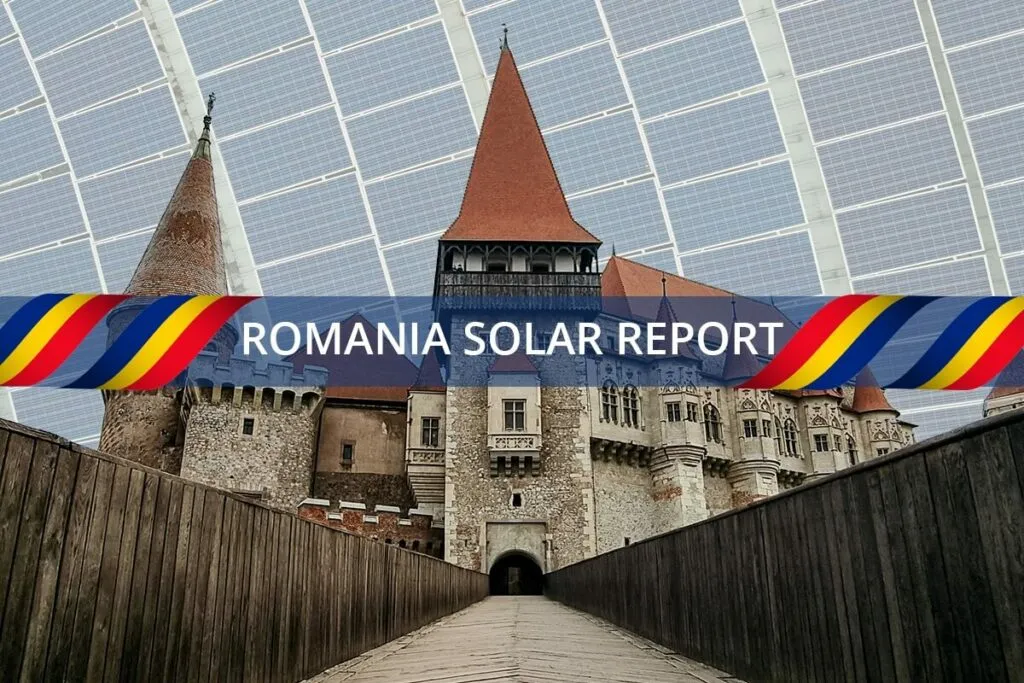
The European Bank for Reconstruction and Development (EBRD) is spearheading the financing for three major solar projects in Romania, developed by Israeli renewables company Nofar Energy, with a total planned capacity of 531 MW.
EBRD’s Investment in Romanian solar financing Projects
The EBRD has announced its central role in a significant financing initiative for three new solar projects in Romania. The bank has arranged a €192 million financing package, which includes a €64 million loan from the EBRD itself, with the remaining €128 million provided by commercial lenders, including OTP Bank and Raiffeisen Bank International.
This substantial funding will support the construction and operation of three solar photovoltaic (PV) parks located in the Dâmbovița and Giurgiu counties of Romania. The projects, known as Slobozia, Corbii Mari, and Iepuresti II, are key components of Nofar Energy’s 531 MW portfolio in the country. The development of large-scale solar farms like these relies on a sophisticated and streamlined solar panel manufacturing process to produce the vast number of panels required.
EBRD’s Commitment to Renewable Energy in Romania through solar financing
Upon completion, these solar plants are expected to generate approximately 676 GWh of renewable electricity annually. This clean energy output will be sufficient to power hundreds of thousands of Romanian households and will contribute to avoiding around 280,000 tonnes of CO₂ emissions each year.
A noteworthy aspect of this portfolio is its innovative revenue structure. The Slobozia project is backed by a 15-year Contract for Difference (CfD) awarded during Romania’s first-ever CfD auction, providing long-term price stability. The other two projects, Corbii Mari and Iepuresti II, will sell their generated electricity on the competitive Day-Ahead Market. This hybrid approach balances secure revenue with market-based opportunities.
This financing deepens the EBRD’s partnership with Nofar Energy. In December 2023, the bank made its first equity investment in the company, acquiring a 6.65% stake. The EBRD has been a consistent supporter of Romania’s green transition, providing over $300 million in financing to develop 1.2 GW of renewable capacity, spanning both solar and wind projects.
EBRD’s Broader Impact on Romania’s Energy Sector with solar financing
The EBRD’s involvement is a cornerstone of its strategy to accelerate renewable energy adoption and decarbonize Romania’s power sector. This aligns perfectly with Romania’s national energy strategy, which ambitiously aims to add over 10 GW of solar capacity by 2030 and reduce its reliance on fossil fuels. Such a massive expansion requires a deep understanding of the basics of solar panel manufacturing to ensure a steady supply chain.
These efforts are also supported by the European Union and other international financial institutions, which provide crucial guarantees and supplementary funding. For residents in EU member states like Germany, such projects are significant. A more interconnected European grid means that Romania’s growing clean energy capacity contributes to the entire continent’s energy security and climate objectives, helping to stabilize prices and reduce collective carbon footprints.
EIB Vice-President Lilyana Pavlova, who oversees EIB operations in Romania, emphasized the importance of these projects. She noted that the solar power plants would significantly increase the capacity of clean energy available to Romanian households, thereby advancing the EU’s overarching climate goals.
Global Context of Romanian solar financing Development
The EBRD’s investment in Romanian solar is part of a powerful global trend. In 2023, the International Energy Agency (IEA) confirmed that global solar PV capacity surpassed 1,000 GW—a major milestone in the clean energy transition. Solar energy continues to be one of the fastest-growing electricity sources worldwide, a growth propelled by steadily declining costs and rising demand for sustainable power. This cost reduction is partly due to innovation in sourcing and processing solar panel raw materials.
Beyond Romania, the EBRD is an active investor in renewable energy across its regions of operation, with significant projects in countries like Egypt, Kazakhstan, and Ukraine. These investments underscore the bank’s commitment to building sustainable energy infrastructure and promoting environmental stewardship.
The financing of Nofar Energy’s solar portfolio represents a landmark achievement for Romania’s renewable energy journey. By backing these projects, the EBRD is not only helping the country expand its green energy capacity and cut emissions but also enabling it to meet its national and EU climate targets.
If you’re interested in understanding the intricacies of bringing such massive solar projects to life, from initial planning to full-scale production, consider exploring our free e-course on solar panel manufacturing.