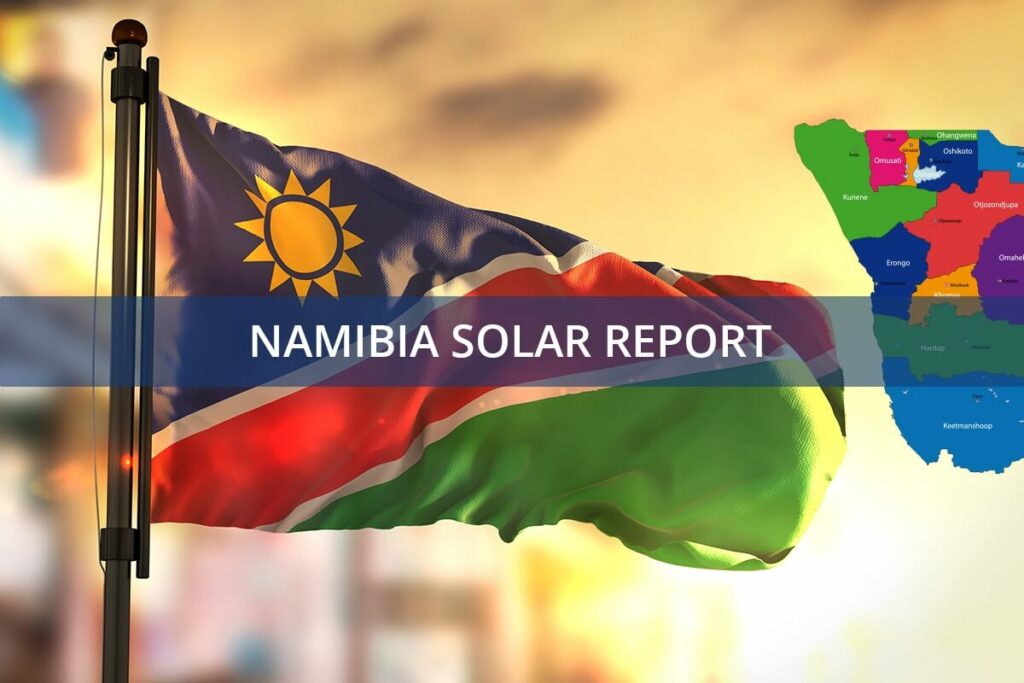
Namibia has announced a significant tender for six solar power projects, totaling 120 MW. This initiative, managed under an Independent Power Producer (IPP) model, is a cornerstone of the country’s strategy to enhance its renewable energy capacity, achieve energy independence, and support its burgeoning green hydrogen ambitions.
Solar Power Projects to Boost Renewable Energy Capacity with Namibia solar tender
In a decisive move to expand its green energy portfolio, Namibia, through its state-owned utility NamPower, has launched a tender for six grid-connected solar power plants, each with a capacity of 20 MW. This 120 MW initiative is a key part of Namibia’s plan to harness its abundant solar resources, reduce its reliance on electricity imports, and foster sustainable development.
The tender invites bids from both local and international firms, with a final submission deadline of January 30, 2026. These projects, expected to be operational shortly thereafter, will be developed under an IPP framework where private companies will finance, build, and operate the plants, selling the generated power to NamPower through long-term agreements.
This new capacity will build on an already impressive growth trajectory. According to the International Renewable Energy Agency (IRENA), Namibia’s installed solar capacity reached 285 MW by the end of 2023, a significant increase from just 145 MW in 2019. The addition of 120 MW demonstrates a continued commitment to leveraging the basics of solar panel manufacturing and technology to meet national energy goals. This tender also complements other major projects, such as the construction of a 100 MW solar plant that began in mid-2025, showcasing a multi-faceted approach to renewable expansion.
Namibia’s Commitment to Renewable Energy via Namibia solar tender
Namibia’s push for solar power is a strategic response to its natural advantages. The country boasts some of the highest solar irradiation levels in Africa, making it an ideal location for photovoltaic projects. The government is actively capitalizing on this by creating an attractive investment climate to diversify its energy mix away from fossil fuels.
The IPP model is central to this strategy. By allowing private producers to invest, it stimulates competition and innovation in the energy market. This framework is crucial for funding large-scale infrastructure, and understanding the plant cost breakdown is essential for potential investors.
Beyond electricity generation, these solar projects are intrinsically linked to Namibia’s ambitious green hydrogen plans. The nation is advancing large-scale green hydrogen projects powered by renewables, including a massive 3 GW solar facility approved for hydrogen and ammonia production. The successful solar panel manufacturing process is the foundation upon which these large-scale energy ambitions are built. The decentralization of these new solar plants across various regions will also enhance the resilience of Namibia’s energy infrastructure.
Reducing Dependence on Electricity Imports through Namibia solar tender
Historically, Namibia has imported a significant portion of its electricity from neighboring countries, creating vulnerabilities in its energy supply. The development of domestic solar power is a crucial step toward ensuring national energy security and autonomy.
The government has set an ambitious target to increase the share of renewable energy in its total mix to 70% by 2030. Solar power is the leading technology to achieve this goal. To support this influx of renewable energy, Namibia is also investing in critical infrastructure, including new transmission lines. These upgrades are particularly focused on the southern region near Lüderitz, which is rapidly emerging as a key industrial and growth hub. The sheer scale of these projects relies on sophisticated solar panel manufacturing machines and a steady supply of high-quality solar panel raw materials.
The 120 MW solar tender is more than just an energy project; it’s a clear signal of Namibia’s dedication to a sustainable and secure future. By creating a favorable environment for investors and leveraging its natural resources, Namibia is positioning itself as a formidable leader in Africa’s renewable energy transition.
To learn more about the intricacies of bringing solar projects to life, from initial concept to full-scale production, explore our free e-course on solar panel manufacturing.