Oman’s Dhofar II Oman wind farm Project Forges Ahead with 125 MW
Oman is taking a significant stride in its renewable energy journey with the Dhofar II wind farm project. This ambitious initiative is set to generate 125 megawatts (MW) of clean energy, enough to power more than 18,000 homes and substantially advance the nation’s green energy goals. Scheduled to begin commercial operations in the third quarter of 2027, the project is a cornerstone of Oman’s commitment to a sustainable future.
The development, ownership, and operation of the wind farm will be managed by a joint venture between Sembcorp Utilities and OQ Alternative Energy. This partnership has secured a 20-year power purchase agreement with the Nama Power and Water Procurement Company (Nama PWP). Spanning an area of 12 million square meters in the Dhofar Governorate, the farm will feature 20 state-of-the-art Windey WD200 turbines, each with a capacity of 6.25 MW, which will connect to the national grid through a 400kV substation.
With a total investment of approximately OMR 43 million (around $112 million), the Dhofar II wind farm is projected to have a profound environmental impact. It is expected to generate approximately 396,754 megawatt-hours (MWh) of electricity annually. This clean power generation will reduce carbon emissions by an estimated 158,000 tonnes and save about 76 million cubic meters of natural gas each year.
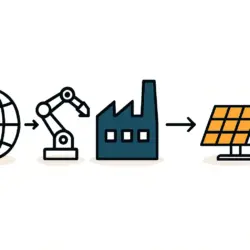
This project is a key component of the Oman Vision 2040 strategy, which aims to diversify the country’s energy sources and achieve net-zero emissions by 2050. While the Dhofar II project harnesses wind, it is part of a broader renewable energy strategy that also heavily features solar power, as highlighted in the latest Oman Solar Production Report. The nation’s commitment extends beyond installation to understanding the entire clean energy value chain. This involves a deep dive into the basics of manufacturing for renewable technologies, from sourcing essential raw materials to mastering the complete manufacturing process. Gaining expertise in the required manufacturing machines and understanding the detailed plant cost breakdown are critical steps toward building a self-sufficient and robust green economy.
To dive deeper into the world of renewable energy production and its various components, explore our comprehensive free e-course.