Japan’s ambitious energy goals are making headlines, with reports suggesting its new perovskite solar technology could one day generate power equivalent to 20 nuclear reactors. While this figure represents the immense potential of this next-generation technology, the real story lies in Japan’s strategic push to revolutionize renewable energy, a move that holds significant implications for Germany’s own Energiewende.
Perovskite Solar Cells: A Game-Changer for Japan and the World
Japan is heavily investing in the commercialization of perovskite solar cells, a technology poised to redefine the solar industry. These cells are celebrated for their potential for high efficiency and lower production costs, positioning Japan as a future leader in a critical energy sector. For homeowners and tenants in Germany, this innovation offers a glimpse into the future of personal energy generation.
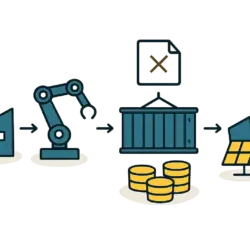
Perovskite solar cells have distinct advantages over traditional silicon-based panels. Their unique crystal structure allows for a simpler solar panel manufacturing process, which can significantly reduce costs.
One of the most exciting features is their physical flexibility. Unlike rigid silicon panels, perovskite cells can be manufactured into ultra-thin, lightweight sheets. Imagine solar technology integrated directly into curved roofs, building facades, or even lightweight balcony power plants (Balkonkraftwerke), where weight restrictions are a major concern. This vision aligns with Japan’s investment in ultra-thin solar panels, signaling a major shift in how we can deploy solar power.
Efficiency and Performance of Perovskite solar
In laboratory settings, perovskite solar cells have already achieved conversion efficiencies surpassing 25%, with tandem cells (a layer of perovskite on top of silicon) showing a potential to exceed 33%. This high efficiency means more power from a smaller area.
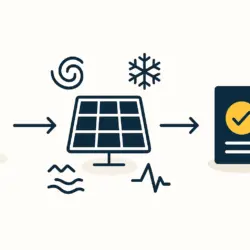
Crucially for the German climate, perovskites perform remarkably well in low-light conditions. This ability to maintain efficiency on cloudy days makes them an incredibly promising technology for Northern Europe, potentially boosting year-round energy yields compared to traditional panels. This drive for next-generation solar is underscored by government initiatives like NEDO’s unique 2024 call for proposals to accelerate development.
Challenges and Solutions for Perovskite solar Japan
Like any emerging technology, perovskite cells face hurdles. Early prototypes struggled with durability, degrading when exposed to moisture and heat. However, researchers are making rapid progress with protective coatings and new material compositions to extend their lifespan.
Another challenge is the use of lead in some solar panel raw materials for perovskites, which poses environmental questions. The industry is actively developing stable, lead-free alternatives to ensure the technology is as green as the energy it produces. Overcoming these obstacles is the final step before this technology can be widely adopted in consumer markets.
Japan’s Commitment to Renewable Energy with Perovskite solar
Japan’s focus on perovskite technology is a key part of its strategy to achieve carbon neutrality by 2050. This commitment is evident in Japan’s energy transition plan, which includes a massive investment in perovskite solar. This strategy is part of a broader, pragmatic approach to energy that also considers nuclear power as a stable, low-carbon source, reflecting a comprehensive vision for Japan’s energy security.
The commercialization of perovskites is set to create new markets for innovation, from building-integrated photovoltaics to wearable technology. For those interested in the latest developments, the Japan solar news archives offer ongoing updates on this dynamic sector.
Global Implications and What It Means for Germany Regarding Perovskite solar Japan
Japan’s leadership in perovskite technology has global significance. As mass production begins, it is expected to drive down the overall solar panel manufacturing plant cost breakdown, making advanced solar power more affordable worldwide.
For German homeowners and businesses, this means the next generation of solar installations could be more efficient, versatile, and aesthetically integrated than ever before. The lightweight and flexible nature of perovskites could unlock solar potential on countless surfaces previously deemed unsuitable for heavy, rigid panels. As this technology matures, it will fundamentally change how we design our cities and power our homes.
The advancements in Japan are setting a new benchmark for solar energy. To dive deeper into the world of solar panel production and prepare for the next wave of technology, check out our free e-course.