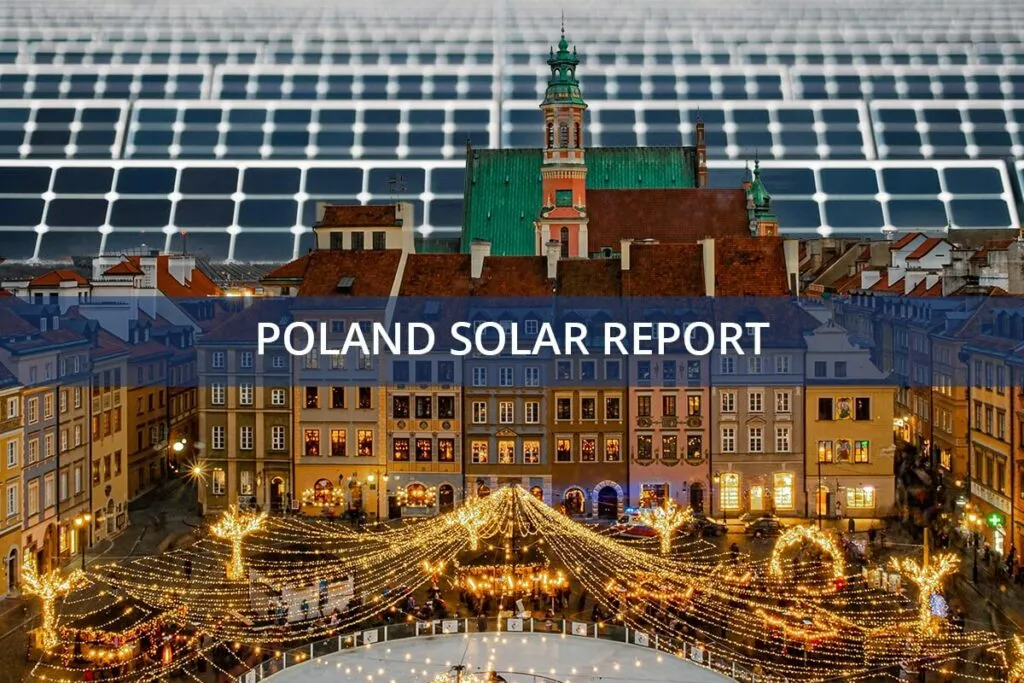
Poland’s installed solar PV capacity has surged past the 21 GW milestone, reaching 21.6 GW by the end of September 2024, according to the Energy Market Agency (ARE). The country solidified its position as a major European solar market by adding an impressive 3.5 GW of new capacity in the first nine months of the year alone. This rapid expansion highlights Poland’s commitment to renewable energy but also introduces new challenges for its national grid.
Steady Growth in Poland PV energy storage
This year’s achievement is part of a consistent and powerful growth trajectory. The expansion follows the addition of 4.5 GW in 2023, 3 GW in 2022, and 3.7 GW in 2021. This sustained development underscores Poland’s successful efforts to transition its energy mix.
The majority of Poland’s solar capacity, totaling 15.9 GW, comes from distributed rooftop installations. This “prosumer” segment has been a cornerstone of the country’s solar boom, showing consistent growth with 3 GW added in 2023, 2.8 GW in 2022, and 3.5 GW in 2021.
Meanwhile, the remaining 5.7 GW of solar capacity originates from large-scale solar parks. This utility-scale segment is also expanding rapidly, with 1.2 GW added in 2023, 1.7 GW in 2022, and 200 MW in 2021, signaling growing investor confidence in Poland’s renewable energy market.
Factors Driving Poland PV energy storage Expansion
Poland’s solar growth is propelled by several key factors, including supportive government policies, increasing awareness of renewable energy’s benefits, and a strategic focus on energy security to reduce reliance on fossil fuels. A significant driver has been the falling costs of solar technology. Global advancements in the solar panel manufacturing process and more efficient use of solar panel raw materials have made solar power more affordable than ever for both homeowners and large-scale developers.
The Polish government’s auction system for renewable energy projects has been instrumental in promoting large-scale solar developments. Furthermore, incentives such as net-metering schemes have successfully encouraged residential and commercial rooftop solar installations, empowering citizens to participate in the energy transition. Understanding the basics of solar panel manufacturing helps clarify how these technological improvements translate into lower costs for consumers.
Future Prospects and Growing Pains for Solar Energy in Poland PV energy storage
Looking ahead, Poland’s solar sector is poised for continued expansion as the country strives to meet its renewable energy targets and contribute to the European Union’s goal of carbon neutrality by 2050. However, this rapid success is creating significant growing pains.
The sheer volume of solar and wind energy being added to the system has begun to cause grid constraints. At times, the combined renewable energy output already exceeds the grid’s peak load capacity, leading to a phenomenon known as curtailment, where potential energy production is deliberately cut to prevent grid overload. This underscores the urgent need for grid modernization.
Consequently, the focus is shifting towards enhancing the integration of solar power. The growing interest in energy storage solutions and smart grid technologies is no longer a future prospect but a present necessity. These systems are crucial for stabilizing the grid, storing excess energy for later use, and improving the overall efficiency of renewable energy utilization.
With continued government support and favorable market conditions, Poland’s solar capacity will undoubtedly expand further. This growth will be pivotal for the country’s energy transition, helping to reduce greenhouse gas emissions and support its long-term sustainability goals. The next critical phase of Poland’s solar journey will involve mastering the integration of this vast new capacity.
To dive deeper into the technology making this green revolution possible, consider exploring our free e-course on solar panel manufacturing.