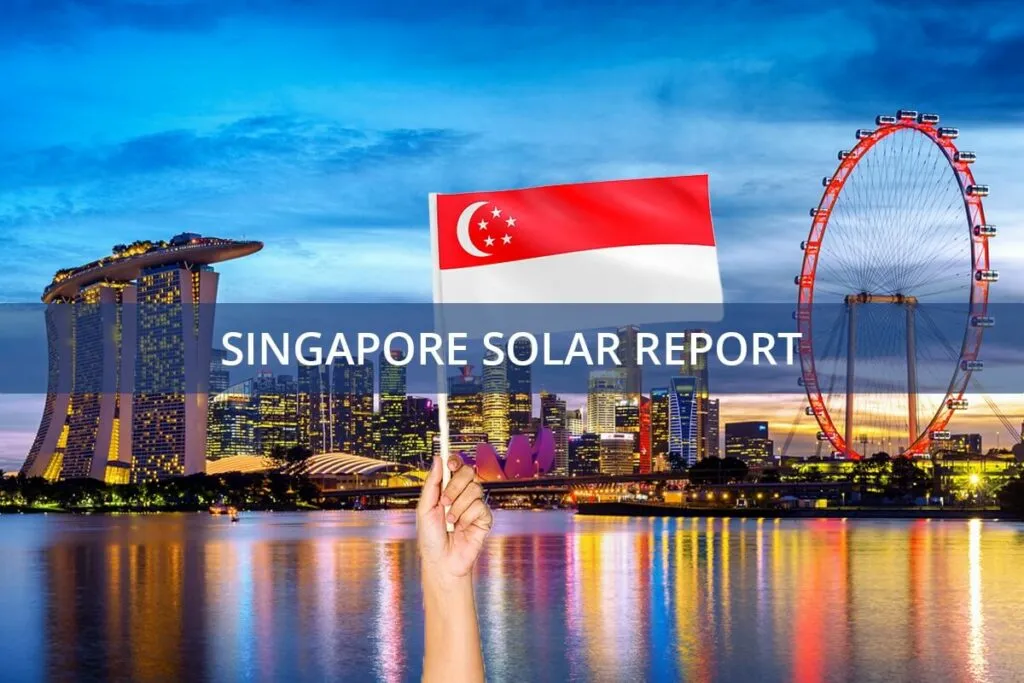
Singapore is doubling down on its commitment to renewable energy, with plans to install solar panels on up to 1,075 public housing blocks. This major push, part of the Housing Development Board’s (HDB) ambitious goal to achieve net-zero energy consumption in its towns, is set to significantly boost the nation’s solar energy production and solidify its role as a leader in urban sustainability.
Singapore HDB solar panels on Public Housing
Under its largest solar tender to date, Singapore is set to equip up to 1,075 public housing blocks with solar panels across several towns. The installation will be carried out by a subsidiary of Keppel Corporation, a move that aligns with the company’s growing focus on clean energy, as seen in the recent Keppel Cleantech acquisition. The work, which will cover blocks managed by the Aljunied-Hougang, Nee Soon, and Sengkang town councils, is expected to be completed by the third quarter of 2026.
This initiative will add a substantial 76 megawatt-peak (MWp) of clean energy to the grid. The generated power will primarily be used to run common services like lifts, lights, and water pumps during the day, with any excess energy sold back to the grid. This project is a key part of the sixth SolarNova tender, a government programme driving solar adoption with a total awarded capacity of 300 MWp.
HDB’s Solar Energy Initiative in Singapore HDB solar panels
The installation of these solar panels is a cornerstone of HDB’s broader green initiative to slash its energy consumption and carbon footprint. To date, HDB has already outfitted over 6,300 of its blocks with solar panels, making it the largest single owner of solar installations in the country.
These existing panels have generated an impressive 1,155 GWh of clean energy—enough to power 260,000 four-room HDB flats for a year. This has translated into a reduction of approximately 485,000 tonnes of carbon emissions. Looking ahead, HDB aims to have solar panels on 14,000 blocks by 2030, which is projected to generate 2,000 GWh of renewable energy annually and cut carbon emissions by a massive 880,000 tonnes. The initiative also includes innovative plans to retrofit about 4,000 lifts with their own solar panels, further decentralizing power generation.
Tapping into Singapore HDB solar panels Power
As a tropical nation with abundant year-round sunlight, Singapore is perfectly positioned to harness solar power as a viable and sustainable energy source. Over the last decade, the city-state has invested heavily in solar energy, supported by significant advancements in the basics of solar panel manufacturing and overall efficiency. The complex solar panel manufacturing process has become more streamlined, making large-scale deployment more feasible.
With growing energy demands and a firm commitment to reducing greenhouse gas emissions, solar has become a critical component of the country’s energy strategy. The installation of panels on HDB rooftops is a significant step towards meeting Singapore’s renewable energy goals, which include generating 2 gigawatt-peak (GWp) of solar energy by 2030. You can explore the nation’s industry in the detailed Singapore Solar Panel Manufacturing Report. As the solar panel manufacturing plant cost breakdown shows, economies of scale make such large projects increasingly cost-effective, benefiting both residents and national sustainability efforts.
Singapore HDB solar panels Energy in the Future
The Singapore government’s unwavering support for solar energy is evident through initiatives like the SolarNova programme and the Solar Energy Research Institute of Singapore (SERIS), which drive innovation and growth. The regulatory framework, including strict guide to NEA environmental compliance, ensures that this growth is sustainable. While HDB projects represent a massive public sector push, private companies are also contributing significantly, such as when TotalEnergies commissioned a 1 MW solar system at one of its plants in Singapore.
Beyond its own shores, Singapore is also looking to regional partnerships to secure its energy future. Ambitious undertakings like the Riau Islands solar project aim to generate and transmit clean energy to the nation, highlighting a multi-pronged strategy. As the world transitions to a more sustainable energy landscape, Singapore’s commitment to solar power demonstrates its dedication to building a greener future.
To gain a deeper understanding of the technologies driving this change, from the specific solar panel raw materials to the advanced solar panel manufacturing machines required for production, explore our resources. If you’re inspired by Singapore’s journey and want to learn more about the industry, consider enrolling in our free e-course on solar panel manufacturing.