Uzbekistan’s Solar Capacity Reaches 3 Gigawatts: A Renewable Energy Milestone
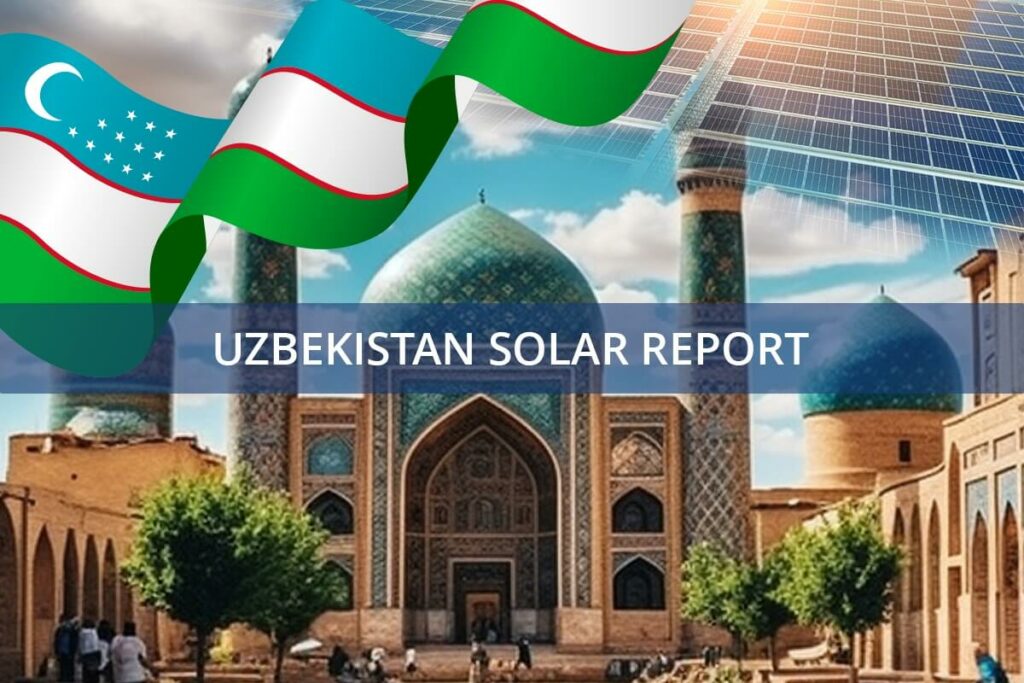
Uzbekistan has officially crossed a significant threshold in its green energy transition, with its installed solar power capacity reaching an impressive 3 gigawatts (GW). This achievement, confirmed in early 2026, marks a pivotal moment in the nation’s journey towards energy security and sustainability, positioning it as a clear leader in Central Asia’s renewable energy landscape.
The rapid expansion is a direct result of a concerted national strategy and substantial international investment, transforming the country’s energy profile in just a few short years.
The Meteoric Rise of Uzbekistan solar capacity to 3 GW
Uzbekistan’s solar journey has been one of exponential growth. As recently as 2023, the country’s solar capacity was a modest 0.5 GW. By the end of 2024, this figure had surged to 2.3 GW, largely driven by the commissioning of massive utility-scale solar farms.
This momentum continued through 2025 and into early 2026, with key projects contributing to the new 3 GW total. The development has been anchored by flagship installations, including the monumental 1 GW Sherabad Solar Power Plant and the 500 MW Benovut plant. These projects, supported by international partners like Masdar and ACWA Power through public-private partnerships, highlight a successful model of attracting foreign investment from nations such as the UAE, Saudi Arabia, and China.
A Strategic Push for a Greener Future with Uzbekistan solar capacity
This milestone is no accident; it is the calculated outcome of the government’s ambitious energy policy. The “Uzbekistan-2030” strategy and the 2022-2026 Energy Strategy explicitly prioritize the shift away from a heavy reliance on natural gas, which has traditionally dominated over 80% of the nation’s power generation.
The government’s goal is to achieve 5 GW of solar capacity by 2030 and increase the share of renewables in the total energy mix to between 25-27%. This strategic focus has been backed by tangible support, with organizations like the World Bank providing over $1 billion in financing since 2022. Furthermore, a competitive auction system has driven down electricity tariffs to as low as $0.03 per kilowatt-hour, among the lowest in Asia, making solar power an economically viable solution.
Tangible Impact of Uzbekistan solar capacity on Homes and the Environment
The 3 GW of installed solar capacity is already making a substantial difference. This infrastructure is capable of generating approximately 5 to 6 terawatt-hours (TWh) of clean electricity annually. This output is enough to power around two million homes across the country.
Beyond providing clean and affordable energy, the environmental benefits are profound. By displacing fossil fuel generation, Uzbekistan’s solar farms are helping to reduce carbon dioxide emissions by an estimated 4 million tons per year, a crucial step in combating climate change.
Challenges and the Path Forward for Uzbekistan solar capacity
While the rapid expansion is a success story, it also presents challenges. The national grid requires significant upgrades to handle the variability of renewable energy sources, with reports indicating only about 70% of the grid is currently prepared. In addition, practical issues such as water scarcity for panel cleaning and the impact of dust accumulation—which can reduce efficiency by up to 30%—must be managed effectively.
Uzbekistan is already looking ahead. Plans are in motion to add another 1 GW of solar capacity between 2026 and 2027. To address intermittency, the country is piloting 200 MW of battery storage solutions. Innovative projects, including floating solar pilots on reservoirs, are also being explored to maximize land and water resources.
This forward-thinking approach solidifies Uzbekistan’s status as a regional trailblazer, far outpacing its neighbors. For those following the latest developments, official press releases from Uzbekistan’s Ministry of Energy and data dashboards from the International Renewable Energy Agency (IRENA) serve as excellent resources.