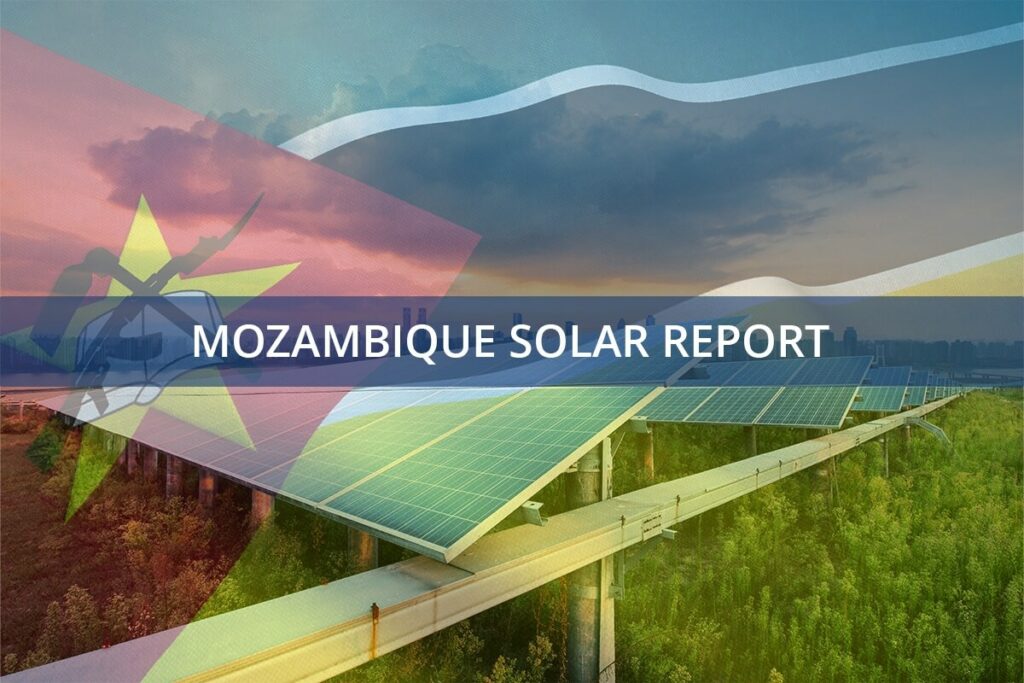
A US$110.6 million solar project in Mozambique will support the country’s goal of universal electrification by 2030. Located in Moamba, the project will also help reduce the country’s reliance on hydropower, create jobs, and boost the local economy.
Solar Project: Boosting Mozambique’s Energy Sector
A new US$110.6 million solar project in Mozambique marks a major step toward the country’s goal of achieving universal electrification by 2030. Planned for Moamba in Maputo Province, the project will help Mozambique tap into its abundant solar resources, diversifying its energy mix and reducing its reliance on hydropower.
The solar project will cover about 142 hectares in the village of Matunganhane, near the Corumana Dam. The state-owned power utility, Electricidade de Moçambique (EDM), is leading the project alongside several private companies through the operating entity Central Solar de Corumana. This collaboration will create jobs, boosting the local economy and supporting regional growth.
As Mozambique emerges as a leader in solar energy development, this project is another significant step forward. The 60-megawatt (MW) power plant aligns with the country’s Strategic Plan for the energy sector.
According to an environmental impact study, this renewable energy project is projected to provide significant economic benefits for both the Moamba district and Maputo Province. By contributing to the national grid, it will help meet the country’s energy needs while driving growth in local communities.
A Growing Solar Revolution
The new Moamba project is part of a national push to expand renewable energy. By 2030, the country plans to implement solar projects in Dondo, Lichinga, Manje, Cuamba, and Zitundo, aiming for a total capacity of 1,000 MW in what is being called a “true solar revolution.”
Mozambique is currently heavily dependent on hydroelectric power, with the massive Cahora-Bassa Hydroelectric Plant generating over 82% of the country’s electricity. However, due to climate change and the increasing frequency of droughts, this reliance on hydropower poses significant risks.
The country’s Energy Transition Strategy acknowledges this challenge and highlights the need to build a more diversified energy mix. By incorporating solar and wind energy, Mozambique can better adapt to changing weather patterns and ensure a steady supply of electricity.
This strategic shift is already showing results. Mozambique’s solar energy production grew by nearly 14% in the first quarter of 2024 compared to the same period in 2023, rising from 17,328 MWh to 19,688 MWh. While solar still accounts for less than 0.5% of total energy production, the upward trend is a promising sign as the country’s renewable projects expand.
Investing in a Green Future
Mozambique’s long-term energy goals are clear. By 2050, the government aims to install at least 7.5 gigawatts (GW) of solar capacity across the country. This would not only meet domestic electricity demand but also allow Mozambique to export green energy to neighboring countries, generating additional revenue and strengthening the national economy.
Alongside solar, Mozambique is also developing wind power. Between 200 MW and 500 MW of onshore wind capacity is expected to come online by 2030, particularly in regions like Lagoa Pathi in Inhambane. By diversifying its energy sources, Mozambique is positioning itself as a key player in Africa’s renewable energy sector.
The solar project at Moamba is just the beginning of what promises to be a large-scale transformation. According to the Energy Transition Strategy, the introduction of solar and wind energy will help Mozambique overcome the strategic challenge of balancing green energy for export with the energy needs of its industrial consumers.
The US$110.6 million solar project represents a significant milestone for Mozambique’s energy sector. By investing in renewable energy, the country is not only reducing its reliance on hydropower but also building a more resilient and sustainable energy future. With plans to install 1,000 MW of solar capacity by 2030 and 7.5 GW by 2050, Mozambique is well on its way to becoming a leader in green energy in Africa.