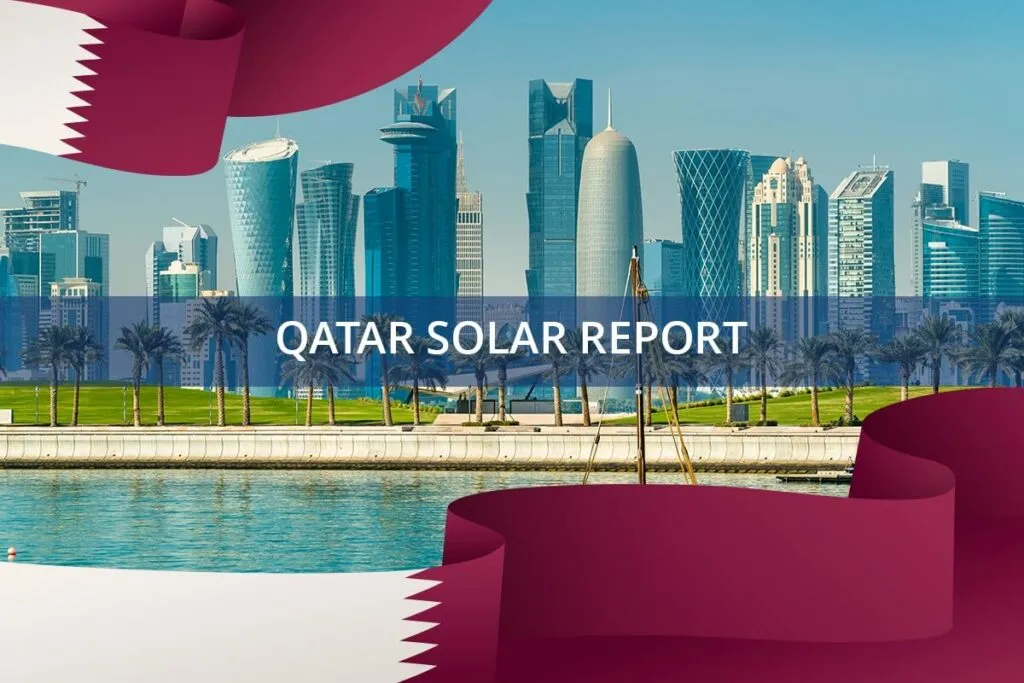
QatarEnergy has announced its target to reach over 5 GW of solar capacity by 2035, marking a significant move toward reducing carbon emissions and expanding its renewable energy footprint. This ambitious goal is a key pillar of the company’s updated Sustainability Strategy, which aligns with Qatar’s broader National Vision 2030 to balance economic growth with environmental stewardship.
QatarEnergy solar capacity Expansion and Carbon Reduction
QatarEnergy’s plans to enhance its solar capacity include the completion of two major solar projects: the 800 MW Al Kharsaah solar plant and the 1.7 GW Mesaieed and Ras Laffan solar plants. These projects are expected to be fully operational by early 2025, contributing to the company’s goal of reducing greenhouse gas emissions.
This solar drive is part of a multi-faceted approach to decarbonization. The strategy also includes eliminating routine flaring, limiting methane emissions along the gas value chain, and significantly expanding carbon capture and storage (CCS) capabilities.
In addition to these projects, QatarEnergy is progressing with environmental impact assessments for new solar initiatives, including a 500 MW solar installation at the North Field East LNG project. QatarEnergy’s Executive Vice President of Surface Development and Sustainability, Abdulaziz Al-Mannai, emphasized the importance of these projects in achieving the company’s net-zero targets.
“By 2030, we aim to reduce GHG emissions by 25% from upstream operations and 30% from downstream operations. A key part of this plan is the expansion of solar power capacity, which will play a significant role in meeting our 2035 net-zero target,” Al-Mannai said in an interview.
Solar Projects: Al Kharsaah and Mesaieed & Ras Laffan QatarEnergy solar capacity
The Qatar solar power plant launches 800 MW Al Kharsaah project, which began operations in 2022, was the first utility-scale solar plant in Qatar and notably provided clean power for the 2022 FIFA World Cup. The plant features over 2 million solar panels, each a product of a complex manufacturing process, and is equipped with a robotic cleaning system to maintain efficiency in the harsh desert environment. It boasts a capacity of 800 MW, covering 10 square kilometres.
The Mesaieed and Ras Laffan solar power plants are even larger, with a combined capacity of 1.7 GW. These two plants are set to begin operations in early 2025, further boosting QatarEnergy’s solar output. The plants are strategically located to support Qatar’s growing industrial and residential energy needs and reduce reliance on fossil fuels. These efforts are part of a massive push, which includes another stunning 1.6 GW project planned by 2029.
These projects are part of QatarEnergy’s broader strategy to achieve net-zero emissions by 2050. The company is also exploring carbon capture and storage (CCS) technologies with the goal of capturing over 11 million tons of CO2 annually, complementing its solar initiatives.
Challenges and Future Plans for QatarEnergy solar capacity
One of the significant challenges QatarEnergy faces is the harsh desert environment, which can impact the efficiency and lifespan of solar panels. To address this, the company has implemented innovative solutions such as robotic cleaning systems and advanced panel technologies that utilize specialized raw materials designed to withstand high temperatures and dust.
QatarEnergy is also working on integrating its solar projects with the national grid, ensuring a stable and reliable supply of clean energy. This challenge of grid integration is familiar to many nations, including Germany, which has pioneered the management of variable renewable energy sources. Qatar’s efforts contribute to a global knowledge base on creating resilient, clean energy grids. The company is coordinating with other stakeholders in Qatar’s energy sector to develop a comprehensive energy strategy that aligns with the country’s Vision 2030, supporting sustainable urban developments like Lusail City and Msheireb Downtown Doha.
In addition to solar energy, QatarEnergy is exploring other renewable energy sources such as wind and hydrogen. The company is conducting feasibility studies to assess the potential for wind farms and green hydrogen production, which could further diversify its energy portfolio and contribute to its long-term sustainability goals.
By investing in renewable energy, QatarEnergy is positioning itself as a key player in the global energy transition. The company’s solar projects are not only reducing its carbon footprint but also driving innovation and collaboration. Such large-scale developments help advance technology across the supply chain, from specialized manufacturing machines to optimizations in the overall plant cost breakdown, with benefits that ripple through the global market.
To understand more about the fundamentals of solar energy production, from the basics of manufacturing to the final installation, consider exploring our free e-course.