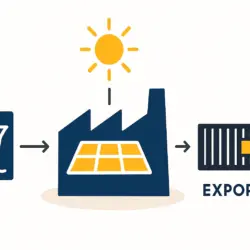
Bhutan is set to build a landmark 500-MW solar power project in collaboration with Reliance Power, marking the nation’s most significant solar initiative to date. This ambitious project will be developed at Sephu in the Wangdue Phodrang district and is slated for completion by 2029. As part of the agreement, India has committed to purchasing the electricity generated at a tariff of ₹4 per unit, reinforcing the strong energy partnership between the two nations.
Strategic Partnership for the Bhutan solar project
The foundational agreement for this project was signed by the Bhutanese government, its state-owned Druk Green Power Corporation (DGPC), and India’s Reliance Power. This venture is a cornerstone of Bhutan’s strategy to diversify its renewable energy portfolio, which has historically been dominated by hydropower. Shifting towards solar reduces dependency on seasonal water flows and builds a more resilient energy grid.
This 500-MW plant represents a massive scale-up of Bhutan’s solar ambitions. It follows earlier initiatives, such as the 100 MW Solar Initiative Marks … commissioned by another Indian firm, showcasing a clear and accelerating trend towards solar energy development in the kingdom.
According to The Hindu Business Line, Bhutan’s total installed renewable energy capacity stands at 2,335 MW, with hydropower accounting for 99.99%. To diversify, the country plans to add 1.2 GW of solar power and 0.3 GW of wind power by 2030, a goal to which this project is a major contributor. For those interested in the country’s solar potential, a detailed analysis is available in the Bhutan Solar Panel Manufacturing | Market Insights Report.
For India, this project is a crucial component of its cross-border energy cooperation and helps in achieving its own ambitious renewable energy targets of 500 GW by 2030. The partnership extends beyond this single project, with other Indian companies like Tata Power also investing heavily in Bhutan’s hydropower sector. The power generated will be evacuated via a dedicated 400-kV transmission line from the project site to the Indo-Bhutan border.
Bhutan’s Renewable Energy Goals and the Bhutan solar project
Bhutan is globally recognized for its commitment to being carbon-negative, and this project further solidifies that status. By diversifying its energy mix, the country aims to reduce its near-total reliance on hydropower and achieve a target of generating 20 percent of its energy from non-hydropower renewable sources like solar, wind, and biomass by 2030.
While the nation plans to add 2,600 MW of hydropower capacity by 2027, the parallel push for solar and wind is clear. The development of this 500-MW solar project will be funded through a mix of grants, concessional loans, and equity investments from both domestic and international sources. Understanding the financial elements of such a large-scale installation can be complex, but a general Plant Cost Breakdown offers insight into the typical investment structure.
The successful completion of this project will establish Bhutan as a key player in renewable energy in the region. The solar plant will be constructed using state-of-the-art technology, ensuring high efficiency and minimal environmental impact. This involves a sophisticated Manufacturing Process that relies on high-quality Raw Materials and advanced Manufacturing Machines to produce durable and effective solar panels.
India’s Commitment to the Bhutan solar project
India’s dedication to renewable energy extends beyond its borders. The nation has consistently championed clean energy on international platforms, such as the India-Africa Partnership for a Green Future, where it pledged significant funds for clean energy projects in Africa. This approach underscores India’s strategy to promote sustainable development and combat climate change globally.
The partnership between India and Bhutan is a testament to the growing importance of renewable energy in the global energy landscape, a trend well-documented in the Global Solar Report. This collaboration is expected to set a powerful precedent for future cross-border renewable energy projects, particularly within the South Asian region.
The 500-MW solar project is a significant milestone in Bhutan’s renewable energy journey. With the technical expertise of Reliance Power and the steadfast support of the Indian government, Bhutan is well-positioned to achieve its renewable energy targets while contributing to regional energy security. The project will not only boost Bhutan’s economy and reduce its carbon footprint but also strengthen its standing as a regional leader in sustainable energy.
To learn more about the fundamentals of solar technology, from production to installation, explore the Basics of Manufacturing or enroll in our comprehensive Free E-Course.