Indonesia is set to add 1.5 gigawatts (GW) of solar power capacity by the end of 2025, a crucial step in its strategy to transition away from coal-fired power plants. Spearheading this private-sector push is Indika Energy, which has announced a landmark $350 million investment in its solar business, signaling a significant strategic pivot towards renewable energy.
$350 Million Investment Towards Indonesia solar capacity target
Indika Energy, traditionally one of Indonesia’s leading coal miners, is channeling $350 million into its solar business by the close of 2025. This investment is aimed at installing 1.5 GW of solar power capacity, a substantial move that will reduce its own reliance on coal and provide a major boost to renewable energy generation across the archipelago.
Arsjad Rasjid, President Director of Indika Energy, confirmed that the company has already secured $100 million for this initiative and is actively engaging with international investors to raise the remaining $250 million. With the first phase of this ambitious project slated for completion by the end of 2024, the momentum is clearly building.
This decision marks a profound shift in Indika Energy’s long-term strategy. As a major coal producer, its decisive turn towards renewables aligns not only with global decarbonization trends but also with the Indonesian government’s concerted efforts to curb emissions from its energy sector.
Partnerships and Future Goals for Indonesia solar capacity target
Indika Energy is not undertaking this transformation in isolation. The company has forged key alliances to bolster its solar ambitions, including a joint venture with India’s Fourth Partner Energy to expand its solar portfolio.
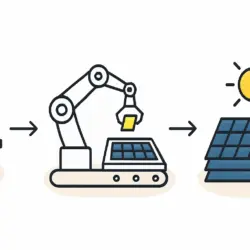
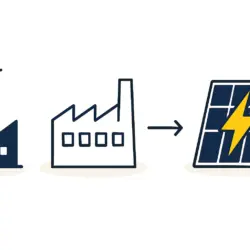
Crucially, Indika Energy has also partnered with China’s Trina Solar to construct a solar module factory in Batang, Central Java. This move is pivotal for developing a domestic supply chain and reducing reliance on imported components. Understanding the basics of manufacturing is key to appreciating the scale of such an enterprise, which involves a complex manufacturing process and sourcing specific raw materials. This development is part of a broader trend, as evidenced by news that Thornova Solar opens Indonesia plant to meet U.S. demand, highlighting the nation’s growing role in the global solar industry.
Beyond solar, Indika Energy is diversifying its renewable interests by exploring hydropower. The company is currently conducting feasibility studies for a 1,000-megawatt (MW) project in North Kalimantan and a 120-MW project in South Sulawesi.
This $350 million solar investment is a pivotal moment for Indika Energy. It reflects a wider sentiment within Indonesia, where polling shows 88% of business leaders want the government to transition away from fossil fuels.
Indonesia’s Renewable Energy Ambitions and solar capacity target
The Indonesian government has established bold targets for integrating renewable energy into its national grid. The country aims for renewables to constitute 23% of its energy mix by 2025, with solar power identified as a cornerstone of this transition. While the current installed renewable capacity is 13.2 GW, the goal is to reach 23 GW by 2025.
This push is part of a much larger vision. The government’s latest energy plan outlines a 71 GW expansion in total power capacity by 2034, with a strong emphasis on renewables. Forecasts suggest that solar is on a rapid growth trajectory, expected to become the country’s largest renewable energy source by 2028 and reach an impressive 23.2 GW of cumulative capacity by 2035.
This transition is driven by the urgent need to reduce greenhouse gas emissions and honor international climate commitments. As a major coal producer, Indonesia is under significant pressure to diversify its energy mix and pivot towards a more sustainable future.
The Challenges Ahead for Indonesia solar capacity target
While this massive investment in solar is a significant leap forward, Indonesia still faces hurdles in realizing its renewable energy potential. The country’s existing energy infrastructure requires substantial upgrades to integrate a growing share of variable renewable sources like solar. Furthermore, addressing regulatory and financial barriers is essential to attract the scale of investment needed for this energy transition.
Despite these challenges, the commitment is unwavering. The government is actively promoting growth through policies supporting floating solar farms, utility-scale projects, and updated net-metering regulations for rooftop solar. This top-down support, combined with decisive investments from forward-thinking companies like Indika Energy, is setting the stage for Indonesia’s transition to a low-carbon economy. The $350 million investment is more than a corporate milestone; it’s a vital contribution to a greener, more sustainable Indonesia.
To learn more about the intricacies of the solar industry, from production to installation, explore our free e-course.