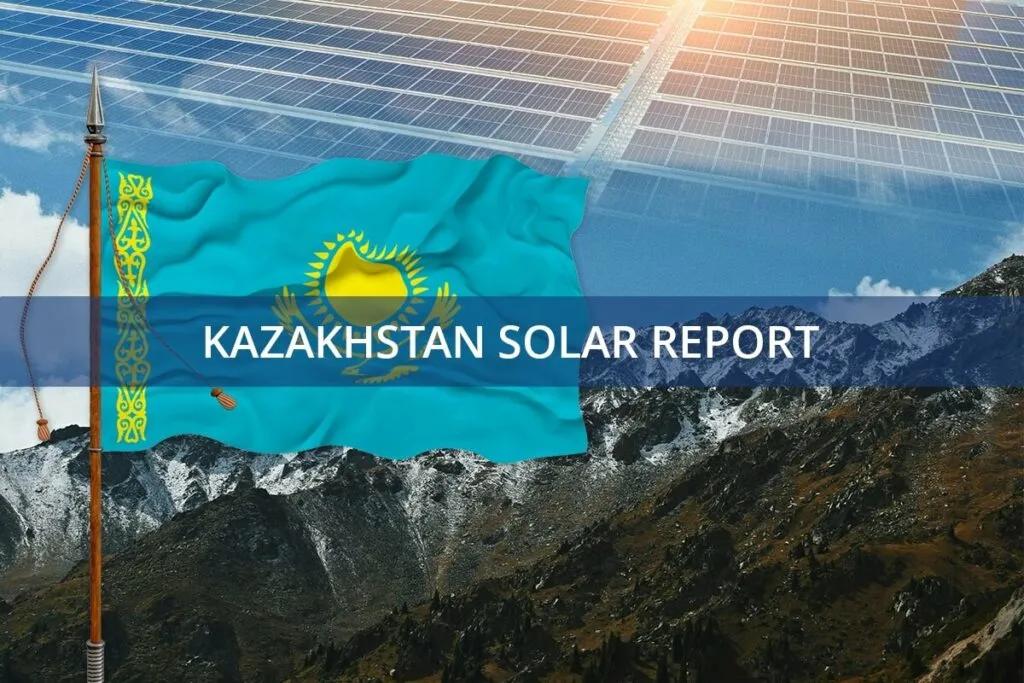
Kazakhstan is set to enhance its national energy grid with the construction of new solar and wind farms, a move powerfully supported by international finance. The European Bank for Reconstruction and Development (EBRD) has approved a $51.2 million debt financing package to support three pioneering projects in the Zhambyl region, spearheaded by the state-owned Kazakhstan Utility Systems (KUS). This investment is a critical component of a broader national strategy that is already yielding remarkable results.
Projects in Kazakhstan renewable energy
The initiative focuses on three key installations in the Zhambyl region: a 100 MW solar farm in the village of Buryl, a 100 MW wind farm in the village of Aksuiyes, and a 50 MW wind farm in the village of Termitau. All projects are on track to be fully operational by the second half of 2025, marking a historic year for the nation’s green energy ambitions.
This venture is a significant milestone for KUS, representing its first major foray into renewable energy despite the company’s long-standing history in the sector. The successful completion of such large-scale solar farms relies on a sophisticated manufacturing process for the photovoltaic modules. These developments are perfectly aligned with Kazakhstan’s strategy to diversify its energy mix and substantially reduce its greenhouse gas emissions.
Kazakhstan’s Renewable Energy Goals
Kazakhstan’s government has laid out an ambitious roadmap for its energy future, aiming to increase the share of renewables in the national energy mix to 20% by 2030 and a remarkable 80% by 2060. The country started from a baseline of 2,400 MW of installed renewable capacity against a total national capacity of 25,000 MW, with a heavy historical reliance on fossil fuels.
However, 2025 has proven to be a watershed year. Thanks to strategic investments and international partnerships, Kazakhstan has achieved a historic milestone: large-scale solar and wind farms now supply over 35% of the national energy demand. This rapid expansion includes a 43.8% growth in solar power capacity and a 21.4% increase in wind power. This dramatic progress demonstrates the country’s commitment and showcases how targeted policies can accelerate a transition to a more sustainable energy future, a lesson of global relevance. For those interested in the technical side of this growth, understanding the basics of manufacturing solar panels is crucial.
The Role of Private Sector Investment
The EBRD has been instrumental in facilitating private sector participation in Kazakhstan’s renewable energy sector. In a statement, the bank highlighted its role in fostering private involvement and supporting the development of critical green infrastructure. Having financed the country’s first solar and wind farms, the EBRD’s continued support is a vote of confidence in the nation’s green trajectory.
This financing is part of a broader effort to attract diverse investment. Beyond the EBRD, Kazakhstan has fostered other international collaborations, such as the development of the Zhanatas wind farm using Chinese technology. This multi-faceted approach to investment ensures a resilient and technologically advanced build-out of its renewable capacity. For a deeper look into the economics, a detailed plant cost breakdown reveals the financial architecture behind these transformative projects.
The Future of Renewable Energy in Kazakhstan
The government of Kazakhstan has been proactive in creating a fertile environment for renewable energy. By introducing policy measures like feed-in tariffs and other incentives, it has successfully attracted the necessary investment to turn ambitious goals into reality. The tangible success in 2025 proves these policies are highly effective.
This progress significantly contributes to Kazakhstan’s efforts to meet its international climate commitments, including its pledge to reduce greenhouse gas emissions by 15% by 2030 and achieve carbon neutrality by 2060. Sustaining this momentum will depend on a stable supply chain for essential raw materials and continued innovation in manufacturing machines.
The new solar and wind farms in the Zhambyl region are more than just power plants; they are symbols of a nation rapidly and successfully navigating the global energy transition. As these projects come online, they will further solidify Kazakhstan’s position as a leader in Central Asia’s shift toward a clean energy economy.
To learn more about the intricacies of solar technology and its production, you can explore our free e-course.