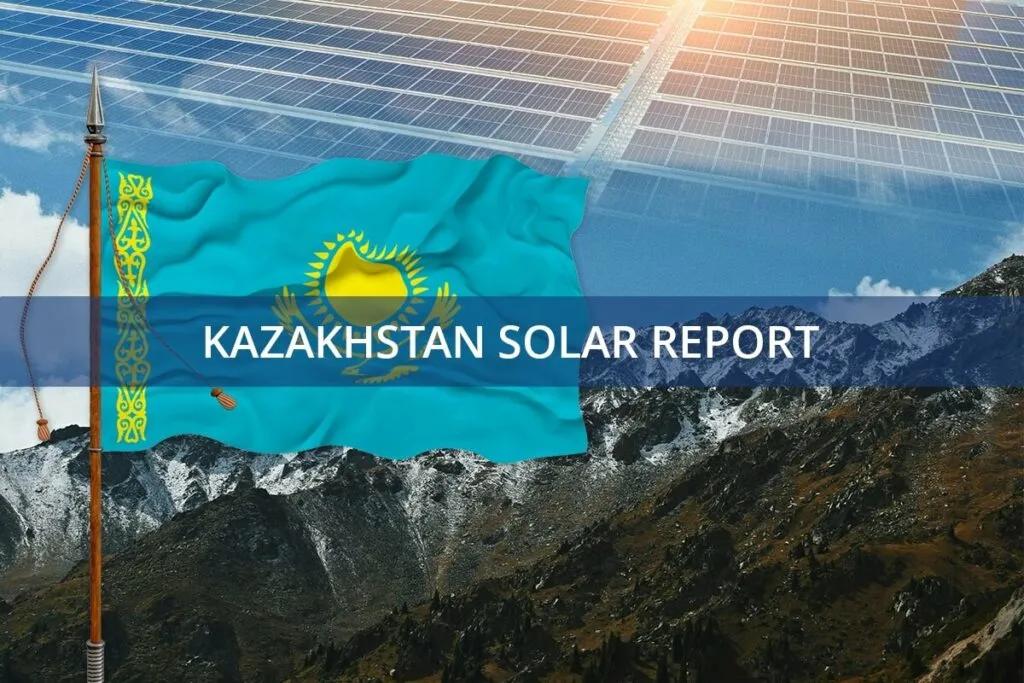
Kazakhstan is making significant strides in solar energy, adding 22 MW of new capacity in Q1 2024 to achieve a total installed capacity of 1,431 MW. This growth is part of the country’s broader strategy to diversify its energy sources and reduce reliance on fossil fuels. The expansion of solar energy is a key element of Kazakhstan’s renewable energy plan, which aims to increase the share of renewables in the energy mix to 15% by 2030. This commitment, however, is just one step in a far more ambitious long-term vision for sustainable development and addressing climate change.
Kazakhstan’s Solar Growth in the Kazakhstan solar energy sector
Kazakhstan’s solar energy capacity increased significantly, reaching 1,431 MW by the end of Q1 2024. This growth aligns with the country’s broader renewable energy goals and builds upon a solid foundation; the nation’s energy system already includes 158 renewable energy sources among its 237 power plants. The government’s ambitious plans include increasing the share of renewable energy in the country’s total energy mix to 15% by 2030. This target underscores Kazakhstan’s commitment to sustainable development and global climate goals, serving as a stepping stone toward an even larger goal: adding over 26 gigawatts (GW) of new power generation capacity by 2035.
The government’s support for renewable energy has been crucial in driving this growth. Kazakhstan has implemented favorable policies, including feed-in tariffs and long-term power purchase agreements, to attract investment. These measures have made it easier for investors, who must consider the entire solar panel manufacturing plant cost breakdown, to finance solar projects and have contributed to the rapid expansion of the country’s solar capacity. The government’s commitment is also reflected in its participation in international climate agreements, where it has pledged to reduce its greenhouse gas emissions as part of its commitments under the Paris Agreement.
Key Kazakhstan solar energy Projects
Several large-scale solar projects have contributed to Kazakhstan’s rapid growth in solar capacity. The Burnoye Solar-1 and Burnoye Solar-2 plants, located in the Zhambyl region, are among the largest solar projects in the country. Each plant has a capacity of 100 MW, making them significant contributors to Kazakhstan’s renewable energy infrastructure. The success of these projects, which covers everything from understanding the basics of solar panel manufacturing to large-scale deployment, has demonstrated the viability of solar energy in Kazakhstan and attracted further investment.
The Saran Solar Plant, with a capacity of 100 MW, is another key project that has played a pivotal role in the country’s solar energy expansion. Located in the Karaganda region, the Saran Solar Plant is one of the largest solar power plants in Central Asia. The project was developed by a consortium of international investors, highlighting the attractiveness of Kazakhstan’s renewable energy sector to foreign capital. This trend continues, with new investments on the horizon, such as a planned 300 MW solar plant backed by China Energy, which is part of a larger billion-dollar investment in Kazakhstan’s green energy sector.
Challenges and Future Prospects for Kazakhstan solar energy
Despite significant progress, Kazakhstan faces challenges in growing its renewable energy sector. Integration of intermittent renewable energy into the national grid remains a key issue. The country’s energy infrastructure is currently heavily reliant on fossil fuels, and significant upgrades are needed. To address this, the government is developing “EnergyTech,” a unified national digital platform to manage its fuel and energy complex, which is expected to be fully deployed by 2026-2027 to improve efficiency and integration.
Looking ahead, Kazakhstan’s renewable energy sector is poised for explosive growth. The country has set a remarkable target to introduce over 26 GW of new power capacity by 2035 through both modernization and new facilities. The government is actively working to attract more investment, with short-term goals of adding 250 MW of power capacity by the end of this year. This momentum is exemplified by massive undertakings like the Hyrasia One project, which aims to develop 40 GW of wind and solar capacity to become one of the world’s largest green hydrogen projects. These initiatives, combining knowledge of everything from solar panel raw materials to global logistics, signal a bright future.
In conclusion, Kazakhstan’s 22 MW solar capacity increase in Q1 2024 is a clear indicator of a much larger transformation. With a total installed solar capacity of 1,431 MW and a clear roadmap toward adding over 26 GW of new power by 2035, the country is on a firm trajectory to meet and exceed its renewable energy targets. Supported by strong government policy and significant foreign investment, Kazakhstan is not just a promising market for solar development—it is positioning itself as a future leader in the global transition to a low-carbon economy.
If you are inspired by Kazakhstan’s solar journey and want to deepen your own understanding of the technology behind it, you can start today. Explore the fundamentals of solar energy production by enrolling in our free e-course on solar panel manufacturing.