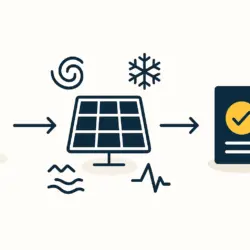
Panasonic has launched its HIT® (Heterojunction with Intrinsic Thin layer) solar panels in Japan, offering cutting-edge efficiency and affordability that make them ideal for dense urban rooftops. Timed with revisions to Japan’s government feed-in tariff policies, this launch introduces panels equipped with a unique heterojunction structure, combining monocrystalline and amorphous silicon to maximize power output and long-term durability.
High Performance in Urban Settings with Panasonic HIT solar panels
Panasonic’s HIT® solar panels are engineered specifically for urban environments where space is a premium. The panels achieve a remarkable module conversion efficiency of up to 23.7%, a significant leap forward in photovoltaic technology. This high performance is crucial for urban rooftops and other confined spaces where maximizing energy generation per square meter is essential, a goal that aligns with broader national trends as Japan invests in ultra-thin solar panels for energy security.
The core of this efficiency lies in the HIT® solar panels’ unique heterojunction structure. This advanced design, which layers amorphous silicon over a monocrystalline silicon wafer, captures more sunlight and reduces electrical losses compared to conventional panels. Understanding the basics of solar panel manufacturing helps appreciate how this hybrid structure maximizes power output while ensuring reliability, even in extreme temperature conditions. The panels are also designed to minimize degradation, maintaining their high performance for decades.
Cost Efficiency and Environmental Impact of Panasonic HIT solar panels
One of the standout features of the HIT® solar panels is their affordability. Panasonic has refined its solar panel manufacturing process to minimize the use of rare and expensive solar panel raw materials, thereby reducing production costs. This cost efficiency makes high-performance solar technology accessible to a wider range of consumers, supporting Panasonic’s goal of accelerating renewable energy adoption.
In terms of environmental impact, the HIT® solar panels are designed to significantly reduce CO2 emissions. According to Panasonic, a single panel can reduce emissions by up to 210 kg per year. This makes the panels a powerful option for consumers who are conscious of their carbon footprint and want to contribute to a greener future, especially for homeowners and tenants in Germany looking for effective ways to reduce their environmental impact.
Advanced Design and Durability of Panasonic HIT solar panels
The HIT® solar panels feature a sleek, low-profile design that integrates seamlessly into modern urban landscapes. They are protected by a thin-film coating that enhances their durability and resistance to harsh weather conditions. This coating also has anti-reflective properties, improving the panels’ ability to capture sunlight and further boosting their overall efficiency.
Furthermore, the panels are equipped with a unique water drainage system at the corners of the frame, preventing water accumulation and stains that can lead to performance degradation over time. This, combined with their excellent temperature coefficient, ensures that the panels operate at optimal efficiency even during hot summer months, a common challenge for traditional solar panels.
Compatibility and Versatility of Panasonic HIT solar panels
The HIT® solar panels are designed for broad compatibility with a wide range of inverters, making them a versatile choice for various installations. They can be integrated into existing solar systems or serve as the foundation for new installations without compatibility issues. This flexibility makes them an attractive option for both residential and commercial applications, a market segment detailed in the Japan Solar Panel Manufacturing Report.
The panels also come with a robust 25-year performance and product warranty, providing consumers with peace of mind and protecting their long-term investment. Panasonic offers comprehensive customer support to ensure the panels are installed correctly and maintained properly throughout their extended lifespan.
Future Prospects for Panasonic HIT solar panels
Panasonic’s launch of the HIT® solar panels in Japan marks a significant step towards making high-efficiency renewable energy more accessible. This move is indicative of a highly competitive market, where technologies like HJT are becoming a key differentiator, as seen with companies like Huasun Japan solar.
The company plans to expand the availability of these panels to other markets, including the United States and Europe, in the coming years. This expansion is part of Panasonic’s broader commitment to clean energy innovation, which includes pioneering research into perovskite cells and even futuristic concepts like space-based solar power.
With their superior efficiency, durability, and cost-effectiveness, Panasonic’s HIT® solar panels are poised to become a popular choice for consumers looking to invest in renewable energy. The panels not only offer significant environmental benefits but also provide substantial long-term savings on energy costs.
To learn more about the technology and business behind solar energy, you can enroll in our free e-course on solar panel manufacturing.