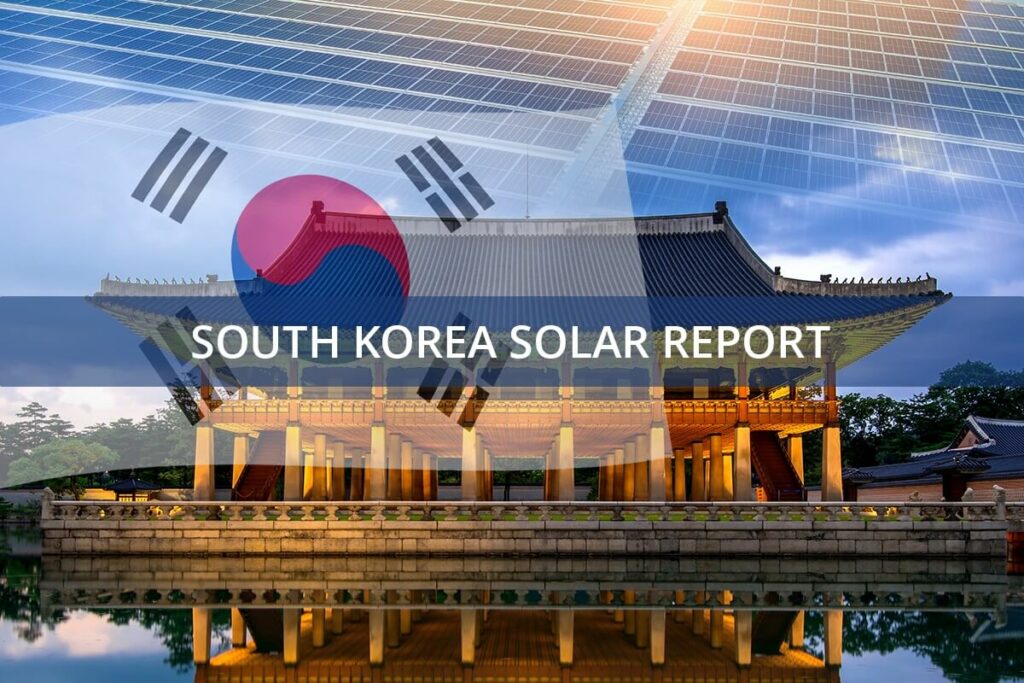
South Korea is set to mandate public enterprises to use domestically produced solar power products, starting in 2025. The Ministry of Trade, Industry, and Energy (MOTIE) announced that this policy will apply to public companies and public institutions, requiring them to procure solar panels, inverters, and energy storage systems (ESS) produced in South Korea. This move is a significant part of the nation’s broader strategy to enhance energy security and bolster its high-tech industrial base.
South Korea will require public enterprises to use locally produced solar power products.
Support for Domestic Solar Industry with South Korea solar mandate
This mandate aims to bolster the domestic solar manufacturing industry, which has been under intense pressure due to competition from lower-priced imports, particularly from China. The policy ensures that public sector procurement supports local manufacturers, thereby helping to sustain the industry and safeguard jobs. A closer look at the South Korea Solar Panel Manufacturing Report reveals the challenges and opportunities facing local producers.
The MOTIE emphasized that the policy is designed to counteract the influx of cheaper Chinese imports. By requiring public enterprises to purchase domestically produced solar products, the government hopes to provide a stable and predictable market for local manufacturers. This stability is crucial for mastering the basics of solar panel manufacturing at scale and competing more effectively against foreign rivals on quality and innovation, if not price alone.
The policy will be implemented in stages, with the MOTIE planning to review and adjust the scope of the mandate regularly. The goal is to ensure that the policy remains effective in supporting the domestic industry while also promoting innovation and competitiveness within the sector.
Boosting Market Confidence with South Korea solar mandate
By creating a guaranteed market for domestic solar products, the government hopes to instill confidence among manufacturers and encourage further investment in the industry. This, in turn, could lead to advancements in technology and increased production capacity within South Korea. Such investment would likely target upgrading solar panel manufacturing machines and refining production techniques.
The MOTIE’s decision was influenced by the need to shield the domestic solar industry from the price-driven competition of imports. The ministry noted that this policy is part of a broader national strategy to support the renewable energy sector and ensure the sustainability of local industries, aligning with President Lee’s administration’s push to develop industrial innovation in renewable-rich regions.
While the mandate is expected to provide significant benefits to the domestic solar industry, it could also lead to higher initial costs for public enterprises. Understanding the typical solar panel manufacturing plant cost breakdown highlights the capital-intensive nature of the industry. However, the government believes that the long-term benefits of a secure domestic supply chain and a robust industrial base outweigh these short-term costs.
Long-Term Benefits of South Korea solar mandate
The MOTIE’s decision is a key component of a broader effort to support the renewable energy sector in South Korea. The government has been actively promoting renewable energy sources to reduce the country’s dependence on fossil fuels and achieve its ambitious climate goals.
By supporting domestic manufacturers, the government aims to create a more resilient and competitive solar industry. A stable domestic market fosters innovation throughout the entire solar panel manufacturing process, from sourcing solar panel raw materials to final assembly. The mandate is also expected to create skilled jobs and stimulate economic growth within the renewable energy sector.
As the policy is implemented, the MOTIE will monitor its impact on the domestic solar industry and make adjustments as needed. The government is also considering additional measures to support the sector, including incentives for research and development and funding for new projects. This decision to mandate the use of domestically produced solar products is seen as a crucial step toward achieving energy independence and ensuring the long-term sustainability of South Korea’s solar industry.
If you are interested in learning more about the intricacies of setting up a solar manufacturing business, consider enrolling in our free e-course.