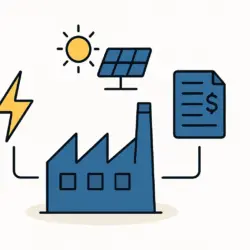
In a significant move to accelerate its renewable energy transition, Thailand’s Cabinet has approved new tax breaks for solar investment. This initiative is designed to bolster the development and adoption of solar power systems, supporting everything from large-scale manufacturing to individual rooftop installations as a cornerstone of the country’s green energy strategy.
Growing Solar Industry with Thailand solar tax breaks
Thailand is making substantial strides in the solar sector, aiming to expand its manufacturing capabilities and boost solar energy production to become a renewable energy leader in Southeast Asia. The nation’s progress is part of a broader regional trend, with neighboring countries like Laos and Myanmar also ramping up their solar ambitions. For instance, a Thai company is even developing a major solar panel manufacturing plant in Myanmar, highlighting the country’s growing influence.
This growth is underpinned by strong government support and strategic initiatives. According to a detailed Thailand Solar Panel Manufacturing Report, significant investment is flowing into the sector, driven by favorable government policies aimed at modernizing the country’s energy infrastructure and promoting sustainable development. While Laos also offers incentives like profit tax exemptions for solar projects, Thailand’s latest measures are set to make its market even more competitive.
New Tax Incentives Explained with Thailand solar tax breaks
The newly approved tax measures, which will be effective until December 31, 2028, pending a formal Royal Decree, provide specific deductions for both corporations and individuals. These incentives are more detailed and impactful than previous offerings, targeting distinct areas of the solar value chain.
For businesses, the new rules allow for a 50% deduction on the costs of high-efficiency machinery and equipment used for solar energy. To qualify, this equipment must be new, certified with a 5-star energy efficiency label, and ready for use by the 2028 deadline. This policy directly encourages investment in the solar panel manufacturing process by lowering the capital expenditure for companies. A comprehensive overview of these types of benefits can be found in our guide to Thailand’s BOI Incentives for Solar Manufacturing.
For individuals, the government has introduced a personal income tax deduction of up to 200,000 Baht for the cost of installing a residential rooftop solar system. This is a key part of the government’s broader strategy, as detailed in the Thailand solar incentives: Impressive 2024 Rooftop Plan, which aims to make solar energy more accessible and affordable for homeowners.
Thailand’s Solar Energy Growth and Thailand solar tax breaks
Thailand’s solar energy sector has expanded rapidly, with installed capacity exceeding 3,000 MW by 2023. The government has set an ambitious target to reach 10 GW by 2030, and these new tax breaks are a critical tool to help achieve that goal.
The incentives support the entire domestic solar manufacturing industry, from sourcing solar panel raw materials to deploying advanced solar panel manufacturing machines. By reducing the financial barriers, the government is fostering an environment where both local and international companies can thrive, creating jobs and boosting the economy. Understanding the basics of solar panel manufacturing is becoming increasingly valuable for investors looking to capitalize on this growth.
The country’s geographical location provides abundant sunlight, making it an ideal setting for solar energy generation. Combined with strong policy support, this natural advantage continues to attract significant foreign investment, bringing advanced technology and expertise into the market. This influx of capital helps lower the overall solar panel manufacturing plant cost breakdown and accelerates project development.
Thailand is also innovating by integrating solar power into its urban infrastructure and developing large-scale floating solar farms on reservoirs and dams, generating clean energy without occupying valuable land. These strategic initiatives, coupled with the new tax incentives, solidify Thailand’s commitment to a sustainable and solar-powered future.
For those looking to enter or expand within this booming market, understanding the fundamentals is crucial. To learn more about the opportunities in solar manufacturing, you can explore our free e-course.