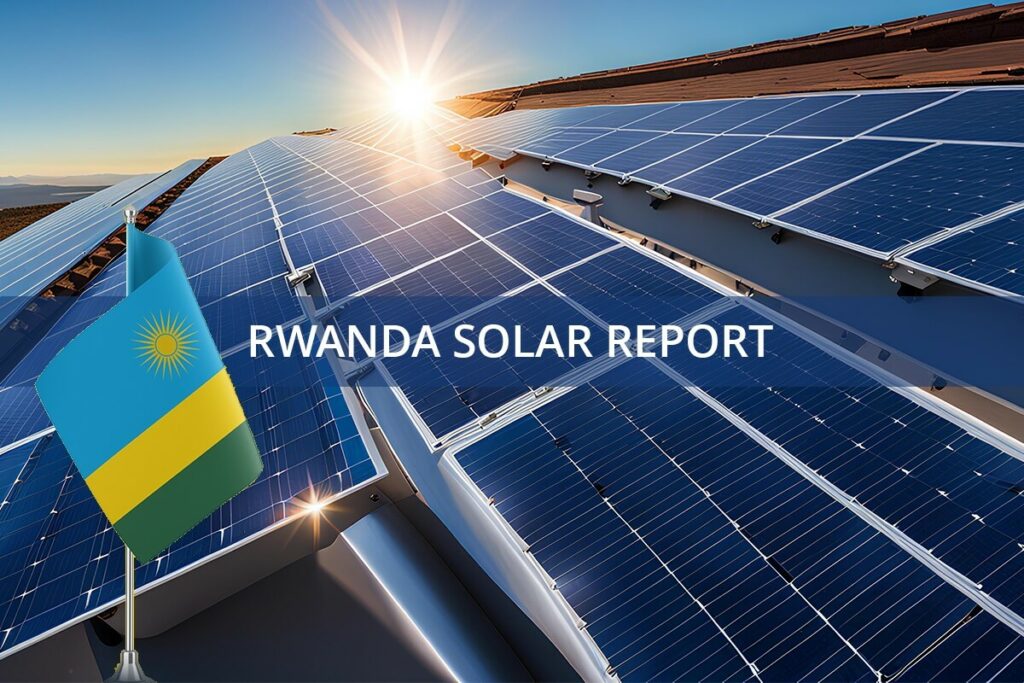
A transformative £3 million in funding has been awarded to Swansea University to pioneer Africa’s first full-scale manufacturing demonstration for next-generation solar technology. The ambitious initiative, named REACH-PSM, will focus on developing and producing sustainable perovskite solar modules directly on the continent, creating a new paradigm for energy access and economic growth.
Swansea University Secures £3M for New PV Manufacturing Project in Africa: Addressing Energy Poverty
The project arrives at a critical time, as over 500 million people in Africa currently live without access to electricity—a number that has unfortunately grown in recent years. REACH-PSM directly confronts this challenge by localizing the solar manufacturing process, aiming to build resilient local supply chains and reduce dependence on imported energy solutions. The collaboration will span multiple countries, with universities, businesses, and communities in Nigeria, Rwanda, Kenya, and South Africa playing key roles.
The Promise of Perovskite Technology
At the heart of this project are perovskite solar cells, an emerging technology with significant advantages over traditional silicon-based cells. Perovskites require less energy to produce, can be made with more sustainable materials, and offer a lower-cost manufacturing pathway, making them an ideal technology for fostering clean economic growth in developing regions.
Professor Matthew Davies, the project’s Principal Investigator, emphasized its holistic vision. “Through REACH-PSM, we are bringing together world-class expertise in sustainable materials, photovoltaic technology, and local manufacturing to help revolutionise energy access and resilience across Africa,” he stated. “By developing perovskite modules that are not only efficient but also sourced and produced locally and designed for efficient end-of-life processes, we hope to empower communities… and help usher in a more equitable, low-carbon energy future.”
Sustainability and a Circular Economy
Funded by the UKRI Ayrton Challenge Programme, REACH-PSM places a strong emphasis on a circular economy. The project, whose full name is “Resilient Renewable Energy Access Through Community-Driven Holistic Development in Perovskite Solar Module Manufacturing,” will design efficient end-of-life treatments for its products. This includes the reuse, refurbishment, and recycling of valuable solar materials, ensuring minimal environmental impact and extending the lifespan of all components, including the solar panel frames.
Frances Wood, UKRI International Director, commented on the program’s goals, saying, “The Ayrton Challenge Programme demonstrates the power of research and innovation to address critical global challenges… These projects exemplify how equitable, interdisciplinary collaboration can unlock transformative solutions.” By establishing a local base for the manufacturing of solar modules, REACH-PSM is set to create a powerful model for sustainable development and community-driven renewable energy innovation across the continent.
Sources
- Swansea University-Led Consortium Secures £3M to Establish Sustainable Perovskite Solar Module Manufacturing in Africa
- Swansea University Leads REACH-PSM Project for Clean Energy in Africa
- Swansea University Secures £3M for Perovskite Solar Module Manufacturing in Africa
- Swansea University Spearheads £3m Solar Revolution in Africa
- Swansea University Press Office News
- Swansea University leads £3m project to revolutionise solar energy in Africa