In a significant move towards renewable energy self-sufficiency, Nigeria is set to increase its solar cell imports by 20 percent, backed by a strategic investment of $1.2 billion. This initiative marks a pivotal shift from importing finished goods to empowering local industry, aiming to boost domestic solar panel assembly, reduce dependence on foreign products, and catalyze sustainable energy development and economic growth.
Solar Cell Imports Surge to Support Local Nigeria solar assembly
The Nigerian government’s commitment to localizing its solar industry is already showing tangible results. In a landmark development, recent data shows that for the first time in the country’s history, imports of solar cells for local assembly have surpassed imports of finished solar panels. This shift is driven by investor-friendly policies and a strong political commitment under the Renewed Hope Agenda, which champions local content and industrial growth.
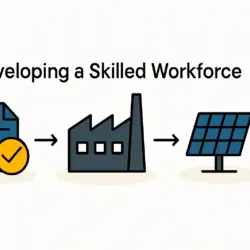
The government has allocated $1.2 billion to fund this initiative, which will be used to import essential raw materials like solar cells, establish state-of-the-art solar panel assembly plants across the country, and train a skilled local workforce. The Nigerian Solar Energy Company (NSEC) will manage the importation of the cells, collaborating with the Nigerian Customs Service to ensure a smooth supply chain to local manufacturers. Understanding the plant cost breakdown is crucial for appreciating the scale of this investment in the nation’s energy future.
Boosting Local Nigeria solar assembly
This influx of solar cells is set to provide a significant boost to Nigeria’s burgeoning solar panel assembly industry. With the government investing in assembly plants and training programs, the country aims to create thousands of new jobs and vastly improve its renewable energy infrastructure. This aligns with ambitious plans, including the development of a 1 GW solar module factory, signaling a major leap in capacity.
The locally assembled panels will serve a wide range of applications, from residential rooftops to large-scale commercial and industrial (C&I) projects. The basics of solar panel manufacturing will become common knowledge as the industry grows, supported by investment blueprints for facilities like a 20 MW solar assembly plant in Lagos.
According to the Minister of Energy, the goal is to have at least 50 percent of all solar panels used in Nigeria assembled locally by 2025. This target underscores the commitment to fostering a robust domestic solar industry as a core component of Nigerian energy diversification. This increased local production is expected to significantly reduce the cost of solar energy, making clean, reliable power more accessible to all Nigerians and driving sustainable economic development.
Reducing Reliance on Imported Solar Panels for Nigeria solar assembly
The strategic decision to prioritize solar cell imports is already successfully curbing Nigeria’s dependence on foreign-made solar panels. By mastering the local manufacturing process, the nation can control costs, enhance product quality, and tailor solutions to its unique needs. This is especially critical for expanding energy access in rural areas.
This strategy is part of a wider push for Nigeria renewable energy, backed by an impressive $435M deal. The success of this approach is evident not just in declining imports but in a remarkable new milestone: Nigeria has begun exporting its first solar panels to Ghana. This achievement transforms the nation from a consumer to a producer and regional leader in clean energy technology. The Nigeria solar production surge is a testament to the effectiveness of these coordinated reforms.
This initiative also aligns perfectly with Nigeria’s commitment to global climate goals, as greater use of solar energy will reduce greenhouse gas emissions and help mitigate the impacts of climate change.
Economic and Environmental Impact of Nigeria solar assembly
The Nigerian government’s decision to invest in local solar assembly is a bold and transformative step. With the $1.2 billion investment, Nigeria is not just pursuing its renewable energy targets but is positioning itself as a leader in Africa’s green transition, promising clean and affordable energy for millions.
The initiative is expected to have a lasting impact on Nigeria’s economy and environment by strengthening energy security, creating skilled jobs, reducing energy costs, and promoting sustainable industrialization. As Nigeria continues to build its domestic renewable energy capacity, it is set to play a pivotal role in the global shift to a cleaner and more sustainable energy future.
If you are inspired by Nigeria’s progress and wish to learn more about the intricacies of the solar industry, from production to installation, consider enrolling in our free e-course to deepen your knowledge.